So now that I have an Integra GSR for a daily (I know, blasphemy) I've been looking into Hondas a lot. I must say I'm quite impressed with their capabilities and the wealth of knowledge on them. So anyways, after seeing some numbers on them I was kind of curious as to see how our motors compare and how hard it'd be to build a head to flow comparably. IIRC, at stock GSR head can flow 190cfm (idk about intake and exhaust side differences, that's just a number I remember reading). It seems like on boosted setups people like to get Integra Type-R cams, and that's about as big as they like to go for boost. The specs are: Intake lift 11.5mm, duration 243 @ 1mm lift
Exhaust lift 10.5mm, duration 235 @ 1mm lift. These seem to be substantially larger than aftermarket cams for CA's especially the lift. They do extremely well for B-series it seems.
So I guess what I'd like to know is how much do CA heads flow? 4-port versus 8-port? Stock versus various levels of PnP? Are there cams like ITR cams for our motors? If not, then if someone were to get the vtec lobes copied on a cam to fit our motors how would the motor behave? Would it make power comparable to a B-series? (I know the difference in bore x stroke and head flow are factors)

Head Flow and Big Cams
-
float_6969

- Moderator
- Posts: 17366
- Joined: Mon Aug 26, 2002 1:55 pm
- Car: CA18DET swapped 1995 Nissan 240sx (too many mods to list)
2015 SV Leaf w/QC & Bose (daily) - Location: Topeka, Kansas
- Contact:
Re: Head Flow and Big Cams
Not much around for flow numbers. The support an interest just aren't there. The issue with high lift cams on our motor is the lack of valve stem height. I don't think the head has the room to run that much lift. Even going to a 10mm lift requires clearancing at every cam lob in the head.
Re: Head Flow and Big Cams
The ports on the CA is quite big, but remember that it is a turbo engine and there are really no need to apply too much "N/A tuning" to it.
The result of bigger valves, ports and aggressive cams is a ruined powerband.
The Supertech springs are rated @ 14 point something mm lift.
Alot of "tuners" are making good money tricking people into port everything even at modest power levels.
The result of bigger valves, ports and aggressive cams is a ruined powerband.
The Supertech springs are rated @ 14 point something mm lift.
Alot of "tuners" are making good money tricking people into port everything even at modest power levels.
-
mdb4879

- Posts: 419
- Joined: Sat Jul 02, 2011 9:36 am
- Car: 1987 Nissan Pulsar SE (CA18DET)
1990 Nissan 240SX (KA24E)
1995 Acura Integra GSR
Re: Head Flow and Big Cams
I know the tuning is different between N/A and boost, but I figured a lot of the same principles applied. It seems to me that having a well flowing head is like increasing displacement. I had thought before that PnP would reduce intake velocity and torque would suffer in the bottom end, but from what I can tell power is gained almost across all rpm's until extreme port work is done. A lot of the porting is making the size of the runners equal from the opening to the valve, and they have ways to work it so the transition into the combustion chamber is enhanced. Flow is improved everywhere and I don't see that being a bad thing in any motor, FI or NA. The biggest difference I see between building the two different types of motors are cams and timing. Aggressive cams bleed off pressure, and gains are minimal unless you bump up the compression to compensate. I'm sure there's still a limit in how big you'd go with FI, but compression loss is where power and responsiveness is lost.
Of course the Honda motors I've been looking into have two cam profiles to aid in the bottom end, But even so I've seen some very extreme cams used in their dragsters that don't utilize VTEC that still have a good idle quality and a very broad powerband with quite a bit of bottom end because of how they're tuned. True, these motors are completely different than ours (I've mostly been looking at all motor B-series and just a smidge of FI), but in small doses I would have thought the principles would still apply.
The physical restrictions are completely different, though. As Float said there's only so much room for high lift. All I was saying I guess is that Honda's seem to have good results with this so I figured, why wouldn't we? I don't know how much our heads flow, but it can't be too much less than a stock B-series head, can it? Although they do seem to be in a whole nother ball park.
Of course the Honda motors I've been looking into have two cam profiles to aid in the bottom end, But even so I've seen some very extreme cams used in their dragsters that don't utilize VTEC that still have a good idle quality and a very broad powerband with quite a bit of bottom end because of how they're tuned. True, these motors are completely different than ours (I've mostly been looking at all motor B-series and just a smidge of FI), but in small doses I would have thought the principles would still apply.
The physical restrictions are completely different, though. As Float said there's only so much room for high lift. All I was saying I guess is that Honda's seem to have good results with this so I figured, why wouldn't we? I don't know how much our heads flow, but it can't be too much less than a stock B-series head, can it? Although they do seem to be in a whole nother ball park.
-
D_Stirls

- Posts: 246
- Joined: Mon Sep 01, 2008 4:04 am
- Car: Nissan 180sx 1990 Ca18det
- Location: Adelaide,South Australia
Re: Head Flow and Big Cams
Can't run hydraulic lifters over 9.3mm as the supply gallery will then be covered at peak lift.
-
float_6969
- Moderator
- Posts: 17366
- Joined: Mon Aug 26, 2002 1:55 pm
- Car: CA18DET swapped 1995 Nissan 240sx (too many mods to list)
2015 SV Leaf w/QC & Bose (daily) - Location: Topeka, Kansas
- Contact:
Re: Head Flow and Big Cams
Another good point!
-
boost_boy
- Posts: 7051
- Joined: Thu Nov 14, 2002 7:28 am
- Car: B12 sentra w/built CA18DET, B12 sentra w/fully-built CA18DET, S13 coupe w/ CA18DET, S13 hatch w/CA18DET, 2002 maxima SE
- Location: Miami, FL.
- Contact:
Re: Head Flow and Big Cams
Curious to know where you got this info from? Wanna make sure that our CA18ers are well informed, but not misinformed.D_Stirls wrote:Can't run hydraulic lifters over 9.3mm as the supply gallery will then be covered at peak lift.
-
boost_boy
- Posts: 7051
- Joined: Thu Nov 14, 2002 7:28 am
- Car: B12 sentra w/built CA18DET, B12 sentra w/fully-built CA18DET, S13 coupe w/ CA18DET, S13 hatch w/CA18DET, 2002 maxima SE
- Location: Miami, FL.
- Contact:
Re: Head Flow and Big Cams
Ryan, do yu honestly believe that as well? Think about it before you answer. Maybe you were drunk when you read it, so you all have the opportunity to re-visit D_stirls' post.float_6969 wrote:Another good point!
-
boost_boy
- Posts: 7051
- Joined: Thu Nov 14, 2002 7:28 am
- Car: B12 sentra w/built CA18DET, B12 sentra w/fully-built CA18DET, S13 coupe w/ CA18DET, S13 hatch w/CA18DET, 2002 maxima SE
- Location: Miami, FL.
- Contact:
Re: Head Flow and Big Cams
Would you like to "EDIT" your previous post or explain what you meant? WE as a group and I as one of the moderators would like to know because that was a pretty defined response that must have some factual credibility behind it. If you don't, please don't spew random and misleading information as this is what causes all the myths, spook would be CA18ers and may just cause someone that believed your information, to sell his/her lump.D_Stirls wrote:EDIT
FACT: This statement is not true ladies and gents. Not trying to bust his chops, but I can't stand misleading information because it for one screws-up your credibility and creates unnecessary mayhem. If I don't have facts, I don't comment "POINT BLANK".
-
D_Stirls
- Posts: 246
- Joined: Mon Sep 01, 2008 4:04 am
- Car: Nissan 180sx 1990 Ca18det
- Location: Adelaide,South Australia
Re: Head Flow and Big Cams
No i wrote a statement but removed it as i don't have time at the moment to referance it.
I'll get back to you. I am sure it is correct and any off the shelf cams over 9.3mm are solid cams not lash cams to that also points to the fact that it is correct.
There are a couple things that you can do (modify the the head or the lifter) to be able to run lash cams past that point but if you are going past that lift it's a fairly serious engine build and you would probably want to switch to a solid setup for reliability at high revs.
Hydraulic lifter will not break things above 9.3mm provided the lifter has clearance to the head on full lift, but you will not be achieving the advertised lift of the cam that you are using.
Also since you have the facts what lash type cams have you used that are above 9.3mm, becuase if you are using solid cams with hydraulic lifters i can guarantee that you are no achieveing you advertised lift for that cam.
Since we are now specifying FACTUAL information is required to back up any statement where is the FACTUAL information to back up reoccuring statemnet that the 4 port head flow bigger HP that the 8 port head, that the butterfly system is not useful and might as well be removed.....etc etc.
There have been a number of claims made repeatedly on this and other forums that have no evidence to back them up other than the OP's "seat of the pants feel", no dyno graphs, no flow charts, nothing.
I'll get back to you. I am sure it is correct and any off the shelf cams over 9.3mm are solid cams not lash cams to that also points to the fact that it is correct.
There are a couple things that you can do (modify the the head or the lifter) to be able to run lash cams past that point but if you are going past that lift it's a fairly serious engine build and you would probably want to switch to a solid setup for reliability at high revs.
Hydraulic lifter will not break things above 9.3mm provided the lifter has clearance to the head on full lift, but you will not be achieving the advertised lift of the cam that you are using.
Also since you have the facts what lash type cams have you used that are above 9.3mm, becuase if you are using solid cams with hydraulic lifters i can guarantee that you are no achieveing you advertised lift for that cam.
Since we are now specifying FACTUAL information is required to back up any statement where is the FACTUAL information to back up reoccuring statemnet that the 4 port head flow bigger HP that the 8 port head, that the butterfly system is not useful and might as well be removed.....etc etc.
There have been a number of claims made repeatedly on this and other forums that have no evidence to back them up other than the OP's "seat of the pants feel", no dyno graphs, no flow charts, nothing.
-
float_6969
- Moderator
- Posts: 17366
- Joined: Mon Aug 26, 2002 1:55 pm
- Car: CA18DET swapped 1995 Nissan 240sx (too many mods to list)
2015 SV Leaf w/QC & Bose (daily) - Location: Topeka, Kansas
- Contact:
Re: Head Flow and Big Cams
I'm not saying I know for a fact that it's an issue as I haven't measured it. I do have a junk head (and I think lifters) sitting in the garage. I could go out and measure them, but I know the CA engine well enough to say that I know the size of the oil galley in the head and the way the lifter is designed to know that his number is probably pretty close to being accurate.
But to be completely forthcoming, I don't have any first hand knowledge to say one way or the other.
I'd also like to be clear that I'm on the 8 port w/functional butterfly bandwagon. I've owned and driven both and I prefer the 8 port head. If I had the time and energy, I would pull my 4 port head off and put an 8 port back on it. It does have a nice top end, but IMHO, it's not worth what's lost everywhere else.
But to be completely forthcoming, I don't have any first hand knowledge to say one way or the other.
I'd also like to be clear that I'm on the 8 port w/functional butterfly bandwagon. I've owned and driven both and I prefer the 8 port head. If I had the time and energy, I would pull my 4 port head off and put an 8 port back on it. It does have a nice top end, but IMHO, it's not worth what's lost everywhere else.
-
mdb4879
- Posts: 419
- Joined: Sat Jul 02, 2011 9:36 am
- Car: 1987 Nissan Pulsar SE (CA18DET)
1990 Nissan 240SX (KA24E)
1995 Acura Integra GSR
Re: Head Flow and Big Cams
I don't think it's ever been said the butterfly system isn't useful. Only that the system is outdated and with a proper tune the same responsiveness can be achieved without the system. Also, being as old as they are, they are prone to cause problems such as the seals for the shaft leaking vacuum.
The problem isn't necessarily your statement. It's that you made the statement alone, and left it there. We're here to create a database for fact. Generally we determine fact through discussion of various experiences and opinions. Nobody has a problem with putting your opinion out there. It's just that the way you worded your statement you made it sound like it was fact, but without any representation as to why it was so. I personally don't know either way, but there is controversy on the matter so sharing your experience in the matter to prove it's fact would be appreciated. (not just speculation because "cams with more than 'x' lift are advertised as solid lifter cams")
The same goes for the myth that the 4 port head flows better. Idk if there is any actual proof on the matter, but everything I've ever read about the matter the poster always said it was their opinion. It's all speculation. Which is what I always make certain to do. If I have any doubt in any information I post I state where I heard the information, or that it was my own speculation I came up with and how/why it makes sense to me that way, and I ask for confirmation from others. I also word my statements to display uncertainty. This way people know to take what I say as opinion and not fact, until others come on to confirm or deny anything.
I also have my own question about what was said. What difference does it make whether the valve lash is mechanically or hydraulically adjust in relation to how much lift you actually have? (not how much lift you can run, but with the same cam why would you have less lift with hydraulic lifters?) To my understanding hydraulics work basically like having a direct steel rod to push on since the fluids don't compress. The cam IS steel (or iron or whatever, it's strong) so lift can't vary on that. I haven't really looked into exactly how the lifters adjust themselves, so maybe when the lifter hits the bottom of the head (spring seat I guess it would be) the lifter compresses itself in the play it has to adjust lash and the valve isn't opened anymore. But that's the only thing I can think of. If they don't function the way I think they do then if a cam had so much lift it bottomed out the lifter then it simply wouldn't turn anymore.
The problem isn't necessarily your statement. It's that you made the statement alone, and left it there. We're here to create a database for fact. Generally we determine fact through discussion of various experiences and opinions. Nobody has a problem with putting your opinion out there. It's just that the way you worded your statement you made it sound like it was fact, but without any representation as to why it was so. I personally don't know either way, but there is controversy on the matter so sharing your experience in the matter to prove it's fact would be appreciated. (not just speculation because "cams with more than 'x' lift are advertised as solid lifter cams")
The same goes for the myth that the 4 port head flows better. Idk if there is any actual proof on the matter, but everything I've ever read about the matter the poster always said it was their opinion. It's all speculation. Which is what I always make certain to do. If I have any doubt in any information I post I state where I heard the information, or that it was my own speculation I came up with and how/why it makes sense to me that way, and I ask for confirmation from others. I also word my statements to display uncertainty. This way people know to take what I say as opinion and not fact, until others come on to confirm or deny anything.
I also have my own question about what was said. What difference does it make whether the valve lash is mechanically or hydraulically adjust in relation to how much lift you actually have? (not how much lift you can run, but with the same cam why would you have less lift with hydraulic lifters?) To my understanding hydraulics work basically like having a direct steel rod to push on since the fluids don't compress. The cam IS steel (or iron or whatever, it's strong) so lift can't vary on that. I haven't really looked into exactly how the lifters adjust themselves, so maybe when the lifter hits the bottom of the head (spring seat I guess it would be) the lifter compresses itself in the play it has to adjust lash and the valve isn't opened anymore. But that's the only thing I can think of. If they don't function the way I think they do then if a cam had so much lift it bottomed out the lifter then it simply wouldn't turn anymore.
-
D_Stirls
- Posts: 246
- Joined: Mon Sep 01, 2008 4:04 am
- Car: Nissan 180sx 1990 Ca18det
- Location: Adelaide,South Australia
Re: Head Flow and Big Cams
Cams designed for hydraulic lifters have a higher initial lift that locks the lifter (seat the bearing in the orifice) they can also ramp the lift up quicker as the oil “cylinder” does supply a slight cushioning effect. With the solid cams they cams they have a gentler lift profile as they don’t need to seat a bearing to lock the lifter; also the forces (shock loading) that the cam exerts on the rest of the valve train are higher due to there being no cushioning effect. If you use a solid cam with a hydraulic lifter the lifter doesn’t lock out as early and you lose lift as a result.
When a hydraulic cam has an advertised lift of say 9.0mm you will not achieve 9.0mm in reality as there is a slight loss of lift in the early ramp before the lifter locks out, but you lose more if the cam is not suited to the lifter.
The lifters adjust themselves by oil pressure pushing out on a small expandable cylinder. The cylinder is small enough that oil pressure cannot overcome the valve spring pressure and open the valve but is big enough to be able push the cylinder out so that contact is made to both the cam and the valve (In reality there is a slight gap but to explain how that is achieved it would double the length of this post). The oil pressure enters the cylinder via a small orifice which is blocked by a small ball bearing when the lifter is locked out. When the orifice is open the ball bearing is held away from the orifice by a tiny spring. When the cam starts to push the lifter, oil rushes back out the orifice and pushes the bearing into the hole, the oil pressure behind the bearing then holds the orifice closed. The quicker the oil moves out the orifice the quicker the lifter locks out.
The blocking of the feed gallery causes issues with the re pressurising of the lifter after the orifice is reopen as the chamber that fills the cylinder from has been de pressurised.
The 4 port head thing and the butterflies were just used as cases that are widely touted as gospel but I have ever seen evidence of (with the 4 port head).
My self and Meminto (Matt) have produced data; dyno graphs (myself) and flow charts (Meminto) about the butterfly system that shows that there is a decent gain in low RPM torque (50% gain) and that there is no flow advantage by removing them until 350rwkw (550BHP).
I also have data that shows that the 8 port head has a ~35% increase (actual figure in my personal laptop and I’m at work ATM) in intake area over the 4 port head; this data I have never posted online as I need to confirm the 4 port head dimensions before I do. I realise that there are boundary layer losses due to the increased surface area in the 8 port head as well as butterfly shaft but I would say that the large increase in intake area offset those losses; and I would be surprised if there was much if any top end gain with the 4 port head. Ie. Back to back dyno graph with the same exactly the same setup.
When a hydraulic cam has an advertised lift of say 9.0mm you will not achieve 9.0mm in reality as there is a slight loss of lift in the early ramp before the lifter locks out, but you lose more if the cam is not suited to the lifter.
The lifters adjust themselves by oil pressure pushing out on a small expandable cylinder. The cylinder is small enough that oil pressure cannot overcome the valve spring pressure and open the valve but is big enough to be able push the cylinder out so that contact is made to both the cam and the valve (In reality there is a slight gap but to explain how that is achieved it would double the length of this post). The oil pressure enters the cylinder via a small orifice which is blocked by a small ball bearing when the lifter is locked out. When the orifice is open the ball bearing is held away from the orifice by a tiny spring. When the cam starts to push the lifter, oil rushes back out the orifice and pushes the bearing into the hole, the oil pressure behind the bearing then holds the orifice closed. The quicker the oil moves out the orifice the quicker the lifter locks out.
The blocking of the feed gallery causes issues with the re pressurising of the lifter after the orifice is reopen as the chamber that fills the cylinder from has been de pressurised.
The 4 port head thing and the butterflies were just used as cases that are widely touted as gospel but I have ever seen evidence of (with the 4 port head).
My self and Meminto (Matt) have produced data; dyno graphs (myself) and flow charts (Meminto) about the butterfly system that shows that there is a decent gain in low RPM torque (50% gain) and that there is no flow advantage by removing them until 350rwkw (550BHP).
I also have data that shows that the 8 port head has a ~35% increase (actual figure in my personal laptop and I’m at work ATM) in intake area over the 4 port head; this data I have never posted online as I need to confirm the 4 port head dimensions before I do. I realise that there are boundary layer losses due to the increased surface area in the 8 port head as well as butterfly shaft but I would say that the large increase in intake area offset those losses; and I would be surprised if there was much if any top end gain with the 4 port head. Ie. Back to back dyno graph with the same exactly the same setup.
-
themadscientist

- Posts: 26254
- Joined: Tue Nov 12, 2002 3:30 pm
- Car: R32 GTR, DR30 RS Turbo, BRZ, Lunchbox, NSR50 Sportster 883 Iron
- Location: Staring down at you with disdain from the spooky mountaintop castle.
Re: Head Flow and Big Cams
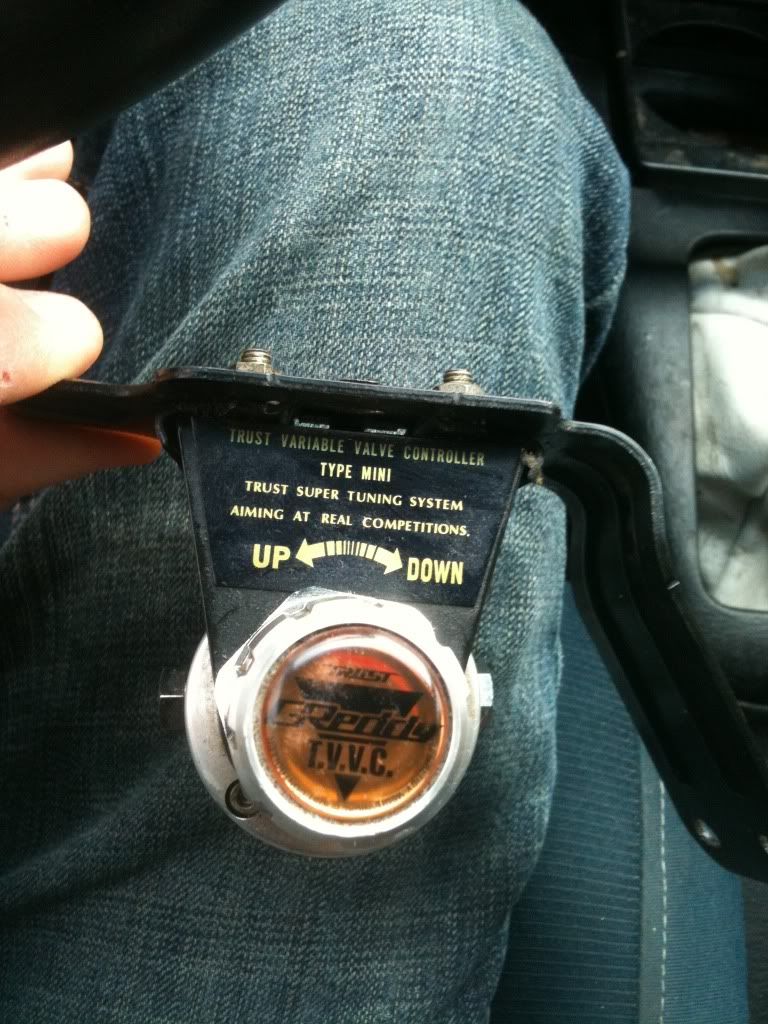
< Wants more air, just turns knob.
-
boost_boy
- Posts: 7051
- Joined: Thu Nov 14, 2002 7:28 am
- Car: B12 sentra w/built CA18DET, B12 sentra w/fully-built CA18DET, S13 coupe w/ CA18DET, S13 hatch w/CA18DET, 2002 maxima SE
- Location: Miami, FL.
- Contact:
Re: Head Flow and Big Cams
This is really my only concern here, my friend. As for the 4 port/8 port butterfly thing, to each his own as I chose not to use them because the seals are old and will fail which will cause your engine to have weird rich running conditions due to a massive vacuum leak as well as some other ghost issues. Then engine does not have the displacement to enjoy driving off boost and there are too many bulky and outdated components that makes for a very untidy engine bay as well as something else to baby-sit, so after dealing with failed butterfly valve seals in 2000, I decided to stay away from them and compensate for their function via tuning.D_Stirls wrote:Can't run hydraulic lifters over 9.3mm as the supply gallery will then be covered at peak lift.
Now that that is out of the way, let's address the concern at hand. FACT: you can actually use bigger cams with the hydraulic lifters without disturbing or blocking-off the supply gallery as stated in D_Stirls' quote. Too many myths of what cannot be done has been introduced over the last decade and a half and I felt it was time to put a few of them to rest.
Evidence: My very own 1993 nissan 240sx coupe with CA18DET installed. The head carries JUN cams with a spec of 272 duration with a 9.3mm lift, nissan Z32 heavy duty race valve springs, standard oem (but healthy) hydraulic lifters and a head that is ported and polished. Bottom end is .020 over with oem nissan slugs, standard rods, non nissan nor ACL bearings, polished crank and fresh oil pump. On a dynomometer, my car put out an impressive 536whp @ 32psi of boost (2nd pull). I was never concerned about the camshafts being too much for the lifters because because if Tomei's 270 (8.8mm) work in my other motors with hydraulic lifters, then why not the JUN units.
Conclusion: What makes my engines any different from anyone else's? I did nothing fantastic, but took a chance on parts that I wanted to use, installed them in my engine, tuned the engine to what I feel is acceptable and away I went. The car idles a little lumpy, sucks on fuel economy, but it also has A/C and power steering which helps tremendously here in Florida.
Evidence #2: To get an idea of who this kid is, here's a link to his old set-up: overboosted180-s-ca-powered-s13-on-the- ... 91114.html
Here's a link to his most current set-up. [youtube]http://www.youtube.com/watch?v=SPn-EQSa ... e=youtu.be[/youtube]
[youtubewww.youtube.com/watch?v=SPn-EQSacO4
][/youtube]
Build Spec: Standard bore CA18DET impregnated with CP sluds, XC rings, non-nissan nor non-ACL bearings, polished crank, honed and assembled by me. Head consists of JUN 272 camshafts with a 10.5mm, head clearanced for bigger camshaft lift, standard oem (but healthy) hydraulic lifters, JUN valve springs, head meticulously ported and polished (most of the money is in the head), block and head sealed via a cometic gasket and ARP head studs.
Conclusion: It worked once, why not do it again. There's no starving cams for oil and there are no mechanical issues here, either. D-Stirls' post forced me to share information that I would not normally share, but buyers be aware, you don't go slapping this stuff on your engine without having the car tuned for it. It requires work, money and more work to make this all function as one. Nothing cheap about it, so don't take this info and say "Well, Dee said" because I would tell you this is a play at your own risk hobby. BTW, he has no butterfly valves for his 8 port head either and his car rather powerful and as fast as my own.

-
boost_boy
- Posts: 7051
- Joined: Thu Nov 14, 2002 7:28 am
- Car: B12 sentra w/built CA18DET, B12 sentra w/fully-built CA18DET, S13 coupe w/ CA18DET, S13 hatch w/CA18DET, 2002 maxima SE
- Location: Miami, FL.
- Contact:
Re: Head Flow and Big Cams
If the link doesn't work, I'll fix it when I get home.
-
float_6969
- Moderator
- Posts: 17366
- Joined: Mon Aug 26, 2002 1:55 pm
- Car: CA18DET swapped 1995 Nissan 240sx (too many mods to list)
2015 SV Leaf w/QC & Bose (daily) - Location: Topeka, Kansas
- Contact:
Re: Head Flow and Big Cams
He's right about how the lifters work and why cam manufacturers specify solid vs. lash on their cams. He's also right about lash cams loosing lift.D_Stirls wrote:Cams designed for hydraulic lifters have a higher initial lift that locks the lifter (seat the bearing in the orifice) they can also ramp the lift up quicker as the oil “cylinder” does supply a slight cushioning effect. With the solid cams they cams they have a gentler lift profile as they don’t need to seat a bearing to lock the lifter; also the forces (shock loading) that the cam exerts on the rest of the valve train are higher due to there being no cushioning effect. If you use a solid cam with a hydraulic lifter the lifter doesn’t lock out as early and you lose lift as a result.
When a hydraulic cam has an advertised lift of say 9.0mm you will not achieve 9.0mm in reality as there is a slight loss of lift in the early ramp before the lifter locks out, but you lose more if the cam is not suited to the lifter.
The lifters adjust themselves by oil pressure pushing out on a small expandable cylinder. The cylinder is small enough that oil pressure cannot overcome the valve spring pressure and open the valve but is big enough to be able push the cylinder out so that contact is made to both the cam and the valve (In reality there is a slight gap but to explain how that is achieved it would double the length of this post). The oil pressure enters the cylinder via a small orifice which is blocked by a small ball bearing when the lifter is locked out. When the orifice is open the ball bearing is held away from the orifice by a tiny spring. When the cam starts to push the lifter, oil rushes back out the orifice and pushes the bearing into the hole, the oil pressure behind the bearing then holds the orifice closed. The quicker the oil moves out the orifice the quicker the lifter locks out.
The blocking of the feed gallery causes issues with the re pressurising of the lifter after the orifice is reopen as the chamber that fills the cylinder from has been de pressurised.
The 4 port head thing and the butterflies were just used as cases that are widely touted as gospel but I have ever seen evidence of (with the 4 port head).
My self and Meminto (Matt) have produced data; dyno graphs (myself) and flow charts (Meminto) about the butterfly system that shows that there is a decent gain in low RPM torque (50% gain) and that there is no flow advantage by removing them until 350rwkw (550BHP).
I also have data that shows that the 8 port head has a ~35% increase (actual figure in my personal laptop and I’m at work ATM) in intake area over the 4 port head; this data I have never posted online as I need to confirm the 4 port head dimensions before I do. I realise that there are boundary layer losses due to the increased surface area in the 8 port head as well as butterfly shaft but I would say that the large increase in intake area offset those losses; and I would be surprised if there was much if any top end gain with the 4 port head. Ie. Back to back dyno graph with the same exactly the same setup.
As for the port area, when I measured it (I both heads and had both of them off of the car. I used the intake manifold gaskets as a guide, traced them onto a piece of architectural paper, and physically counted the area) they were very close to each other. I'll try to find that paper and scan a copy and post it. As you said, the 8 ports had more area, but obviously there are other losses there. This also doesn't take port volume into account. And IMHO those figures don't mean much. The dyno chart is what tells the real story.
-
float_6969
- Moderator
- Posts: 17366
- Joined: Mon Aug 26, 2002 1:55 pm
- Car: CA18DET swapped 1995 Nissan 240sx (too many mods to list)
2015 SV Leaf w/QC & Bose (daily) - Location: Topeka, Kansas
- Contact:
Re: Head Flow and Big Cams
Dee and I must have posted at the same time. To clarify, as Dee has illustrated, this doesn't mean you can't do it, it just means you won't get the same lift you would with solid lifters.
-
boost_boy
- Posts: 7051
- Joined: Thu Nov 14, 2002 7:28 am
- Car: B12 sentra w/built CA18DET, B12 sentra w/fully-built CA18DET, S13 coupe w/ CA18DET, S13 hatch w/CA18DET, 2002 maxima SE
- Location: Miami, FL.
- Contact:
Re: Head Flow and Big Cams
I believe the JUN cams we are using are of the lash type, but don't quote me on it. I don't even know if I or he still have the boxes to his camshafts. I do know for my engine with the solid lifters, it's a totally different ball game and required more extensive labor and measurement to get this right. Thanks to one of our Aussie brothers "dattodude" who helped me sort that whole solid lifter thing out because I was very unsure as to which way I should go since my engine builder at the time screwed it up.
-
boost_boy
- Posts: 7051
- Joined: Thu Nov 14, 2002 7:28 am
- Car: B12 sentra w/built CA18DET, B12 sentra w/fully-built CA18DET, S13 coupe w/ CA18DET, S13 hatch w/CA18DET, 2002 maxima SE
- Location: Miami, FL.
- Contact:
Re: Head Flow and Big Cams
Exactly! But the only reason I posted on this was to supress misinformation. Could care less about 4 port/8 port whatever because I am so passed that meaningless drama. Whatever you use, do your best to get the most out of it.float_6969 wrote:Dee and I must have posted at the same time. To clarify, as Dee has illustrated, this doesn't mean you can't do it, it just means you won't get the same lift you would with solid lifters.
-
themadscientist
- Posts: 26254
- Joined: Tue Nov 12, 2002 3:30 pm
- Car: R32 GTR, DR30 RS Turbo, BRZ, Lunchbox, NSR50 Sportster 883 Iron
- Location: Staring down at you with disdain from the spooky mountaintop castle.
Re: Head Flow and Big Cams
I think the definitive way to settle the port size argument is to fill each head's ports with that molding material and measure the total displacement of all the mold for each head in liquid. It's not just the entry size, but also the complete volume. The whole argument seems ridiculous to me anyway. There are perhaps a dozen guys in the world even coming close to choking a CA18 head of any type. Move on to more relevant s*** already. It's like a virgin arguing about how he would satisfy three chicks at once before he's got his d!ck wet once. 
-
r34 gtr

- Posts: 8909
- Joined: Sun Dec 29, 2002 9:33 am
- Car: 98 Nissan Frontier XE 4x4
95.5 Audi URS6 Avant 5spd
03 BMW 330i ZHP 6spd
89 Nissan 240SX base CA18DET - Location: Creepin' in your crawl space
- Contact:
Re: Head Flow and Big Cams
You guys, I can totally satisfy like, three chicks at the same time. Swear to god.
At the end of the day, there are only a handful of people who buy anything as serious as cams for the CA18 anyway, and everyone has their own ideas about what is the correct way to do things. Just let them do it. Anyone who comes in here asking s*** like "zomg what are biggest cams I can do wifout any other supporting mods" will be met with "GET OUT." Hell the only cams 95% of people with CAs buy these days are Tomei, and they clearly state "lash type" or "solid type." Argument is pretty much a moot point because of this.
Arguing on the internet is for Reddit. Post some badass car pictures or something. Damn.
At the end of the day, there are only a handful of people who buy anything as serious as cams for the CA18 anyway, and everyone has their own ideas about what is the correct way to do things. Just let them do it. Anyone who comes in here asking s*** like "zomg what are biggest cams I can do wifout any other supporting mods" will be met with "GET OUT." Hell the only cams 95% of people with CAs buy these days are Tomei, and they clearly state "lash type" or "solid type." Argument is pretty much a moot point because of this.
Arguing on the internet is for Reddit. Post some badass car pictures or something. Damn.
-
boost_boy
- Posts: 7051
- Joined: Thu Nov 14, 2002 7:28 am
- Car: B12 sentra w/built CA18DET, B12 sentra w/fully-built CA18DET, S13 coupe w/ CA18DET, S13 hatch w/CA18DET, 2002 maxima SE
- Location: Miami, FL.
- Contact:
Re: Head Flow and Big Cams
This post has like multiple discussions. I didn't enter into this for the 4 port/ 8 port conversation because again, it's pointless to me. Butterfly valves? okay. If you want to use yours, that's fine too. But when you say cams are cutting off oil supply, it's on like Tim when he gets drunk, we will finish it to the last drop and yes, we have hit the bottom, sooooo moving forward  .
.
.-
mdb4879
- Posts: 419
- Joined: Sat Jul 02, 2011 9:36 am
- Car: 1987 Nissan Pulsar SE (CA18DET)
1990 Nissan 240SX (KA24E)
1995 Acura Integra GSR
Re: Head Flow and Big Cams
Most of the discussion is relevant because it pertains to the thread topic. Maybe not directly, but there's enough information in here to say my initial questions are mute because of physical constraints within the head, and that the heads both flow plenty well that there isn't much need to worry about extensive work to achieve most power goals. I think my initial curiosity was if one could build a CA to make more torque across the entire rev range and more power with less boost (much, as I've stated before, as Honda guys seem to excel at in all motor applications, minus the boost part). But it seems the general consensus still stands to just throw a bunch of boost at the sucker and call it a day. The limit where the OEM stuff on these motors chokes out performance seems to be really high.
Now, to keep Tim happy:


That's about as badass as they come
Now, to keep Tim happy:
That's about as badass as they come
-
boost_boy
- Posts: 7051
- Joined: Thu Nov 14, 2002 7:28 am
- Car: B12 sentra w/built CA18DET, B12 sentra w/fully-built CA18DET, S13 coupe w/ CA18DET, S13 hatch w/CA18DET, 2002 maxima SE
- Location: Miami, FL.
- Contact:
Re: Head Flow and Big Cams
The infamous "E" with Mikunis and headers  Once upon a time, I would rock that in a heartbeat, but alas, I tapped the CA sisters (16 and 18) and I'm whooped,,, .
Once upon a time, I would rock that in a heartbeat, but alas, I tapped the CA sisters (16 and 18) and I'm whooped,,, .-
themadscientist
- Posts: 26254
- Joined: Tue Nov 12, 2002 3:30 pm
- Car: R32 GTR, DR30 RS Turbo, BRZ, Lunchbox, NSR50 Sportster 883 Iron
- Location: Staring down at you with disdain from the spooky mountaintop castle.
Re: Head Flow and Big Cams
A mecha E engine? That is awesome squared!
-
boost_boy
- Posts: 7051
- Joined: Thu Nov 14, 2002 7:28 am
- Car: B12 sentra w/built CA18DET, B12 sentra w/fully-built CA18DET, S13 coupe w/ CA18DET, S13 hatch w/CA18DET, 2002 maxima SE
- Location: Miami, FL.
- Contact:
Re: Head Flow and Big Cams
That was some of nissan's finest work, for you young thunder cats that only know SR, RB and for the newly newbs the VQ. The E, L, M10, FJ, KA, and CA are nissan's power monkeys from the old school.
Re: Head Flow and Big Cams
boosted hondas run way more compression, so they should make more power @ less boost.
why worry about headflow or peak hp? They're just "numbers". Countless 4/8 port builds to cover any "1.8" power crave. Take your pick
Mobne for example, hairy street beast (4 port) while still sporting stock intake manifold and 260 hyd tomeis made way more power than 99% of us will ever see or could use
why worry about headflow or peak hp? They're just "numbers". Countless 4/8 port builds to cover any "1.8" power crave. Take your pick
Mobne for example, hairy street beast (4 port) while still sporting stock intake manifold and 260 hyd tomeis made way more power than 99% of us will ever see or could use
-
themadscientist
- Posts: 26254
- Joined: Tue Nov 12, 2002 3:30 pm
- Car: R32 GTR, DR30 RS Turbo, BRZ, Lunchbox, NSR50 Sportster 883 Iron
- Location: Staring down at you with disdain from the spooky mountaintop castle.
Re: Head Flow and Big Cams
LOL @ Thundercats. You're dating yourself grandpa!
The CA18 feels like Spaceghost to me.

The CA18 feels like Spaceghost to me.