Or do it my way:
Buy old luxury cars, spend the repair and maintenance equivalent of $800/mo on them, and... lose a ton of money.

Ramsey's plan makes perfect sense but it assumes that folks will buy standard used cars with standard features rather than something interesting or exotic. Luxury and performance cars depreciate heavily and become attractive to used buyers who would otherwise drive something modest if they had to buy new [ask me how I know]. A shopper might see a newer Accord for $20k or a slightly older but MUCH nicer Range Rover for $27k. Some would buy the Rover.
If his plan is applied to a run-of-the-mill Malibu, Camry, or Accord, it makes financial sense. Anything higher on the ladder in terms of luxury or performance will require a generous aftermarket warranty or extended factory coverage, otherwise you could spend as much on repairs as you would on new car payments.
In my case, Cadillac and Saab stopped building my favorite cars years ago (I've owned four Sevilles and I'm waiting for GM to build a modern equivalent), so regardless of what's available new, the cars I really want to own tend to be 10-20 years old. That's also true for Mazda (NA and NB Miata are the best), Nissan (anything before 2002), and Toyota (90s or earlier). The new stuff is mostly bland and ugly.
Among brand new cars that I can actually afford, a CTS with the FE3 package would be pretty sharp, or a BMW 3-series coupe, but they aren't compelling enough to draw me away from my old vehicles. The XLR is no longer in production so it also becomes an expensive-to-maintain used car, and the ones I can afford to buy are out of their warranty period. There's a retired guy I know in Virgina who owns three Sevilles. Despite having owned new Italian exotics and European luxury cars, he prefers his older Cadillacs. They just feel right. I can't explain it or quantify it. Same goes for 90s Nissans.

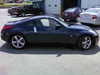




 Maybe the C5 should be the Bottmobile! Sorry, I'm a little slap-happy...need some sleep.