
Which Q45 Is Better?
-
unknown007

- Posts: 1907
- Joined: Sun Nov 04, 2007 10:07 pm
- Car: White 1993 Q45 (G50)
Which Q45 Is Better?
should i buy the 1990-1993 Q45 or the 1994-1996 Q45?and why?just want a second opionion?
-
Infinitiguy19

- Posts: 7787
- Joined: Sat Dec 22, 2007 4:58 pm
- Car: 1993 Infiniti Q45 188580 Miles
1994 Infiniti Q45a 240000 Miles
Re: Which Q45 Is Better? (unknown007)
1993 ecspecially if you add sodium filled exhast valves!!!
And there the best because they start on first gear and have the faster transmission and some even have the new chain guides.
So basicaly they have the best of the G50s except for seat warmers, auto dimming rear mirror, cup holders and probly more that i forgot to list. o yea back seat pockets
And there the best because they start on first gear and have the faster transmission and some even have the new chain guides.
So basicaly they have the best of the G50s except for seat warmers, auto dimming rear mirror, cup holders and probly more that i forgot to list. o yea back seat pockets
-
unknown007
- Posts: 1907
- Joined: Sun Nov 04, 2007 10:07 pm
- Car: White 1993 Q45 (G50)
Re: Which Q45 Is Better? (ppastos)
well i was trying to go for the 1994 Q45 just because of all those things.any ideas on how much the streeing pump is i think the guy said?im to choose from a 1991 with a jdm Q45 engine or a 1994 with 160k miles what you think?
-
Infinitiguy19
- Posts: 7787
- Joined: Sat Dec 22, 2007 4:58 pm
- Car: 1993 Infiniti Q45 188580 Miles
1994 Infiniti Q45a 240000 Miles
Re: Which Q45 Is Better? (unknown007)
Sweet jesus go with the 91 that baby must screem how many miles on here?
-
unknown007
- Posts: 1907
- Joined: Sun Nov 04, 2007 10:07 pm
- Car: White 1993 Q45 (G50)
Re: Which Q45 Is Better? (ppastos)
70k or around there he put 30k on it.but he says the interiors rough.i want a car that would be very realiable.and last.so any ideas on how much power steering pump i think is?i need to replace that so i want to know.i might just replace both front seats too.
-
Q451990

- Moderator
- Posts: 11033
- Joined: Tue Jul 23, 2002 8:21 am
- Car: 1990 Q45 - 118K, 2022 Toyota 4 Runner, 2004 Frontier M/T - 108K, 2012 Xterra (Mom's), 2023 Rogue (Inlaws)
- Location: Columbia, SC
- Contact:
Re: Which Q45 Is Better? (unknown007)
Just remember that just because the engine has been swapped in the 91, it could still have the bad guides.
I would be concerned about the rack being trashed on the 94 as well as the pump. It's a rare failure item, so I would think really poor maintenence would likely take the rack out too. Check out http://www.everythinginfiniti.com for the pump price and then add say $400-500 for labor. Maybe less... it shouldn't be that hard to swap out. You could be lucky enough that it's just a bad idler pulley that sounds like a bad pump too.
I would recommend a pre-buy inspection on either car... Even if you decided buy it, you'll know what you're getting in to and what it's going to take to get it in the condition you want.
Good luck!
Heath
I would be concerned about the rack being trashed on the 94 as well as the pump. It's a rare failure item, so I would think really poor maintenence would likely take the rack out too. Check out http://www.everythinginfiniti.com for the pump price and then add say $400-500 for labor. Maybe less... it shouldn't be that hard to swap out. You could be lucky enough that it's just a bad idler pulley that sounds like a bad pump too.
I would recommend a pre-buy inspection on either car... Even if you decided buy it, you'll know what you're getting in to and what it's going to take to get it in the condition you want.
Good luck!
Heath
-
unknown007
- Posts: 1907
- Joined: Sun Nov 04, 2007 10:07 pm
- Car: White 1993 Q45 (G50)
Re: Which Q45 Is Better? (Q451990)
well that's true and if you prebuy inspection as in a mechanic to inspect maybe i can but other than that i hear for infiniti to do it alone is 1k so i'll pass.i've read and been told that the 94+ have better chain guides than the 90-93.i was looking for low miles and durabilty but also stylish which goes with the 94.the 93 i was wondering can i just make the whole front into a 94?with fenders,bumper etc?
-
maxnix
- Posts: 22627
- Joined: Mon Jul 22, 2002 8:11 pm
- Car: 1995 Infiniti Q45
1995 Infiniti Q45t
2000 Infiniti Q45
Re: Which Q45 Is Better? (unknown007)
Buy the one with the best sevice history. Read the sticky above.unknown007 wrote:should i buy the 1990-1993 Q45 or the 1994-1996 Q45?and why?just want a second opionion?
With that in mind, the earlier ones will cost more to restore. Air bags, thicker glass, powered headrests, R134a, twin tank aTF heat exchangers, rotary disc injectors, OEM remotes, auto dimming rear view mirrors, first gear launch (also in 1993), metal backed timing chain guides and a few other things are unique to the later ones.
Read the previous post and you will be rewarded with a better buy and better application of your funds to restore the important items correctly.
-
unknown007
- Posts: 1907
- Joined: Sun Nov 04, 2007 10:07 pm
- Car: White 1993 Q45 (G50)
Re: Which Q45 Is Better? (maxnix)
ok thanks.my heads so twisted well i got until next weekend because i was also into the lowrider scene but i rather not touch andthing the hops haha to much to repair.i found a forest green car with some pics.the front driver seat has a tear i was thinking replacing both front seats any ideas on price?andways it has 155k miles the guy said it has been good just a power pump leak it's a 92 but i'll see whats up and check it out.but thanks i'll be sure to see what im getting into thanks.
Re: Which Q45 Is Better? (maxnix)
They are all old cars at this point that will require $$$$$ to restore to good, reliable daily transportation status.....the cheap miles are long gone. Why not look for a much newer, one owner, low mile 2000-2001 which should prove to be less headaches?
-
maxnix
- Posts: 22627
- Joined: Mon Jul 22, 2002 8:11 pm
- Car: 1995 Infiniti Q45
1995 Infiniti Q45t
2000 Infiniti Q45
Re: Which Q45 Is Better? (unknown007)
Without interior repairs, have a $6K cash kitty for retoration of a well maintained later G50, $8K for an earlier one.
-
unknown007
- Posts: 1907
- Joined: Sun Nov 04, 2007 10:07 pm
- Car: White 1993 Q45 (G50)
Re: Which Q45 Is Better? (maxnix)
well i only got 2k to spend so i cant buy a newer one.i asked the guy from the green on he said all services were good and the pump hose is leaking thats all other than that just the driver seat ripped.any good?
-
maxnix
- Posts: 22627
- Joined: Mon Jul 22, 2002 8:11 pm
- Car: 1995 Infiniti Q45
1995 Infiniti Q45t
2000 Infiniti Q45
Re: Which Q45 Is Better? (unknown007)
Truthfully, you can't even afford an older one. Please think again about any used car with only $2K on hand. All used cars have deferred maintenance expenses. A luxury imported V8 is not what you need.unknown007 wrote:well i only got 2k to spend so i cant buy a newer one.
Re: Which Q45 Is Better? (maxnix)
You should really read the above quote over and over.....it is an accurate statement. Never confuse price to buy with cost to own.maxnix wrote:Without interior repairs, have a $6K cash kitty for retoration of a well maintained later G50, $8K for an earlier one.
-
unknown007
- Posts: 1907
- Joined: Sun Nov 04, 2007 10:07 pm
- Car: White 1993 Q45 (G50)
Re: Which Q45 Is Better? (qship96)
wellim going tomorrow to go check out a 1993 Q45 with 116k miles original.mint interior.just a minor fender and hood damage.so thanks and i'll tell you if i get it.he said he took it somewhere to get it inspected and all it got was a new starter and thats it.
-
sijoko
- Posts: 961
- Joined: Fri Jul 26, 2002 6:54 am
- Car: Black 1994 Infiniti Q45 Turbo, Pearl White 2014 Maxima Sport
- Contact:
Re: Which Q45 Is Better? (ppastos)
The 94 Q also had sodium filled exhaust valves as per the Factory Service Manual. I think it is the best year to get.ppastos wrote:1993 ecspecially if you add sodium filled exhast valves!!!

-
unknown007
- Posts: 1907
- Joined: Sun Nov 04, 2007 10:07 pm
- Car: White 1993 Q45 (G50)
Re: (qsiguy)
i got no clue but i think that q45 with 116k miles is good deal.well i was thinking is it possible to throw on a 94 front end?fender,bumpers,hood,grill?
-
unknown007
- Posts: 1907
- Joined: Sun Nov 04, 2007 10:07 pm
- Car: White 1993 Q45 (G50)
Re: (qsiguy)
what should type foir the search?
-
Infinitiguy19
- Posts: 7787
- Joined: Sat Dec 22, 2007 4:58 pm
- Car: 1993 Infiniti Q45 188580 Miles
1994 Infiniti Q45a 240000 Miles
Re: Which Q45 Is Better? (sijoko)
Um everone including Q45Tech said that they stopped sodium filled exhaust valves in 92 so if its 94 and Q45Tech is wrong well this is a rare thing too see?sijoko wrote:
The 94 Q also had sodium filled exhaust valves as per the Factory Service Manual. I think it is the best year to get.
-
sijoko
- Posts: 961
- Joined: Fri Jul 26, 2002 6:54 am
- Car: Black 1994 Infiniti Q45 Turbo, Pearl White 2014 Maxima Sport
- Contact:
Re: Which Q45 Is Better? (ppastos)
If you look in the FSM for the 94 Q, you'll see that the exploded diagram for the engine mentions that the exhaust valves contain sodium and therefore must be disposed of properly. I've never cut one open to verify.ppastos wrote:
Um everone including Q45Tech said that they stopped sodium filled exhaust valves in 92 so if its 94 and Q45Tech is wrong well this is a rare thing too see?
-
sijoko
- Posts: 961
- Joined: Fri Jul 26, 2002 6:54 am
- Car: Black 1994 Infiniti Q45 Turbo, Pearl White 2014 Maxima Sport
- Contact:
Re: (qsiguy)
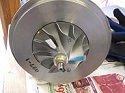
The sodium inside the valve stem helps pull heat out of the cylinders. Another reason to turbocharge the VH45.qsiguy wrote:So what's the big deal with sodium filled exhaust valves besides sounding cool?
http://www.aa1car.com/library/ar1192.htm
Any valve will eventually wear out if driven enough miles. But many valves call it quits long before they should because of burning or breakage.
Let's talk about burning first. Exhaust valves are the ones most likely to burn because they run hotter than the intakes. The intake valves are cooled by the incoming air and fuel, and consequently operate at about 800 degrees F. Exhaust valves, on the other hand, receive little such cooling and are blasted by the hot combustion gases as they exit through the exhaust port. Exhaust valves run at 1200 to 1350 degrees F. on average, which makes them much more vulnerable to erosion and burning than intakes. The higher operating temperature requires a tougher alloy, so exhaust valves are usually made of stainless steel or have stainless steel heads (typically 21-2N or 21-4N alloy with a high chromium and nickel content). For heavy-duty gasoline and diesel applications where heat is even more of a problem, a tough Stellite facing (cobalt alloy) may be needed on the exhaust valve face to control wear.
The intake and exhaust valves rely on physical contact with the valve seat and guide for cooling. About 75% of the combustion heat that is conducted away from the valve passes through the seat, so good seat contact is essential to prevent burning. The remaining 25% of the heat is dissipated up through the valve stem and out through the guides. Sodium filled hollow valve stems in heavy-duty applications are sometimes used to draw even more heat up through the stems to aid cooling.
-
Infinitiguy19
- Posts: 7787
- Joined: Sat Dec 22, 2007 4:58 pm
- Car: 1993 Infiniti Q45 188580 Miles
1994 Infiniti Q45a 240000 Miles
Re: Which Q45 Is Better? (sijoko)
I will call IOS tommorrow and I will report my findings. But they might have forgotton to take that out of the FSM i don't know.
Last edited by Infinitiguy19 on Sat Jan 08, 2011 9:43 pm, edited 1 time in total.
-
maxnix
- Posts: 22627
- Joined: Mon Jul 22, 2002 8:11 pm
- Car: 1995 Infiniti Q45
1995 Infiniti Q45t
2000 Infiniti Q45
Re: Which Q45 Is Better? (sijoko)
You'll also see the seating pattern of the earlier cars in the 1995 manual. I don't think the proof readers were too good.sijoko wrote:
If you look in the FSM for the 94 Q, you'll see that the exploded diagram for the engine mentions that the exhaust valves contain sodium and therefore must be disposed of properly. I've never cut one open to verify.
What page is that on in the 1994 FSM?
-
elwesso

- Posts: 30810
- Joined: Sun Feb 23, 2003 4:52 pm
- Car: 94 Infiniti Q45t 5 spd
2007 BMW M Coupe
2007 Infiniti G35 S 6MT - Location: Indiana
- Contact:
Re: Which Q45 Is Better? (maxnix)
I TOTALLY agree with the above. IF you only have 2k to play with, dont buy a Q. All its gonna do is bite you in the butt because something will happen and you wont have the money to fix it.
Let me tell you, buying the car, insuring it and putting gas into it are the 3 cheapest things you can do to the car.. Its all uphill from there...
What you need is 2k to buy the car, and about 3k to drop into it to make it like new. For an old exotic car, its pretty cheap to restore and usually once they're running good and everything is caught up, they run great and are very reliable... Its the years of neglect from previous owners!
I was also under the impression that the sodium filled valves were done in 92 or 93... I also think the proofreaders were mistaken, because in the 90Q FSM it has a small ditty in there about how to properly dispose of the sodium filled valves... the 94 FSM does not have that.
When I get back home in a couple days Ill compare the stem diameter from 94 to 90... The sodium filled ones should be wider...
The page sijoko is referring to from the 94 FSM is EM-25
Let me tell you, buying the car, insuring it and putting gas into it are the 3 cheapest things you can do to the car.. Its all uphill from there...
What you need is 2k to buy the car, and about 3k to drop into it to make it like new. For an old exotic car, its pretty cheap to restore and usually once they're running good and everything is caught up, they run great and are very reliable... Its the years of neglect from previous owners!
I was also under the impression that the sodium filled valves were done in 92 or 93... I also think the proofreaders were mistaken, because in the 90Q FSM it has a small ditty in there about how to properly dispose of the sodium filled valves... the 94 FSM does not have that.
When I get back home in a couple days Ill compare the stem diameter from 94 to 90... The sodium filled ones should be wider...
The page sijoko is referring to from the 94 FSM is EM-25
-
maxnix
- Posts: 22627
- Joined: Mon Jul 22, 2002 8:11 pm
- Car: 1995 Infiniti Q45
1995 Infiniti Q45t
2000 Infiniti Q45
Re: Which Q45 Is Better? (elwesso)
EM-25 is just an exploded engine view in the 1995 FSM.
I think that with only $2K to purchase and he's thinking about switching fron ends, the message is lost.
I think that with only $2K to purchase and he's thinking about switching fron ends, the message is lost.
-
elwesso
- Posts: 30810
- Joined: Sun Feb 23, 2003 4:52 pm
- Car: 94 Infiniti Q45t 5 spd
2007 BMW M Coupe
2007 Infiniti G35 S 6MT - Location: Indiana
- Contact:
Re: Which Q45 Is Better? (maxnix)
Yeah but if you look at where it says SODIUM FILLED EXHAUST VALVES in the 94 FSM...maxnix wrote:EM-25 is just an exploded engine view in the 1995 FSM.
I think that with only $2K to purchase and he's thinking about switching fron ends, the message is lost.
This is in the big (non bible sized) 94 FSM (on PDF)
Re: Which Q45 Is Better? (maxnix)
The 90-93 is what the Q45 was intended to be. When I first got mine, it felt so good to drive a car. Everything was perfecto!! The armrest moves with the drivers seat--makes it feel like I'm watching football on my couch at home.
I liked it so much I had to get one with HICAS. So I found the 94 Q45t. The HICAS is awesome but I was very disapointed at the driving feel of the 94, you have to slow down more often for turns, feels like a grandma's car. Its slightly more luxury but its like the Q45 lost its mojo in 1994.
My 93 pulls STRONG after 140mph, thats on a windy day, sunroof+ all windows open with 4 heavy people in the car. My 94 lost its pull after 135. BIG DIFFERENCE in power. I also get better mileage in my 93.
I don't understand what these other guys are talkin about... IMO the 90-96 Q45 is lightweight when it comes to maintenance. Its like a Honda, but V8.
I liked it so much I had to get one with HICAS. So I found the 94 Q45t. The HICAS is awesome but I was very disapointed at the driving feel of the 94, you have to slow down more often for turns, feels like a grandma's car. Its slightly more luxury but its like the Q45 lost its mojo in 1994.
My 93 pulls STRONG after 140mph, thats on a windy day, sunroof+ all windows open with 4 heavy people in the car. My 94 lost its pull after 135. BIG DIFFERENCE in power. I also get better mileage in my 93.
I don't understand what these other guys are talkin about... IMO the 90-96 Q45 is lightweight when it comes to maintenance. Its like a Honda, but V8.