^ THIS x 40-blue million.mattblancarte wrote:"Setting proper tax goals" is another way of saying "keeping as much money in the hands of the private citizen as possible" to me.
Again, the logical outcome to avoid people adjusting their lifestyles is not the abolition of taxes altogether. It is to take an aggressive stance against cost inflation at all levels of government.
"Subject to conditions of equity and individual survivability" is another way of saying that.
I don't know what kind of analysis you've seen of government spending and policy in the last decade, but it does not represent that kind of attitude and control.

The Poor Rich
-
AZhitman

- Administrator
- Posts: 54538
- Joined: Mon Apr 29, 2002 2:04 am
- Car: 58 L210, 63 Bluebird RHD, 64 NL320, 65 SPL310, 66 411 RHD, 67 WRL411, 68 510 SR20, 75 280Z RB25, 77 620 SR20, 79 B310, 90 Z32, 91 GTi-R, 92 Silvia Qs, 98 S14, 23 Z.
- Location: Surprise, Arizona
- Contact:
Re: The Poor Rich
Re: The Poor Rich
Heheh, I was just reading this article and it seemed a good place to pass on a quote:
Let's see if we can offer a snapshot of the national mood just now. Fast-forward toward the end of "National Lampoon's Christmas Vacation," after Clark Griswold discovers that his holiday bonus is a subscription to the Jelly of the Month Club. Ripping the envelope to shreds, Clark describes what I would call the American people's current, bipartisan view of their political leadership: a "cheap, lying, no good, rotten, four-flushing, low-life, snake-licking, dirt-eating, inbred, overstuffed, ignorant, bloodsucking, dog-kissing, brainless, hopeless, heartless . . . worm-headed sack of monkey bleep!"
http://online.wsj.com/article/SB1000142 ... 80452.html
Let's see if we can offer a snapshot of the national mood just now. Fast-forward toward the end of "National Lampoon's Christmas Vacation," after Clark Griswold discovers that his holiday bonus is a subscription to the Jelly of the Month Club. Ripping the envelope to shreds, Clark describes what I would call the American people's current, bipartisan view of their political leadership: a "cheap, lying, no good, rotten, four-flushing, low-life, snake-licking, dirt-eating, inbred, overstuffed, ignorant, bloodsucking, dog-kissing, brainless, hopeless, heartless . . . worm-headed sack of monkey bleep!"
http://online.wsj.com/article/SB1000142 ... 80452.html
-
IBCoupe

- Posts: 7534
- Joined: Sun May 17, 2009 11:51 am
- Car: '08 Nissan Altima Coupe 3.5SE
'19 Infiniti QX50 FWD
'17 BMW 330e iPerformance - Location: Orange County, CA
Re: The Poor Rich
Why? They're easily reconcilable: "I'd love to have more money, but I'm not going to cry if I don't because I'm doing fine." There's two principles: "More money is good," and "Any money is better than no money."mattblancarte wrote:You're sending me mixed signals. The first quote sounds good and reasonable. You lost me on the second one.
I was operating under the assumption that you were responding to my comment in the way that I had intended it to be used, and, in my view, you were raising irrelevancies. I got snippy and there was that "Ta-dah! Logic!" line when I tried to explain to you the point that was made within the context of the comment that you responded to.mattblancarte wrote:I feel the same way. I guess I had to give a little back after you began to repeatedly insult my intelligence in a passive-aggressive manner.
Upon review of the conversation you very quickly started trying to make the conversation about what I think, rather than the message of the point I was making, with me as an example. So while you'll get an apology from me for arguing against you as if you had made Stebo's comments, I'm not going to apologize for getting frustrated when you chose to go after my beliefs rather than my arguments for two reasons: 1) as we've discovered, you didn't understand my argument because you weren't considering what it was in response to, and 2) you made the mistake of assuming my arguments were my belief.
What you saw as new arguments were really just an explanation of my first arguments, compounded by my conflation of yours and Stebo's comments.
Perfectly logical. That works fine until you start responding to comments people have made to other arguments a full page in. At that point, it's more important to look at the conversation than it is to look at the individual comments that make it up.mattblancarte wrote:Fair enough. I chose to use the topic of the thread (the professor's blog post) as my reference.
And if you look back at the quote you chose to respond to, and then at that quote's conversational context, they don't look as much like arguments as they do explanations.IBCoupe wrote:Reading back through our discussion, I'm more often than not responding to arguments that you've laid out for me to tackle. Often at your own expense because you've used yourself as the target reference for your arguments.
There were actual arguments that came out of your supposition that the $2500 couldn't go towards paying his employees anymore. That was a fresh line of debate, and that's not what I got snippy about until you started trying to analyze my beliefs there, too.
This is where you and I part ways. That they impede on a person's life does not mean that they suck. I like this:mattblancarte wrote:Absolutely, it does. Taxes inherently suck.
Justice Oliver Wendell Holmes, Jr. wrote:I like to pay taxes. With them I buy civilization.
I disagree. Setting proper tax goals means not looking taxes as something that affects people as much as we look at it as something that funds government. If you look at it the way you're doing, the obvious solution in order to keep money in people's hands is to lower taxes. If you look at it the way I propose, the obvious solution is to shrink government.mattblancarte wrote:"Setting proper tax goals" is another way of saying "keeping as much money in the hands of the private citizen as possible" to me.
Yes it is, but notice that those are conditions on the major premise. Those things are limitations on the main principle, but you can't ever lose sight of the primary purpose.mattblancarte wrote:"Subject to conditions of equity and individual survivability" is another way of saying that.
I'm not sure what you're getting at, but I dont' know that the current practices of government are relevant.mattblancarte wrote:I don't know what kind of analysis you've seen of government spending and policy in the last decade, but it does not represent that kind of attitude and control.
So this should be perfectly obvious by now, as I've explained it to pretty decent lengths earlier in this post: this is only the trying to explain to you my comment to Stebo that you chose to respond to out of context. Okay?mattblancarte wrote:This:IBCoupe wrote:I don't buy into the "problems" of the people who make more.
So you've decided to take my response to this instant case and assume that I believe a certain thing in all cases? Yeah, okay. Please stop doing that.mattblancarte wrote:OPM. Other people's money.IBCoupe wrote:Short answer: no, it doesn't mean that. Similarly, it doesn't mean that we must show sympathy. And I choose not to, because the money doesn't get torched.
At the risk of opening myseulf up to more personal attacks, I'll explain: if I have a lack of sympathy for rich people in general, it's only because I have a lack of sympathy for all people in general. You're still trying to score points on the wealth envy thing, when I've already explained how I can both want more money and be satisfied without it.
At this point, I'll point you back to Justice Holmes. If I have the money available, I won't say it. Last year was the first year I got a motor vehicle tax bill for more than $50. It was a lot higher than I thought it would be, but I didn't think it sucked - I just sent it in.mattblancarte wrote:There is no freaking way that you can convince me that you'd write an additional $2500 check to the federal government and not think that it sucks even just a little bit.

You know how in movies people will sometimes get hurt, or a bomb would go off in a city and thousands of men, women, and children would die? As a kid watching those movies, I mourned the cats, dogs, rats, birds and squirrels. Of all the deaths in Jurassic Park, I choked up about the cow and the goat.mattblancarte wrote:Good god man. Where's your humanity?

I'm not a people person, and never have been.
See above. In a world where all men are created equal, people are interchangeable, especially when we're talking about taking money away from one person in a system where it invariably ends up with another. I think I wrote earlier to you or someone else: I can't think of a government program that doesn't result in money going into someone's wages.mattblancarte wrote:Yes, you're missing the fact that those variables represent humans.I employ people so I guess I feel a little more down to earth on the whole tax issue.
I don't think there's anything necessarily bad about the Tax Professor not getting to choose who gets his money.
-
audtatious

- Moderator
- Posts: 25014
- Joined: Sun Oct 27, 2002 5:31 pm
- Car: 2017 Q60 Red Sport. Gone: 2014 Q50s, 2008 G37s coupe, 2007 G35s Sedan, 2002 Maxima SE, 2000 Villager Estate (Quest), 1998 Quest, 1996 Sentra GXE
- Location: Stalking You
- Contact:
Re: The Poor Rich
Being a Professor and living in Chicago I think the guy should be living off IB's $42k while giving the rest to the Obama Administration which he probably supported in the first place. Let them decide who should get the rest of the moniez

-
AZhitman
- Administrator
- Posts: 54538
- Joined: Mon Apr 29, 2002 2:04 am
- Car: 58 L210, 63 Bluebird RHD, 64 NL320, 65 SPL310, 66 411 RHD, 67 WRL411, 68 510 SR20, 75 280Z RB25, 77 620 SR20, 79 B310, 90 Z32, 91 GTi-R, 92 Silvia Qs, 98 S14, 23 Z.
- Location: Surprise, Arizona
- Contact:
Re: The Poor Rich
...and yet I got lambasted for my views on welfare.IBCoupe wrote:I have a lack of sympathy for all people in general.
...I mourned the cats, dogs, rats, birds and squirrels. Of all the deaths in Jurassic Park, I choked up about the cow and the goat.
I'm not a people person, and never have been.

I'M a people person. I could give a damn about cats, dogs, rats, birds and squirrels (not that I wish them any harm), but I believe human life is incredibly valuable - So how is it that you crucified me for saying that it's OK for people to "starve"?
Not looking for you to defend your position, as it's completely antithetical - But it's quite ironic, and leads me to believe that one of us isn't quite being honest with ourselves.
-
IBCoupe
- Posts: 7534
- Joined: Sun May 17, 2009 11:51 am
- Car: '08 Nissan Altima Coupe 3.5SE
'19 Infiniti QX50 FWD
'17 BMW 330e iPerformance - Location: Orange County, CA
Re: The Poor Rich
Greg, as I've repeatedly explained: I don't always argue the things I believe. If you're looking for me to admit that the things I've said in the past aren't consistent with what I've just explained as my personal values, I freely and happily admit it.
Many of our political issues are a balancing of multiple factors that are often in conflict. If an issue is, at its most basic level, broken down into principles A, B, and C, people will usually advocate one or two of them. I just seek, in my arguments, to advocate whatever's left out, or is, at the very least, in the minority opinion.
Many of our political issues are a balancing of multiple factors that are often in conflict. If an issue is, at its most basic level, broken down into principles A, B, and C, people will usually advocate one or two of them. I just seek, in my arguments, to advocate whatever's left out, or is, at the very least, in the minority opinion.

-
IBCoupe
- Posts: 7534
- Joined: Sun May 17, 2009 11:51 am
- Car: '08 Nissan Altima Coupe 3.5SE
'19 Infiniti QX50 FWD
'17 BMW 330e iPerformance - Location: Orange County, CA
Re: The Poor Rich
Damnit! Either that's really funny, really pointed, or really insulting (or some combination of the three)... but the image is blocked at work. I hate missing out.
Sometimes I can guess what it is by the name of the image file, but "paulthurs... stump" doesn't help.
Sometimes I can guess what it is by the name of the image file, but "paulthurs... stump" doesn't help.
-
AZhitman
- Administrator
- Posts: 54538
- Joined: Mon Apr 29, 2002 2:04 am
- Car: 58 L210, 63 Bluebird RHD, 64 NL320, 65 SPL310, 66 411 RHD, 67 WRL411, 68 510 SR20, 75 280Z RB25, 77 620 SR20, 79 B310, 90 Z32, 91 GTi-R, 92 Silvia Qs, 98 S14, 23 Z.
- Location: Surprise, Arizona
- Contact:
Re: The Poor Rich
All three. It's a picture of a stump.IBCoupe wrote:Damnit! Either that's really funny, really pointed, or really insulting (or some combination of the three)...
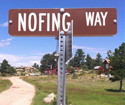
Re: The Poor Rich
Is that Al Gores dead aunt?
-
IBCoupe
- Posts: 7534
- Joined: Sun May 17, 2009 11:51 am
- Car: '08 Nissan Altima Coupe 3.5SE
'19 Infiniti QX50 FWD
'17 BMW 330e iPerformance - Location: Orange County, CA
Re: The Poor Rich
I don't get it.
Re: The Poor Rich
I dont either, I didnt pass after 2 puffsIBCoupe wrote:I don't get it.

-
IBCoupe
- Posts: 7534
- Joined: Sun May 17, 2009 11:51 am
- Car: '08 Nissan Altima Coupe 3.5SE
'19 Infiniti QX50 FWD
'17 BMW 330e iPerformance - Location: Orange County, CA
Re: The Poor Rich
Finally, a reference I understand!