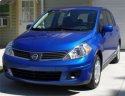
This is my first car with a tire pressure monitoring system and I’m glad I have it as a reminder. The light came on I checked the pressure and all four tires where a few pounds either side of 27psi. The tire displays the max as 44! So I assume they lost pressure since manufacture which was around August 09 and I bought it late October 09 almost right off the truck lol. I stopped filled up two tires to 35psi as that’s all the stupid compressor at that gas station would do before it died. Drove to the next gas station and the tire pressure light went off with two of my four tires at 35psi and the other two in the mid to high 20’s? I filled all four up to 40psi and all is well again so nothing to worry about.
I found it odd that it does this? Reminds me to check the pressure on each tire the old fashioned way! So I don’t end up with one running too low on air at any point and it not being detected. I assume this behavior is normal for this car?

Tire Pressure Light@25psi
Re: Tire Pressure Light@25psi (aidan80)
I think you filled your tires too full. Look inside the drivers door and there is a table to show how much PSI should be in both front and rear tires. Filling them too full can result in a blow out. I belive the table shows 33 psi but don't quote me because i fille dmine about a mont ago and forgot already. And yes tires do loss air over time due mostly weather and temp changes.
Re: Tire Pressure Light@25psi (Brad17w)
Depending on your wheels and tires. I run 38psi for my 17in wheels. I would think 40psi on the OEM wheels might be a tad much.
-
led hed

- Posts: 126
- Joined: Wed Oct 28, 2009 2:33 pm
- Car: 2009 Nissan Versa SL HB 6spd
- Location: Ontario, Canada
Re: Tire Pressure Light@25psi (steed77)
seems those pressure sensors are problematic. i'm glad i don't have them, and i wouldn't want them , i'll check mine manually from time to time.
-
Shad0wXCalibur
- Posts: 622
- Joined: Wed Apr 23, 2008 10:02 am
- Car: Nissan Versa SL Sedan
Re: Tire Pressure Light@25psi (led hed)
Seems like it's working to me. It will come on if pressure is about 27 or lower. To make mine go off, I air them all up to 35 PSI (do this cold! IE: car's been sitting) then drive around (70 mph on interstate works well) and the pressure will go up a little and turn the light back off. If it still hasn't gone off, try up to 40 PSI then just let a little air out after the light goes back off.
-
VersaMG08

- Posts: 2059
- Joined: Wed May 28, 2008 5:16 pm
- Car: '10 Mazda 3 s hatchback
'14 Nissan 370z - Location: Prescott Valley, AZ
Re: Tire Pressure Light@25psi (Shad0wXCalibur)
That's the biggest reason why I hate those things, so annoying. I'd rather do it manually.
-
iluvmyVersa08
- Posts: 1540
- Joined: Mon Sep 01, 2008 2:49 pm
- Car: 2008 Nissan Versa SL Sport
- Location: Hamilton, Ontario, Canada
Re: Tire Pressure Light@25psi (VersaMG08)
So I should be happy our Canadian Versa's did not come w/ this feature ???VersaMG08 wrote:That's the biggest reason why I hate those things, so annoying. I'd rather do it manually.
Also, my nitrogen filled stock tires, have not had to be filled ONCE since purchasing the car in April of 2008!
Re: Tire Pressure Light@25psi (iluvmyVersa08)
filled them at 33 psi and u shouldnt have tht problem anymore.
Re: Tire Pressure Light@25psi (Brad17w)
I'll check the drivers door but I usually check the tire sidewall themselves to see what the max PSI is. I checked and checked again and unless I need glasses I'm seeing the max PSI at 44? I've an 09 Versa S, stock everything. Did they changes tires or anything at any point between models or years? Is there a reason mine would be rated at 44PSI? I'll check the manual as well as the door just to be 101% and when it's light out I'll check the tire sidewalls again to confirm that I seen 44PSI correctly. Let's hope I'm wrong! and I'll ditch a some air. Luckily I've only driven about 20 miles on it so far back and forth to work.
Thanks for the responses!
Thanks for the responses!
-
alonsorules8
- Posts: 380
- Joined: Mon Jun 18, 2007 2:15 pm
- Car: 2008 Nissan Versa SL HB
Re: Tire Pressure Light@25psi (aidan80)
The tire manufacture has it rated at 44 psi on the tire because the tire can fit many different vehicles.
The 07 through 10 Nissan Versa's base, S, SL models call for the tire pressure to be at 33 psi all the way around. This pressure gives you the best handling characteristics and best gas mileage with out sacrificing safety.
If you decide to run your tires at 40 to 45 psi you run the risk of loosing grip and handling during cornering and in windy conditions, plus the possibility of tire blowouts. If you run your tires between 20-25 psi you run the risk of side wall damage and tire failure due to to much weight on under inflated tires.
The 07 through 10 Nissan Versa's base, S, SL models call for the tire pressure to be at 33 psi all the way around. This pressure gives you the best handling characteristics and best gas mileage with out sacrificing safety.
If you decide to run your tires at 40 to 45 psi you run the risk of loosing grip and handling during cornering and in windy conditions, plus the possibility of tire blowouts. If you run your tires between 20-25 psi you run the risk of side wall damage and tire failure due to to much weight on under inflated tires.
Re: Tire Pressure Light@25psi (alonsorules8)
So Nissan is saying put in 33psi and continental are saying the tire can take up to 44psi. So if it's safe to fill up to 44psi how could I be running the risk of damage to the tires? Sounds like Nissan is saying one thing and the people that made the tires have something else stamped to the side of the tire? Shouldn't they both match? To the average person that reads the tire they might well put in the full 44psi and risk killing themselves or doing damage to their car.alonsorules8 wrote:The tire manufacture has it rated at 44 psi on the tire because the tire can fit many different vehicles.
The 07 through 10 Nissan Versa's base, S, SL models call for the tire pressure to be at 33 psi all the way around. This pressure gives you the best handling characteristics and best gas mileage with out sacrificing safety.
If you decide to run your tires at 40 to 45 psi you run the risk of loosing grip and handling during cornering and in windy conditions, plus the possibility of tire blowouts. If you run your tires between 20-25 psi you run the risk of side wall damage and tire failure due to to much weight on under inflated tires.
I'll check the door, the manual and follow it's directions. Has anyone complained about this or did I miss something and is this a standard practice on cars? Sounds like an open door for someone and a greedy lawyer to make some cash out of this and the confusion as to how much air should be in the tires?
-
Shad0wXCalibur
- Posts: 622
- Joined: Wed Apr 23, 2008 10:02 am
- Car: Nissan Versa SL Sedan
Re: Tire Pressure Light@25psi (aidan80)
The max PSI on the tire sidewall is not what you're supposed to daily drive with. It's just that. A maximum. It's mainly to tell you what it COULD handle and give you an idea of how well the tire is built. However, if you actually drive around with 44 PSI, you will have center wear, less traction, and a REALLY bumpy ride and one decent sized pothole will most likely bust it. I air mine up to 38-40 PSI for a firmer, better handling ride and more even wear but that's the max you should probably put in the tires.
-
iluvmyVersa08
- Posts: 1540
- Joined: Mon Sep 01, 2008 2:49 pm
- Car: 2008 Nissan Versa SL Sport
- Location: Hamilton, Ontario, Canada
Re: Tire Pressure Light@25psi (alonsorules8)
For my winter tires they don't have nitrogen, and my dad always fills them to 33 PSI ...alonsorules8 wrote:The tire manufacture has it rated at 44 psi on the tire because the tire can fit many different vehicles.
The 07 through 10 Nissan Versa's base, S, SL models call for the tire pressure to be at 33 psi all the way around. This pressure gives you the best handling characteristics and best gas mileage with out sacrificing safety.
If you decide to run your tires at 40 to 45 psi you run the risk of loosing grip and handling during cornering and in windy conditions, plus the possibility of tire blowouts. If you run your tires between 20-25 psi you run the risk of side wall damage and tire failure due to to much weight on under inflated tires.
-
Bubs daddy
- Posts: 834
- Joined: Tue Dec 26, 2006 5:29 pm
- Car: 2007 Nissan Versa SL
ABS, CVT
Re: Tire Pressure Light@25psi (iluvmyVersa08)
One is max pressure, one is recommended pressure for all around good mileage, handling and ride comfort.
You can put 44 psi in. You then have excessive wear, a harsher ride and in many ways, worse handling characteristics.
Do you want the max pressure to be 33? You then have zero room for tire catastrophe.
You can set your thermostat for 85 degrees in the winter. Your house will stay at 85 degrees. Is that what you want? You pay much higher heating bills and you'll be more uncomfortable.
You can put 44 psi in. You then have excessive wear, a harsher ride and in many ways, worse handling characteristics.
Do you want the max pressure to be 33? You then have zero room for tire catastrophe.
You can set your thermostat for 85 degrees in the winter. Your house will stay at 85 degrees. Is that what you want? You pay much higher heating bills and you'll be more uncomfortable.
-
silverarrow27
- Posts: 460
- Joined: Thu Sep 16, 2004 7:25 am
Re: Tire Pressure Light@25psi (Bubs daddy)
Understood, 44 is max and 33 is what is best. All four tires now have 33psi in them, so back to what is standard for this vehicle. I don't know where I got the idea that tires had to be filled to the level listed on the sidwall.
Ah well one of the many benefits of being on a message board like this is to get good information on the same product we all share.
Thanks
Ah well one of the many benefits of being on a message board like this is to get good information on the same product we all share.
Thanks
-
bladesbravo
- Posts: 41
- Joined: Mon Mar 31, 2008 2:33 pm
- Car: Nissan Versa '08 SL
Re: Tire Pressure Light@25psi (aidan80)
Nissan has a pretty fuzzy line when it comes to tire pressure, I was having trouble on my Versa with the low pressure light never going out. So the next time I brought my car in for warranty work I mentioned it to them and they said they would take a look at it. I have the stock tires so the label in the door (33 psi) should be accurate. That afternoon the Nissan tech calls up and when asked about the tires he said, "Yea, they were low, we filled them up to Nissan's recommended 35 psi and the light went out."
-
iluvmyVersa08
- Posts: 1540
- Joined: Mon Sep 01, 2008 2:49 pm
- Car: 2008 Nissan Versa SL Sport
- Location: Hamilton, Ontario, Canada
Re: Tire Pressure Light@25psi (aidan80)
Yes fill with 33 PSI ... that's what I do. I think it's listed when you open up your door ? Or maybe in the driver's book it came with. Either way it's somewhere there, I looked it up before when we switched the all-seasons to winters last year.aidan80 wrote:Understood, 44 is max and 33 is what is best. All four tires now have 33psi in them, so back to what is standard for this vehicle. I don't know where I got the idea that tires had to be filled to the level listed on the sidwall.
Ah well one of the many benefits of being on a message board like this is to get good information on the same product we all share.
Thanks
-
boxcarbill
- Posts: 229
- Joined: Wed Sep 05, 2007 9:47 pm
- Car: '07 Versa SL hatch 6 speed white/beige int.
-
silverarrow27
- Posts: 460
- Joined: Thu Sep 16, 2004 7:25 am
Re: (boxcarbill)
What is the max tire pressure on your current tires? I personally think the 33 psi standard thing is for stock Conti tires. 33 psi on my new tires still looks flat, that's why they're at 46 psi now and rides a whole lot smoother. Big difference in rolling friction, night and day difference.boxcarbill wrote:I run 28psi in the oversized (205/70/15) rear tires. My light is ALWAYS on.
Re: Tire Pressure Light@25psi (aidan80)
People always confuse the tire sidewall max pressure with the manufacturer recommended pressure. Nissan has recommended 33 pounds of pressure for all 4 Versa original tires based on vehicle weight, handling, etc. That is what you should use. You can ad more air, but your ride quality will suffer. Overinflated tires will tend to wear more in the center, will give you a harsher ride and might not stop the car as fast on an emergency stop. I trust what their engineers recommend.
-
silverarrow27
- Posts: 460
- Joined: Thu Sep 16, 2004 7:25 am
Re: Tire Pressure Light@25psi (V-Man)
Key part is, "Nissan has recommended 33 psi for all 4 Versa original tires...". People forget that not everyone has the stock conti's anymore.V-Man wrote:People always confuse the tire sidewall max pressure with the manufacturer recommended pressure. Nissan has recommended 33 pounds of pressure for all 4 Versa original tires based on vehicle weight, handling, etc. That is what you should use. You can ad more air, but your ride quality will suffer. Overinflated tires will tend to wear more in the center, will give you a harsher ride and might not stop the car as fast on an emergency stop. I trust what their engineers recommend.
-
iluvmyVersa08
- Posts: 1540
- Joined: Mon Sep 01, 2008 2:49 pm
- Car: 2008 Nissan Versa SL Sport
- Location: Hamilton, Ontario, Canada
Re: Tire Pressure Light@25psi (silverarrow27)
I'm using that on my winter's though as well. The stock tires have not had to have any nitrogen added to them since I bought the car in April (2008).silverarrow27 wrote:
Key part is, "Nissan has recommended 33 psi for all 4 Versa original tires...". People forget that not everyone has the stock conti's anymore.
-
silverarrow27
- Posts: 460
- Joined: Thu Sep 16, 2004 7:25 am
Re: Tire Pressure Light@25psi (iluvmyVersa08)
Sounds like you're not aware that nitrogen doesn't leak like air does that's why shops charge an arm and a leg for nitrogen in the tires alone. It saves you those trips to the gas stations to put more air into your tires.iluvmyVersa08 wrote:
I'm using that on my winter's though as well. The stock tires have not had to have any nitrogen added to them since I bought the car in April (2008).
I love checking and putting air in my tires because at the same time I can check for cracks or nails on the tires while I'm pumping air.
-
boxcarbill
- Posts: 229
- Joined: Wed Sep 05, 2007 9:47 pm
- Car: '07 Versa SL hatch 6 speed white/beige int.
Re: (silverarrow27)
I think they are 36psi max. I have the fronts at 31 and the rears at 28 and it still looks like I have too much pressure cause the centers are wearing more than the edges.
-
boxcarbill
- Posts: 229
- Joined: Wed Sep 05, 2007 9:47 pm
- Car: '07 Versa SL hatch 6 speed white/beige int.
Re: Tire Pressure Light@25psi (silverarrow27)
Exactly...far from it. I have 205/70/15s to gain some more overdrive. They are about twice the rubber as the stockers.silverarrow27 wrote: People forget that not everyone has the stock conti's anymore.
-
iluvmyVersa08
- Posts: 1540
- Joined: Mon Sep 01, 2008 2:49 pm
- Car: 2008 Nissan Versa SL Sport
- Location: Hamilton, Ontario, Canada
Re: Tire Pressure Light@25psi (silverarrow27)
No I do know that nitrogen does not leak the same way air does.silverarrow27 wrote:
Sounds like you're not aware that nitrogen doesn't leak like air does that's why shops charge an arm and a leg for nitrogen in the tires alone. It saves you those trips to the gas stations to put more air into your tires.
I love checking and putting air in my tires because at the same time I can check for cracks or nails on the tires while I'm pumping air.
My Versa came w/ it's tires prefilled with nitrogen so I haven't had to pay any extra yet to fill it nor do I have to check them all the time.
The winters need to be check regularly because they are filled w/ regular air.