2010 EX35 JOURNEY Platinum GraphiteI'd like some feedback on those who have tinted windows, particularly which % and whether tinting all around could be a problem.
I live on the East Coast Jersey, about 20min from NYC, and found this about tints in Jersey:
"No after market tint may be applied to front driver and passenger windows. After market tint on rear windows may not cover the 3rd brake light. Windshields may only be tinted 20% down from the top to help avoid sun glare. No mirror tint allowed anywhere on the vehicle. "http://www.topofthelinetint.com/auto_06.html
Also what is the average price have you paid for tints? I'd appreciate any feedback

Tints on 2010 EX35
-
D.I.E.S.E.L
- Posts: 38
- Joined: Sun Jan 03, 2010 12:31 pm
- Car: 2010 Infiniti Ex35 Journey
Re: Tints on 2010 EX35 (D.I.E.S.E.L)
Sounds like they don't allow much of a tint job.
Who would tint their windshield anyway???
Who would tint their windshield anyway???
-
D.I.E.S.E.L
- Posts: 38
- Joined: Sun Jan 03, 2010 12:31 pm
- Car: 2010 Infiniti Ex35 Journey
Re: Tints on 2010 EX35 (txgcoupe)
well that's only 1 source;
Windshield No tint is allowed on the windshield. Front Side Windows No tint can be applied legally to this window. Back Side Windows Any darkness can be used. Rear Window Any darkness can be used.
You have tinted windows?
Windshield No tint is allowed on the windshield. Front Side Windows No tint can be applied legally to this window. Back Side Windows Any darkness can be used. Rear Window Any darkness can be used.
You have tinted windows?

Re: Tints on 2010 EX35 (D.I.E.S.E.L)
basically on the EX u have to pretend its a SUV otherwise in NJ and NY there are no tints under 35% or 30% cant remember.D.I.E.S.E.L wrote:well that's only 1 source;
Windshield No tint is allowed on the windshield. Front Side Windows No tint can be applied legally to this window. Back Side Windows Any darkness can be used. Rear Window Any darkness can be used.
You have tinted windows?
Now if you state to the officer (in the event you get pulled over) that this is a CUV and not a wagon, you can tint rear side windows, rear quarterpanel window and rear windshield i'd say at most 20% ~
actually i'm about to get mine done, i just didnt want to do it in the middle of this s***tastic freezing spell we have right now.
Don't use dyed or metallic tints because it messes with reception and dyed tint is ghetto.
ur best tint is ceramic or graphite.
cermamic tint will run you almost $400, whereas grahipte will be cheaper ~ (when i go i'll tell you how much they charged me)
Re: Tints on 2010 EX35 (JCL622)
No reception issues at all with my metallic tint.
Satellite, Navigation or cell phone.
Possible interference but not likely.
John
Satellite, Navigation or cell phone.
Possible interference but not likely.
John
Re: Tints on 2010 EX35 (txgcoupe)
really?? maybe i just had bad luck then. I would consistently drop about 2-3 bars of reception depending what phone i had (this was in the Z so maybe technology has gotten that much better?), and i had the worst radio reception ever.....sine then i have shelled out the extra cash for ceramics, and more recently graphite tints since they are cheapertxgcoupe wrote:No reception issues at all with my metallic tint.
Satellite, Navigation or cell phone.
Possible interference but not likely.
John
Re: Tints on 2010 EX35 (JCL622)
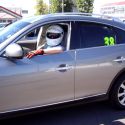
I truly think you could not have darker tint then mine and I always have full bars on all cell's as well as a fully functional radar/laser detector
Just my take
Just my take
Re: Tints on 2010 EX35 (RioD007)
metallic tint?RioD007 wrote:I truly think you could not have darker tint then mine and I always have full bars on all cell's as well as a fully functional radar/laser detector
Just my take
just failed inspection in MA today with 35 front, 15 rear. the law in this asinine state is that if its not oem glass then the aftermarket tint MUST be 35 all around. and the kicker is that the salesman said the ex comes with 2% and the inspecto-monkey said that the front came out to 32% so fail. MA sucks so bad in every front. so I have to have the whole thing redone and it was 'suggested' by the installer that I do metallic because he 'installs all the high end cars with that including his saab'. sound fishy?
Re: (OneOfOne)
To me it is a case of do you want to spend $250.00 or $500.00 for tint. I've always used a metallic tint on every car without issue. Cars with antenna's in the back glass and cars with the antenna's on the roofs. Never have I had an issue with either one.
I'll stick to the cheaper route until I do notice a problem.
Metallic Window Film – Problem?Today’s cars come fully equipped with so many gadgets that it’s almost possible for them to drive themselves. Newer vehicles often feature complex electronics systems, such as satellite radio that provides customized entertainment and the latest traffic conditions, GPS navigation to get the driver where he wants to go when he’s lost, keyless entry systems provide safe entrance to the vehicle, remote start allows the driver to start their vehicle from a distance so by the time they get in their vehicles it may be cool or warm already, tire pressure sensors tell drivers when their tires get too low, and radar detectors designed to avoid speeding tickets.
To work properly, these devices rely on antennas that receive signals from things as far away as the heavens (satellites) or as closeby as the next parking space (a remote control for keyless entry). Sometimes those antennas are on the roof, but other times they’re in the rear window. And, that’s where the problem comes in for Metallic Window Films. When metallized films are installed over those antennas, they interfere with the signals. That means a driver may not be able to enjoy the high technological features of his vehicle.
Ceramic Window Film – Solution?Metal films provide exceptional heat rejection and are highly durable, but they cause interference with rear window electronic systems. Dyed films are non-conductive, but they don’t last as long and they don’t provide the best heat rejection. Ceramic films provide the best of both worlds. Ceramic films also offer better visibility by reducing the reflective qualities of metallized window film while increasing the visible light transmission. This gives you a lighter film with higher heat rejection.
For those of you that are interested, here are some state laws regarding window tinting. Texas looks to be accurate. Can't say for sure their list is current.
http://www.tintcenter.com/laws
John
I'll stick to the cheaper route until I do notice a problem.
Metallic Window Film – Problem?Today’s cars come fully equipped with so many gadgets that it’s almost possible for them to drive themselves. Newer vehicles often feature complex electronics systems, such as satellite radio that provides customized entertainment and the latest traffic conditions, GPS navigation to get the driver where he wants to go when he’s lost, keyless entry systems provide safe entrance to the vehicle, remote start allows the driver to start their vehicle from a distance so by the time they get in their vehicles it may be cool or warm already, tire pressure sensors tell drivers when their tires get too low, and radar detectors designed to avoid speeding tickets.
To work properly, these devices rely on antennas that receive signals from things as far away as the heavens (satellites) or as closeby as the next parking space (a remote control for keyless entry). Sometimes those antennas are on the roof, but other times they’re in the rear window. And, that’s where the problem comes in for Metallic Window Films. When metallized films are installed over those antennas, they interfere with the signals. That means a driver may not be able to enjoy the high technological features of his vehicle.
Ceramic Window Film – Solution?Metal films provide exceptional heat rejection and are highly durable, but they cause interference with rear window electronic systems. Dyed films are non-conductive, but they don’t last as long and they don’t provide the best heat rejection. Ceramic films provide the best of both worlds. Ceramic films also offer better visibility by reducing the reflective qualities of metallized window film while increasing the visible light transmission. This gives you a lighter film with higher heat rejection.
For those of you that are interested, here are some state laws regarding window tinting. Texas looks to be accurate. Can't say for sure their list is current.
http://www.tintcenter.com/laws
John
-
D.I.E.S.E.L
- Posts: 38
- Joined: Sun Jan 03, 2010 12:31 pm
- Car: 2010 Infiniti Ex35 Journey
Re: Tints on 2010 EX35 (JCL622)
i wasn't planning on going under 30-35% anyway. I'll probably come to NY to get it done, cheaper than Jersey, from what I've heard. A friend of mine has a 06' g35 coupe, tinted front and back 30% and he doesn't get much bs from the cops.
Anyway thanks for the feedback
Modified by D.I.E.S.E.L at 7:40 AM 1/7/2010
Anyway thanks for the feedback
Modified by D.I.E.S.E.L at 7:40 AM 1/7/2010
Re: Tints on 2010 EX35 (D.I.E.S.E.L)
i'm looking to tint too, if you go with graphite tints lemme know, maybe we can do it together in NY? i'm sure that'll be even cheaperD.I.E.S.E.L wrote:i wasn't planner on going under 30-35% anyway. I'll probably come to NY to get it done, cheaper than Jersey, from what I've heard. A friend of mine has a 06' g35 coupe, tinted front and back 30% and he doesn't get much bs from the cops.
Anyway thanks for the feedback
-
D.I.E.S.E.L
- Posts: 38
- Joined: Sun Jan 03, 2010 12:31 pm
- Car: 2010 Infiniti Ex35 Journey
Re: (txgcoupe)
interesting. So you have metallic on your 2010 ex now? I was tilting towards ceramic after reading that, but is there a difference in terms of quality? That is to say can someone tell the difference between the two? Cops included
Re: (D.I.E.S.E.L)
the quality is UV transmission. Ceramic does a better job than metallic. Ceramic is also like 4 times the amount of metallic.D.I.E.S.E.L wrote:interesting. So you have metallic on your 2010 ex now? I was tilting towards ceramic after reading that, but is there a difference in terms of quality? That is to say can someone tell the difference between the two? Cops included
Also, ceramic doesnt give off that mirrored finish and is a bit more subtle (though i don't know if that affects the cops in any way)
graphite tints is the new middleman between these two, it's like 1.5 times more expensive than metallic, and blocks out harmful UV rays like 3/4 as good as ceramic. - or at least that's what they're saying so far
Re: (JCL622)
BTW just a friendly reminder, if you live in cold climates, try not to do ur tints until it warms a bit.
-
D.I.E.S.E.L
- Posts: 38
- Joined: Sun Jan 03, 2010 12:31 pm
- Car: 2010 Infiniti Ex35 Journey
Re: (JCL622)
just great. Its going to be cold for another 2 months
Re: (D.I.E.S.E.L)
give you more time to decide!D.I.E.S.E.L wrote:just great. Its going to be cold for another 2 months
haha actually an old friend of mine over at acurazine just told me of a place on Long Island that does a great job. If you're willing to make the drive im sure it'll be cheaper to do it together.
-
D.I.E.S.E.L
- Posts: 38
- Joined: Sun Jan 03, 2010 12:31 pm
- Car: 2010 Infiniti Ex35 Journey
Re: (JCL622)
what's the name of the business? I'll look into it then I'll let you know. If its going to save me money and they do it right, I'm down
Re: (D.I.E.S.E.L)
haha i actually only have a name and phone number. By the number tho, i would say he's out in Suffolk County or at least very close to it. (631 number) ... he called me up and we talked, he still has a few TLs that need to be done, and he said, if you are in a rush I can do it, but He suggested to wait until late feb at the earliest.D.I.E.S.E.L wrote:what's the name of the business? I'll look into it then I'll let you know. If its going to save me money and they do it right, I'm down
i'll pm you the number if u want.
-
D.I.E.S.E.L
- Posts: 38
- Joined: Sun Jan 03, 2010 12:31 pm
- Car: 2010 Infiniti Ex35 Journey
Re: (JCL622)
no rush. I can wait till March even. Did he say how much it would be or you didn't get to that..
PM me the # when you can
PM me the # when you can
-
ex35zigen

- Posts: 8
- Joined: Tue Feb 02, 2010 1:33 pm
- Car: 2010 Infiniti EX35 Journey AWD Nav, Premium, 18" Wheel
Black w/ Currant
Re: (JCL622)
I'm thinking about getting Huper Optik Ceramic, did some research and hear nothing but good things about it. But the price range is high, had a couple of places quote me $450-$500. Than I found a thread over at G35 forums about a place upstate NY that has good prices on Huper Optik, not sure if I can post the name. PM me if you want but he said he'll do $300. Place is about and hour from me. I guess its worth the drive.JCL622 wrote:
the quality is UV transmission. Ceramic does a better job than metallic. Ceramic is also like 4 times the amount of metallic.
Also, ceramic doesnt give off that mirrored finish and is a bit more subtle (though i don't know if that affects the cops in any way)
graphite tints is the new middleman between these two, it's like 1.5 times more expensive than metallic, and blocks out harmful UV rays like 3/4 as good as ceramic. - or at least that's what they're saying so far
-
ex35zigen
- Posts: 8
- Joined: Tue Feb 02, 2010 1:33 pm
- Car: 2010 Infiniti EX35 Journey AWD Nav, Premium, 18" Wheel
Black w/ Currant
Re: (ex35zigen)
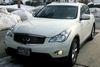
Here are some images I found on Google EX35 with Hupers Ceramic 30
Here is Huper 40
I'm thinking of going with 40 to stay away from the
Here is Huper 40
I'm thinking of going with 40 to stay away from the
Re: (zarar)
his name is Dan - 631-335-3536
tell him Joe from AZ with the EX35 referred you.
what % tint were you looking for, if enough ppl around us are interested i can ask if he can adjust the price accordingly
tell him Joe from AZ with the EX35 referred you.
what % tint were you looking for, if enough ppl around us are interested i can ask if he can adjust the price accordingly
Re: (JCL622)
I'm still debating due to previous trouble but I definately want 20% tints all around, but if I must keep avoiding cops, I will have to settle for 35% all around. If you guys get 5% and its a good deal, I will take it! You can't put a price on clean tints lol.
Re: (zarar)
haha i havent gotten tints < 20% in a LOOOOONG time.....zarar wrote:I'm still debating due to previous trouble but I definately want 20% tints all around, but if I must keep avoiding cops, I will have to settle for 35% all around. If you guys get 5% and its a good deal, I will take it! You can't put a price on clean tints lol.
you roll around West Babylon in tints that dark?! god, you're asking for it.
yea i'd go with probably 35% all around too, tho i really would avoid windshield
Re: (JCL622)
I mean ALL AROUND except windshield. Never done windshield but definitely get away with 20%, usually if I do get pulled over I roll them down, so I get away clean cause they feel dumb asking me to roll up my windows. I just say I drive with my windows down 360 days a year lol. Suffolk County is VERY easy going and lenient but it Nassau that gave me tickets for "Dirty license plate" in a snow blizzard and white LED turn signals. I have gotten away with tints at 20% on all previous cars too, I have friend with 5%, now thats asking for a license suspension haha.
Re: (JCL622)
I was thinking for going in for tints, how much to 35% all around go for these days? I'm not looking to speed too much on tints, I guess Metallic tints will be okay opposed to Ceramic.
Re: (zarar)
call dan up in the post above i have his contact info.zarar wrote:I was thinking for going in for tints, how much to 35% all around go for these days? I'm not looking to speed too much on tints, I guess Metallic tints will be okay opposed to Ceramic.
tell him Joe from acurazine/EX35forums referred you