so this weekend I plan on ripping my stereo out to replace it and take a look at a wiring problem that I've had since I owned the car, and I was wondering if anybody with some knowledge of qx4/pathy wiring could give me some guidance on where to start
so the problem:
with my headlights off the display to the Bose unit goes off when I press the brakes, but with the lights on the unit dims like it should and the brakes don't effect the display at all..also the drivers side brake light doesn't work at all; with the driving lights on it lights up but only at about 1/3 the level of the other (2) lights and when I press the brakes it just goes off again
so am I right in assuming that the drivers side headlight wiring is shorted out somewhere? i checked the bulb a few minutes ago and both filaments appear to be fine..
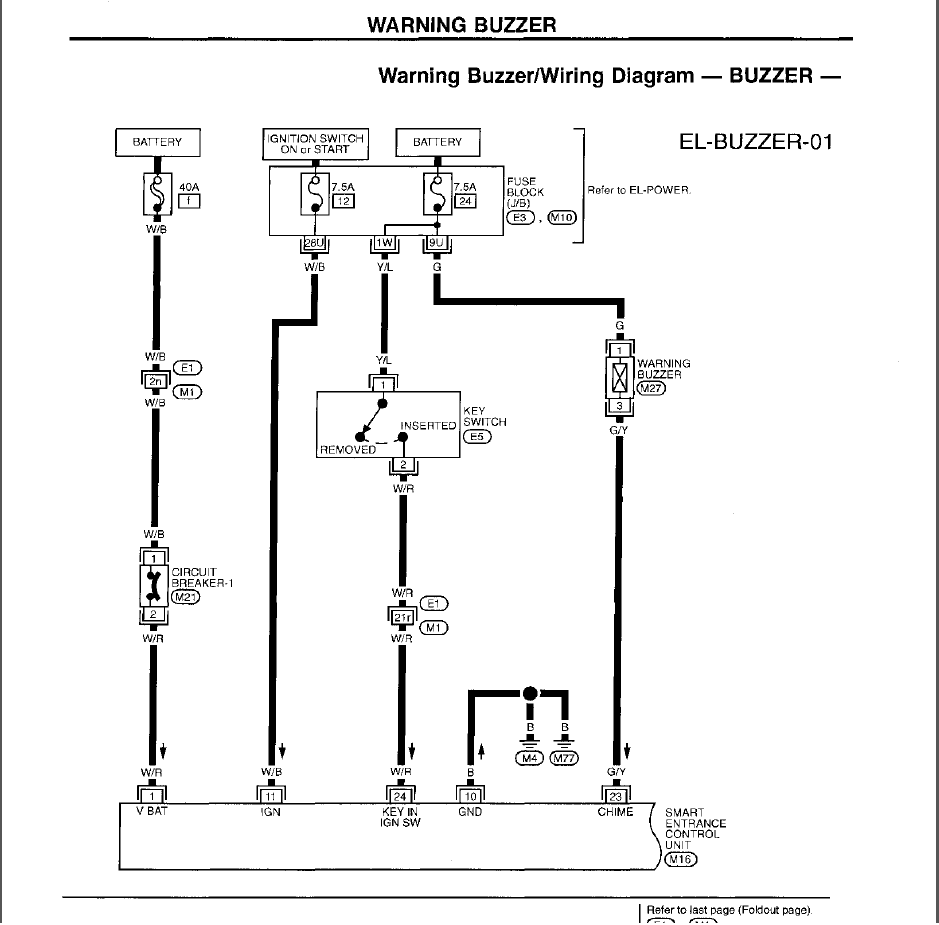
on an unrelated note: i want to attach a piezo buzzer to the wire that controls the beeping that happens when I accidentally leave my headlights on..I cant hear the tiny beeps that the qx4 gives (deployments have taken my hearing down to about 30%)..has anybody done this?

opinion on wiring problem concerning brake lights?
-
Towncivilian

- Posts: 4868
- Joined: Sun May 23, 2010 10:21 am
- Car: 2001.5 Nissan Pathfinder SE 3.5L 2WD A/T
2007 Nissan Altima 2.5L CVT
2012 Nissan Sentra 2.0L CVT Special
2012 Infiniti G37 Sedan 7A/T - Location: Florida, USA
- Contact:
Re: opinion on wiring problem concerning brake lights?
Swap your passenger brake bulb with your driver's bulb to see if the problem moves. It doesn't sound like the bulb is the issue, but it's a good idea to check anyway.
I don't see what could possibly make your Bose head unit turn off (does it turn off, or just the display becomes blank?) when you hit the brakes, other than possibly excessive power draw. Turn a map light on and hit the brakes, see if it dims significantly. The brake wiring seems self-contained, no ties to illumination (i.e. dimmer switch).
The warning buzzer is on the back of the instrument cluster (combination meter). I believe you can just splice in a new buzzer (obviously make sure it operates on +12v). See page EL-100:
I don't see what could possibly make your Bose head unit turn off (does it turn off, or just the display becomes blank?) when you hit the brakes, other than possibly excessive power draw. Turn a map light on and hit the brakes, see if it dims significantly. The brake wiring seems self-contained, no ties to illumination (i.e. dimmer switch).
The warning buzzer is on the back of the instrument cluster (combination meter). I believe you can just splice in a new buzzer (obviously make sure it operates on +12v). See page EL-100:
Re: opinion on wiring problem concerning brake lights?
great thanks a lot for that diagram
as far as the wiring goes: today I took the head unit out and looked for obvious frayed wires behind there and under the dash, but nothing glaring was wrong..I had already switched the bulbs and nothing changed..I think I finally figured it out though; it seems that the socket that holds the brake bulb in has started to rust/corrode a little and its making a contact where it shouldn't..with the bulb out everything works perfect--i'm going to try and find a replacement socket at the you-pull-it this weekend and splice it in..hopefully that'll fix it. For now im just running no bulb in that side
i still dont have any idea as to why this would cause the cd player display to go off
as far as the wiring goes: today I took the head unit out and looked for obvious frayed wires behind there and under the dash, but nothing glaring was wrong..I had already switched the bulbs and nothing changed..I think I finally figured it out though; it seems that the socket that holds the brake bulb in has started to rust/corrode a little and its making a contact where it shouldn't..with the bulb out everything works perfect--i'm going to try and find a replacement socket at the you-pull-it this weekend and splice it in..hopefully that'll fix it. For now im just running no bulb in that side
i still dont have any idea as to why this would cause the cd player display to go off
-
Towncivilian
- Posts: 4868
- Joined: Sun May 23, 2010 10:21 am
- Car: 2001.5 Nissan Pathfinder SE 3.5L 2WD A/T
2007 Nissan Altima 2.5L CVT
2012 Nissan Sentra 2.0L CVT Special
2012 Infiniti G37 Sedan 7A/T - Location: Florida, USA
- Contact:
Re: opinion on wiring problem concerning brake lights?
Glad you figured it out. I'd be sure to solder the new socket in and use electrical tape, then heatshrink to ensure a good connection and proper insulation. And yeah, your head unit display shutting off is rather strange, perhaps there's a ground nearby that's getting energized by the shorted wire and causing issues. In fact, since the rear Bose amp is near the driver's side taillight and there is indeed a ground screw nearby, that does seem like a logical conclusion, depending on where exactly the shorted wire is contacting.
-
ottofalcon

- Posts: 70
- Joined: Tue Mar 01, 2011 1:53 pm
- Car: 2004 Nissan Pathfinder SE
2001 Volvo S40t
1991 Mitsubishi Montero LS 3.0 - Location: Guaynabo, Puerto Rico
Re: opinion on wiring problem concerning brake lights?
im having this exact problem, when i had the stock bose radio and i used the brakes the display would dim, i swapped it out and installed a clarion and if I brake it does the same thing, also the compass does the same thing.
So looking around for the problem i found that the passenger side rear brake light socket had some corrosion so i bought a new one, problem still there.
The other thing that happens is that when I turn on the lights doesnt matter if its just the tails or all of them, when i brake the driver side light turns off then the passenger side turns on and when i release the brake it turns off and the drivers side light turns on.
Something that i found very curious is that if i turn off the lights and leave the brake pressed the fog lights stay illuminated (I connected my fog lights to my side markers) So i would assume their is a short somewhere and it has to do with the brake circuit because the wiring for the hid's in the fog lights is not connected to the factory harness it is a standalone wiring from the battery to a relay that gets the signal from the side markers and then to the fogs, obviously their is also a ground for the relay.
Where could the short be?
Where is the most prone area for a wire to ground itself?
So looking around for the problem i found that the passenger side rear brake light socket had some corrosion so i bought a new one, problem still there.
The other thing that happens is that when I turn on the lights doesnt matter if its just the tails or all of them, when i brake the driver side light turns off then the passenger side turns on and when i release the brake it turns off and the drivers side light turns on.
Something that i found very curious is that if i turn off the lights and leave the brake pressed the fog lights stay illuminated (I connected my fog lights to my side markers) So i would assume their is a short somewhere and it has to do with the brake circuit because the wiring for the hid's in the fog lights is not connected to the factory harness it is a standalone wiring from the battery to a relay that gets the signal from the side markers and then to the fogs, obviously their is also a ground for the relay.
Where could the short be?
Where is the most prone area for a wire to ground itself?
Re: opinion on wiring problem concerning brake lights?
Automotive grounding is a means to save wire and cabling. It works because the vehicle is made from steel.
It has many problems because it is made from steel.
Copper and steel do not operate well with the introduction of salt...and then water. The combination of these elements create differing electron..ic, aberrations that are predictable only because they interfere with electron flow. But to know exactly what is taking place is a crap shoot, why?
A dissimilar electrical joint by itself will wear out over time.
That joint now introduced to a 12-15 V electrical charge will change things.
Apply a current to that joint and things change again
With voltage and current affecting this joint along with time and add to this the hands of a not to expert person applying force, knife, cutters, black tape or heat from a soldering iron, solder, flux...its easy to see that the original joint stops being a good conductor but more of a semi-conductor or even an insulator.
Ground or common becomes a return path for the source of energy and energy used by humans in the form of electricity travels from the source, to and through the device, to and through the conductors back to the source. It is this return path that really messes things up.
The return path is ground or negative as compared to positive from the storage tank, the battery and all grounds in the vehicle are at the same potential, and all grounds lead to the same place...back to the negative side of the battery.
Over time all ground wires, connections, joints become bad..all, no exception. If your vehicle is over 3 years old the wiring is old. Old wiring and old connections fail, they have different rates of failure. When they fail enough, the ground for a failed device will seek out yet another ground in the system. Because they are all grounded using the car's body, frame, that failed ground could find any number of parallel return lines back to battery. During this type of problem the return amperage can play havoc with the device's grounding.
This is seen on older cars when the brakes are applied. The 2 rear brake lights either come on the same brightness, one is very bright the other dim, or one side goes from off, to dim, to not so bright.
Along with grounding problems is induction, self induction and mutual induction. A wire carrying a DC current can and will induce a voltage within another wire running parallel and close to the wire carrying the power.
The problems you are seeing within your dash may be the act of electron movement and electricity that we know and study involves the movement of electrons.
I cannot tell you what exactly your problem is, but I can tell you induction and ground effects are playing havoc within your systems.
Do not use dielectric grease indiscriminately, basically any grease is a dielectric at 12 V. When repairing grounds use common sense, sand paper, file, steel wool, compressed air, contact cleaner, brake cleaner. Open the joint, blow it off, spray and/or scrape the crap off, blow, then spray then blow dry. Make and break the joint to knock further garbage off. Then make the joint, only after the joint is made and tested good should any grease be applies, especially dielectrics. Because if the joint is bad you will have to clean off that grease and start over.
The task at hand will take patience, effort and skill, good luck!
It has many problems because it is made from steel.
Copper and steel do not operate well with the introduction of salt...and then water. The combination of these elements create differing electron..ic, aberrations that are predictable only because they interfere with electron flow. But to know exactly what is taking place is a crap shoot, why?
A dissimilar electrical joint by itself will wear out over time.
That joint now introduced to a 12-15 V electrical charge will change things.
Apply a current to that joint and things change again
With voltage and current affecting this joint along with time and add to this the hands of a not to expert person applying force, knife, cutters, black tape or heat from a soldering iron, solder, flux...its easy to see that the original joint stops being a good conductor but more of a semi-conductor or even an insulator.
Ground or common becomes a return path for the source of energy and energy used by humans in the form of electricity travels from the source, to and through the device, to and through the conductors back to the source. It is this return path that really messes things up.
The return path is ground or negative as compared to positive from the storage tank, the battery and all grounds in the vehicle are at the same potential, and all grounds lead to the same place...back to the negative side of the battery.
Over time all ground wires, connections, joints become bad..all, no exception. If your vehicle is over 3 years old the wiring is old. Old wiring and old connections fail, they have different rates of failure. When they fail enough, the ground for a failed device will seek out yet another ground in the system. Because they are all grounded using the car's body, frame, that failed ground could find any number of parallel return lines back to battery. During this type of problem the return amperage can play havoc with the device's grounding.
This is seen on older cars when the brakes are applied. The 2 rear brake lights either come on the same brightness, one is very bright the other dim, or one side goes from off, to dim, to not so bright.
Along with grounding problems is induction, self induction and mutual induction. A wire carrying a DC current can and will induce a voltage within another wire running parallel and close to the wire carrying the power.
The problems you are seeing within your dash may be the act of electron movement and electricity that we know and study involves the movement of electrons.
I cannot tell you what exactly your problem is, but I can tell you induction and ground effects are playing havoc within your systems.
Do not use dielectric grease indiscriminately, basically any grease is a dielectric at 12 V. When repairing grounds use common sense, sand paper, file, steel wool, compressed air, contact cleaner, brake cleaner. Open the joint, blow it off, spray and/or scrape the crap off, blow, then spray then blow dry. Make and break the joint to knock further garbage off. Then make the joint, only after the joint is made and tested good should any grease be applies, especially dielectrics. Because if the joint is bad you will have to clean off that grease and start over.
The task at hand will take patience, effort and skill, good luck!