Nissan now the most fuel efficient full-line manufacturer

A General Discussion forum for cars and other topics, and a great place to introduce yourself if you are new to NICO!
lne937s
Posts: 234
Joined: Tue Mar 11, 2014 1:30 pm
Car: 2012 Nissan Juke SL AWD

Post

Looks like Nissan toppled Toyota, despite Toyota's hybrids (LEAF isn't included). Considering the improvement on the Rogue and that the recently released numbers are for 2013MY, the lead might widen... press release below:

http://nissannews.com/en-US/nissan/usa/ ... omy-review
Nissan Group becomes No. 1 full-line manufacturer in EPA’s annual fuel economy review

•Nissan Group takes lead as most fuel efficient full-line automaker with largest year-over-year improvement among any automotive manufacturer
•Lightweight engineering strategy, improved aerodynamics and efficient transmissions drive fuel economy improvements

NASHVILLE, Tenn. – Nissan Group is the most fuel efficient full-line automaker in the United States, according to the 2014 Environmental Protection Agency (EPA) “Trends” Report. Nissan’s fleet-wide fuel economy rating of 26.2 combined1 mpg was highest among all full-line automakers in the annual report, which is the authoritative reference on new light-duty vehicle carbon dioxide emissions, fuel economy and powertrain technology trends in the United States.

Nissan’s 26.2 combined mpg rating, based on 2013 model-year Nissan and Infiniti vehicles, marks a 2.1 combined mpg (8.7 percent) improvement over 2012 model-year Nissan and Infiniti vehicles, the largest year-over-year gain among all manufacturers. The 26.2 combined mpg mark is 4.4 percent more efficient than the No. 2 spot and exceeds the full-line automaker industry average (manufacturers offering vehicles for sale in every product segment) of 23.3 combined mpg by 12.4 percent.

As a full-line automobile manufacturer, Nissan sells passenger cars, SUVs, CUVs, mid-size and full-size pickup trucks, compact and full-size vans, a taxi, vehicles with V-8 engines, a 545-horsepower supercar, luxury hybrid vehicles, and a zero-emissions plug-in battery electric vehicle – a range of products to meet consumer needs across the full spectrum of product segments.2

“Reaching this point is a direct result of a dedicated company-wide effort to scrutinize every aspect of each new model to extract the most fuel efficiency possible,” said Pierre Loing, vice president, Product Planning, Nissan North America. “Our engineers and designers have worked hard to get us here, and we look to continuously improve fuel efficiency of our models to face the challenges of future regulations while surpassing customer expectations.”

The realization of this accomplishment came in part due to the introduction of three all-new fuel-efficient models for the 2013 model year – Altima, Pathfinder and Sentra. These models each brought a significant improvement in fuel efficiency to the marketplace compared to their predecessors. Average combined fuel economy for the 2013 Altima sedan improved 4 mpg or 14.8 percent. The most fuel-efficient 2013 Sentra model improved from 30 mpg to 34 mpg combined, or just over 13 percent compared to the model it replaced. The 2013 Pathfinder SUV saw the largest gains, with an almost 30-percent year-over-year improvement and a combined fuel economy of 22 mpg4.

Fuel economy improvements are attributed to several key engineering advancements such as reduced powertrain friction, improved aerodynamics and the use of efficient Xtronic transmissions. Nissan also employs an engineering lightweight strategy to all new models to significantly reduce vehicle curb weight – a key factor to improving fleet fuel economy. Nissan reduced the weight of the 2013 Nissan Pathfinder by 500 pounds, the 2013 Nissan Sentra by 150 pounds and 80 pounds for the 2013 Nissan Altima.

Nissan expects continued improvements in future model years. Next year’s report will include the Rogue, which was completely redesigned for model year 2014 and achieves a capable combined average of 28 mpg – 3 mpg better than the model it replaced5. The trend will continue with future models like the all-new 2015 Murano and next-generation Maxima, as well as the upcoming all-new Titan full-size pickup truck. Murano features an ultra-low, sports-car-like .31 coefficient of drag, lower curb weight and efficiency improvements in its powertrain. Maxima and Titan will also feature improved efficiency without compromise to the customer.

For more on Nissan’s fuel efficient vehicle line-up, visit NissanNews.com/FuelEconomy. To view the entire EPA Light-Duty Automotive Technology, Carbon Dioxide Emissions, and Fuel Economy Trends Report, please visit http://www.epa.gov/fueleconomy/fetrends ... s14001.pdf.

About Nissan North America
In North America, Nissan’s operations include automotive styling, engineering, consumer and corporate financing, sales and marketing, distribution and manufacturing. Nissan is dedicated to improving the environment under the Nissan Green Program and has been recognized as an ENERGY STAR® Partner of the Year in 2010, 2011, 2012, 2013 and 2014 by the U.S Environmental Protection Agency. More information on Nissan in North America and the complete line of Nissan and Infiniti vehicles can be found online at http://www.NissanUSA.com and http://www.InfinitiUSA.com, or visit the Americas media sites NissanNews.com and InfinitiNews.com.

About Nissan
Nissan Motor Co., Ltd., Japan’s second-largest automotive company, is headquartered in Yokohama, Japan, and is part of the Renault-Nissan Alliance. Operating with more than 244,500 employees globally, Nissan sold almost 5.2 million vehicles and generated revenue of 10.5 trillion yen (USD 105 billion) in fiscal 2013. Nissan delivers a comprehensive range of more than 60 models under the Nissan, Infiniti and Datsun brands. In 2010, Nissan introduced the Nissan LEAF, and continues to lead in zero-emission mobility. The LEAF, the first mass-market, pure-electric vehicle launched globally, is now the best-selling EV in history with almost 50 percent share of the zero-emission vehicle segment.

For more information on our products, services and commitment to sustainable mobility, visit our website at http://www.nissan-global.com/EN/.

1 2013 Model Year EPA Fuel Economy Estimate. Actual mileage may vary with driving conditions – use for comparison only.

2 Excluded from this report: cargo vehicles over 8,500 lbs. GVWR and passenger vehicles over 10,000 lbs. GVWR.

3 Table based on MY 2011 and MY 2012 data from 2013 Trends report and MY 2013 data from 2014 Trends report: http://www.epa.gov/fueleconomy/fetrends ... r13011.pdf.

4 Compared to most fuel efficient version of MY 2012 Altima, Sentra and Pathfinder, according to official EPA numbers. Visit http://www.fueleconomy.gov for fuel economy estimates of each specific vehicle.

5 Compared to most fuel efficient MY 2013 Rogue, according to official EPA numbers. Visit http://www.fueleconomy.gov for fuel economy estimates of MY 2013 and MY 2014 Rogue.

# # #


User avatar
PapaSmurf2k3
Site Admin
Posts: 19003
Joined: Thu Nov 21, 2002 3:20 pm
Car: 2017 Corvette, 2018 Focus ST, 1993 240sx truck KA Turbo.
Location: Merrimack, NH

Post

BUT AT WHAT COST?!?!

Actually, that's a fairly big accomplishment. Nissan stated it would be one of their long term goals a while ago, and blatantly said how they'd get there. Drop weight, reduce friction, improve aero.
They've done more than that too (obviously), but its interesting to think a lot of their lineup still doesn't have direct injection, so there's room to grow!

lne937s
Posts: 234
Joined: Tue Mar 11, 2014 1:30 pm
Car: 2012 Nissan Juke SL AWD

Post

PapaSmurf2k3 wrote:BUT AT WHAT COST?!?!

Actually, that's a fairly big accomplishment. Nissan stated it would be one of their long term goals a while ago, and blatantly said how they'd get there. Drop weight, reduce friction, improve aero.
They've done more than that too (obviously), but its interesting to think a lot of their lineup still doesn't have direct injection, so there's room to grow!
Definitely room to grow. While Mazda, Honda and Toyota have basically shifted their entire lineup to 0W20, Nissan only uses it on the QR and non-turbo MR engines. Between the tighter tolerances and smoother finishes used when optimizing to the thinner lubricant, lower pumping losses, less friction, etc., that can make several percent difference. Add on a couple for direct injection, a few more for downsizing... and all those percent add up.

Where I think Nissan has done the best is job is at keeping weight down while meeting stricter safety standards and maintaining interiors on the large side of their respective segments. At 3108 lbs., an Altima weighs less than a Cruze or Dart while having a larger interior than a Malibu or 200. And all that is with fairly conventional materials, so there is still room to grow there too.

User avatar
PapaSmurf2k3
Site Admin
Posts: 19003
Joined: Thu Nov 21, 2002 3:20 pm
Car: 2017 Corvette, 2018 Focus ST, 1993 240sx truck KA Turbo.
Location: Merrimack, NH

Post

Nissan actually uses a proprietary high strength steel too... there was a thread about it here a while back.
That enables them to decrease thickness (and weight) while maintaining strength and crash worthiness.

User avatar
Bubba1
Moderator
Posts: 16082
Joined: Wed Oct 30, 2002 1:42 pm
Car: 2003 Nissan 350z
2024 Honda HR-V
2008 Toyota Corolla S
2001 Toyota Avalon XLS

Post

PapaSmurf2k3 wrote:Nissan actually uses a proprietary high strength steel too... there was a thread about it here a while back.
That enables them to decrease thickness (and weight) while maintaining strength and crash worthiness.
Don't forget Nissan's wholesale shift to CVT, which also increased gas mileage while reducing driver fun.

User avatar
txchamps
Posts: 288
Joined: Thu Sep 11, 2014 9:14 am
Car: 2015 Versa Note SV, 2023 Kia Rio S
Location: Texas (Go Spurs!)

Post

Bubba1 wrote:Don't forget Nissan's wholesale shift to CVT, which also increased gas mileage while reducing driver fun.
These are among the reasons I decided on Nissan, but I shied away from the CVT and opted for manual -- not because of the "fun" aspect (that's a whole 'nuther discussion, and one we will likely totally disagree on) but because I simply still do not trust the CVT technology, vis a vis its durability/dependability. Still way too many horror stories floating around out there to my liking. Are we so sure that CVT is a long-term commitment? There are super-efficient traditional AT's out there, and a 6 to 8 speed is certainly within the reach of Nissan's engineering expertise. It seems to me that at some point an AT like that would obviate and out-perfrom a CVT, at least in terms of MPG. And if it's still not fun, heck, just add paddle shifters! :biggrin:

User avatar
MinisterofDOOM
Moderator
Posts: 30928
Joined: Wed May 19, 2004 5:51 pm
Car: 1962 Corvair Monza
1961 Corvair Lakewood
1974 Unimog 404
1997 Pathfinder XE
2005 Lincoln LS8
Former:
1995 Q45t
1993 Maxima GXE
1995 Ranger XL 2.3
1984 Coupe DeVille
Location: The middle of nowhere.

Post

It's a statement to the car line's efficiency that they've achieved this despite the VQ40s inconcievably horrendous fuel economy and the VK56's not-exactly-good economy to boot.

EDIT:
Oh wait. The VQ40 is exactly the reason. Pathfinder to Mallfinder means far fewer VQ40s (and a handful fewer VK56s) on the road. There you have it.

User avatar
float_6969
Moderator
Posts: 17366
Joined: Mon Aug 26, 2002 1:55 pm
Car: CA18DET swapped 1995 Nissan 240sx (too many mods to list)
2015 SV Leaf w/QC & Bose (daily)
Location: Topeka, Kansas
Contact:

Post

txchamps wrote:
Bubba1 wrote:Don't forget Nissan's wholesale shift to CVT, which also increased gas mileage while reducing driver fun.
These are among the reasons I decided on Nissan, but I shied away from the CVT and opted for manual -- not because of the "fun" aspect (that's a whole 'nuther discussion, and one we will likely totally disagree on) but because I simply still do not trust the CVT technology, vis a vis its durability/dependability. Still way too many horror stories floating around out there to my liking. Are we so sure that CVT is a long-term commitment? There are super-efficient traditional AT's out there, and a 6 to 8 speed is certainly within the reach of Nissan's engineering expertise. It seems to me that at some point an AT like that would obviate and out-perfrom a CVT, at least in terms of MPG. And if it's still not fun, heck, just add paddle shifters! :biggrin:
IMHO the CVT is here to stay. I won't be surprised if most geared automatics go by the wayside in the next 10 years. I'm sure they'll stick around for things like trucks and vans, but I'll be that's about it. It's a more efficient transmission. There's no getting around it. The geared automatic has had decades of development and is nearing it's limits of efficiency. The CVT is basically (I know it's been around for a while, but it's never been popular, and so never been developed) in it's toddler years. It's only going to get better with time.

As for the original topic, I guess it's an accomplishment. I do have to admit I was a bit saddened. When I became a fan of Nissans in the late 90's, they weren't the manufacturer you went to if you wanted a fuel efficient vehicle. They were who you went to for a FUN vehicle. Those times are gone now. I think fun, and I think Mazda. If I can fit comfortably inside the new Miata, and they make a Mazdaspeed version, I might consider finally getting rid of the S14. Otherwise, I'll stick with my 20 year old Nissan.

lne937s
Posts: 234
Joined: Tue Mar 11, 2014 1:30 pm
Car: 2012 Nissan Juke SL AWD

Post

float_6969 wrote:
txchamps wrote:These are among the reasons I decided on Nissan, but I shied away from the CVT and opted for manual -- not because of the "fun" aspect (that's a whole 'nuther discussion, and one we will likely totally disagree on) but because I simply still do not trust the CVT technology, vis a vis its durability/dependability. Still way too many horror stories floating around out there to my liking. Are we so sure that CVT is a long-term commitment? There are super-efficient traditional AT's out there, and a 6 to 8 speed is certainly within the reach of Nissan's engineering expertise. It seems to me that at some point an AT like that would obviate and out-perfrom a CVT, at least in terms of MPG. And if it's still not fun, heck, just add paddle shifters! :biggrin:
IMHO the CVT is here to stay. I won't be surprised if most geared automatics go by the wayside in the next 10 years. I'm sure they'll stick around for things like trucks and vans, but I'll be that's about it. It's a more efficient transmission. There's no getting around it. The geared automatic has had decades of development and is nearing it's limits of efficiency. The CVT is basically (I know it's been around for a while, but it's never been popular, and so never been developed) in it's toddler years. It's only going to get better with time.

As for the original topic, I guess it's an accomplishment. I do have to admit I was a bit saddened. When I became a fan of Nissans in the late 90's, they weren't the manufacturer you went to if you wanted a fuel efficient vehicle. They were who you went to for a FUN vehicle. Those times are gone now. I think fun, and I think Mazda. If I can fit comfortably inside the new Miata, and they make a Mazdaspeed version, I might consider finally getting rid of the S14. Otherwise, I'll stick with my 20 year old Nissan.
Agree on the CVT being here to stay. The efficiency is already better than the best automatics and automatics are already reaching the limits of their efficiency. There is just too much energy loss associated with changing fixed gears to try to match engine RPMs to peak efficiency. And there used to be a friction penalty associated with CVT's, but the new generation has done away with that while offering a larger ratio range than an 8 speed auto. And if people get used to them, some of the inefficiencies (false shift points, RPM rising with speed, etc.) associated with making them seem like a "normal transmission" can be eliminated.

But if you want to stay away from efficient automakers, you would have to stay away from Mazda too. Nissan is rated the most efficient "Full-Line" manufacturer (includes fuel-thirsty trucks, SUV's, etc.), but Mazda is actually more efficient in its limited model range. The "fun" in Mazda is not based off of superior engine power or acceleration times...

http://www.caymanmama.com/2014/10/19/ma ... 16612.html

User avatar
MinisterofDOOM
Moderator
Posts: 30928
Joined: Wed May 19, 2004 5:51 pm
Car: 1962 Corvair Monza
1961 Corvair Lakewood
1974 Unimog 404
1997 Pathfinder XE
2005 Lincoln LS8
Former:
1995 Q45t
1993 Maxima GXE
1995 Ranger XL 2.3
1984 Coupe DeVille
Location: The middle of nowhere.

Post

float_6969 wrote:IMHO the CVT is here to stay. I won't be surprised if most geared automatics go by the wayside in the next 10 years. I'm sure they'll stick around for things like trucks and vans, but I'll be that's about it. It's a more efficient transmission.
I agree the CVT is here to stay, but I have a hard time believing they will be the prevailing tech in 10 years. ZF and others in cooperation with a number of automakers are pouring HUGE amounts of resources into designing ever-more-complex automatics. I just don't think they'd be doing that if they believed CVT was the future. You don't invest in tech with the kind of shelf life an automatic transmission has unless you believe in its long-term viability. In fact, if anything, I see ZF's increasing gear-count fervor as proof that not everyone in the industry (the engineers who know what they're talking about) genuinely believes in CVT as an application in the real world. CVT discussions inevitably end at the same point: they're great in theory, terrible in practice, and nobody really wants any of the CVTs on the market. There's always a "CVTs of the future will be better" feel to the end of those discussions, but the reality is CVTs have been around in widespread modern form for over a decade, and they have not gotten any better. They're not going to get any better.

ZF's 9 speed auto might seem, but it's also proof that the CVT isn't taking over the world anytime soon.

If outstanding fuel economy was as simple as just throwing a CVT in the car, EVERYONE would be doing it. Not everyone is.

lne937s
Posts: 234
Joined: Tue Mar 11, 2014 1:30 pm
Car: 2012 Nissan Juke SL AWD

Post

MinisterofDOOM wrote:
float_6969 wrote:IMHO the CVT is here to stay. I won't be surprised if most geared automatics go by the wayside in the next 10 years. I'm sure they'll stick around for things like trucks and vans, but I'll be that's about it. It's a more efficient transmission.
I agree the CVT is here to stay, but I have a hard time believing they will be the prevailing tech in 10 years. ZF and others in cooperation with a number of automakers are pouring HUGE amounts of resources into designing ever-more-complex automatics. I just don't think they'd be doing that if they believed CVT was the future. You don't invest in tech with the kind of shelf life an automatic transmission has unless you believe in its long-term viability. In fact, if anything, I see ZF's increasing gear-count fervor as proof that not everyone in the industry (the engineers who know what they're talking about) genuinely believes in CVT as an application in the real world. CVT discussions inevitably end at the same point: they're great in theory, terrible in practice, and nobody really wants any of the CVTs on the market. There's always a "CVTs of the future will be better" feel to the end of those discussions, but the reality is CVTs have been around in widespread modern form for over a decade, and they have not gotten any better. They're not going to get any better.

ZF's 9 speed auto might seem, but it's also proof that the CVT isn't taking over the world anytime soon.

If outstanding fuel economy was as simple as just throwing a CVT in the car, EVERYONE would be doing it. Not everyone is.
I think it is good to keep in mind that there are justifications beyond efficiency that lead to product decisions. Change takes time. People like the familiar way automatics operate, leading some manufacturers to mimic their less-efficient operation with CVT's. People like the momentary g's and rising and falling RPM-- makes an actually-slower car feel faster. There are more suppliers offering automatic options, driving down prices. And while there are little to no complaints about the new transmissions like the CVT8, it has taken a while to get there and some patented technology-- a wholesale switch for other transmission makers will not happen overnight. The CVT still has some torque limits, so for applications the automatic still has a future. But just as overhead-cam, multi-valve engines were introduced early in the 20th century, initially met with skepticism, were widely acknowledged to be superior by the 1970's and now are offered in the vast majority of cars, it takes time for manufacturers to switch over (and some still haven't completely). The transition to ~1/4th of new cars now having a CVT is happening much faster than the transition to overhead cams.

But beyond 9 gears in an automatic transmission on a passenger vehicle, the losses from additional shifting outweigh any incremental efficiency benefit. Essentially, the new ZF offers the max benefit possible in an automatic. There is still a way to go to tap a CVT's potential, and the ability to stay at peak efficiency without the shifting losses has yet to be fully tapped. So I wouldn't take the lack of immediate CVT industry adoption to indicate that ever-more complicated automatics are the long-term solution.

User avatar
float_6969
Moderator
Posts: 17366
Joined: Mon Aug 26, 2002 1:55 pm
Car: CA18DET swapped 1995 Nissan 240sx (too many mods to list)
2015 SV Leaf w/QC & Bose (daily)
Location: Topeka, Kansas
Contact:

Post

You basically just typed exactly what was in my head. The DOHC example especially. Traditional geared automatics will likely have homes in high power/torque applications for decades to come. But for the majority of the vehicles being sold, the CVT will be the transmission of choice. The "If it was so good, everyone would do it" idea, though logical, is flawed. It doesn't take into account human nature. There's no reason for me to spend all of the money I've spent on my CA18 that I have. The logical choice would be to buy an SR or an RB or keep the KA. The CA has no torque out of boost, has small displacement so it's hard to get a turbo to spool, and the aftermarket support is negligible. But LOTS of people use it anyway. Why? Because of how it feels. How it revs, the sounds it makes. For passenger vehicles, CVT's make sense. But many people don't like them because they feel differently. If I'm selling cars, and I have data that suggests that people don't like the way a CVT feels, why would I invest money into developing it, when the development of the geared transmission is SOO thorough, and people like it? It's certainly the safe bet. I think that's why they decided to develop a 9 speed (9 SPEEDS?!?!, I honestly think I might rather have a CTV, that is A LOT of moving parts)

User avatar
txchamps
Posts: 288
Joined: Thu Sep 11, 2014 9:14 am
Car: 2015 Versa Note SV, 2023 Kia Rio S
Location: Texas (Go Spurs!)

Post

I chose the right forum. You people blow me away -- not just with your depth of knowledge and expertise, but with your ability to have a sane discussion even when you have differing POV's. In any other forum, this discussion would have turned into a swinging match, complete with name-calling and personal attacks.

I have learned much in the short time I have been here. Even though I know comparatively next to nothing about cars, I feel as if I am among friends, and generous friends at that. I feel that if I say something that shows my naivety, (which will be frequently), I will be gently challenged and politely corrected. That gives me confidence to speak my mind when I feel the need.

Thanks, people!

With apologies for temprorarily hijacking the thread.......

User avatar
PapaSmurf2k3
Site Admin
Posts: 19003
Joined: Thu Nov 21, 2002 3:20 pm
Car: 2017 Corvette, 2018 Focus ST, 1993 240sx truck KA Turbo.
Location: Merrimack, NH

Post

:cheers:

User avatar
float_6969
Moderator
Posts: 17366
Joined: Mon Aug 26, 2002 1:55 pm
Car: CA18DET swapped 1995 Nissan 240sx (too many mods to list)
2015 SV Leaf w/QC & Bose (daily)
Location: Topeka, Kansas
Contact:

Post

Yea, I don't bother with any other forums because we're awesome like that.

User avatar
nissangirl74
Moderator
Posts: 13910
Joined: Sat Jan 17, 2009 1:15 pm
Car: 2014 Xterra Pro4X, '12 Titan 4x4, '98 240sx, '89 Pao, '77 620, '72 240Z w/RB25, '68 510, '67 WRL411, '67.5 SPL 311, '63 Bluebird, '63 NL320

Post

float_6969 wrote:Yea, I don't bother with any other forums because we're awesome like that.
This. :bigthumb:

While CVTs are becoming increasingly popular among some types of vehicles, I don't ever see them being a reliable alternative for them all. The truck market is huge in this country; in 2013, the F-150 was the #1 selling vehicle in the USA. I don't know about anyone else, but there's no way I would ever tow with a truck equipped with a CVT. It's just not gonna happen. I love our Frontier. It was my daily for years and if wasn't for an almost 40 mile / day commute, it probably still would be. I can't imagine all of the power and torque of that VQ40 choked down by a CVT.

User avatar
txchamps
Posts: 288
Joined: Thu Sep 11, 2014 9:14 am
Car: 2015 Versa Note SV, 2023 Kia Rio S
Location: Texas (Go Spurs!)

Post

float_6969 wrote:Yea, I don't bother with any other forums because we're awesome like that.
And, of course, humble...

User avatar
float_6969
Moderator
Posts: 17366
Joined: Mon Aug 26, 2002 1:55 pm
Car: CA18DET swapped 1995 Nissan 240sx (too many mods to list)
2015 SV Leaf w/QC & Bose (daily)
Location: Topeka, Kansas
Contact:

Post

LOL, the forum is humble, I'M not!

User avatar
txchamps
Posts: 288
Joined: Thu Sep 11, 2014 9:14 am
Car: 2015 Versa Note SV, 2023 Kia Rio S
Location: Texas (Go Spurs!)

Post

nissangirl74 wrote:While CVTs are becoming increasingly popular among some types of vehicles, I don't ever see them being a reliable alternative for them all. The truck market is huge in this country; in 2013, the F-150 was the #1 selling vehicle in the USA. I don't know about anyone else, but there's no way I would ever tow with a truck equipped with a CVT. It's just not gonna happen. I love our Frontier. It was my daily for years and if wasn't for an almost 40 mile / day commute, it probably still would be. I can't imagine all of the power and torque of that VQ40 choked down by a CVT.
Although I'm not a fan of CVT's, (the VDP kind, since that's what we're talking about) for me it's a matter of trust rather than performance. If a CVT were left to its own devices (no computer assist, no planetary gearset interface, etc.) your statement would be true, given the current state of the technology. But advances are being made in high-torque output and , more importantly in your case, ratio-spread. So I don't see it NEVER having the ability to transmit all that power and torque to the back wheels. I do think that they will have a lot of trouble convincing users/enthusiasts that it is viable for truck use, even after it passes muster.

Ironically, the conventional wisdom used to be that CVTs were best fitted to smaller displacement engines, and were not suitable for larger engines requiring higher torque (and hence, durability). Now of course we see the CVT in Nissan's 3.5 l engines in the Altima, Maxima and Pathfinder. I find this ironic, as now all the "professional" critics point to the small cars and complain about the "drone" and the "rubber band" factor, making the coupling of the CVTs to these cars "less than ideal". I want to scream at them "Dudes, it behaves differently, get over it!"

But it is ultimately very capable of doing the things that any conventional transmission can do.

lne937s
Posts: 234
Joined: Tue Mar 11, 2014 1:30 pm
Car: 2012 Nissan Juke SL AWD

Post

txchamps wrote:
nissangirl74 wrote:While CVTs are becoming increasingly popular among some types of vehicles, I don't ever see them being a reliable alternative for them all. The truck market is huge in this country; in 2013, the F-150 was the #1 selling vehicle in the USA. I don't know about anyone else, but there's no way I would ever tow with a truck equipped with a CVT. It's just not gonna happen. I love our Frontier. It was my daily for years and if wasn't for an almost 40 mile / day commute, it probably still would be. I can't imagine all of the power and torque of that VQ40 choked down by a CVT.
Although I'm not a fan of CVT's, (the VDP kind, since that's what we're talking about) for me it's a matter of trust rather than performance. If a CVT were left to its own devices (no computer assist, no planetary gearset interface, etc.) your statement would be true, given the current state of the technology. But advances are being made in high-torque output and , more importantly in your case, ratio-spread. So I don't see it NEVER having the ability to transmit all that power and torque to the back wheels. I do think that they will have a lot of trouble convincing users/enthusiasts that it is viable for truck use, even after it passes muster.

Ironically, the conventional wisdom used to be that CVTs were best fitted to smaller displacement engines, and were not suitable for larger engines requiring higher torque (and hence, durability). Now of course we see the CVT in Nissan's 3.5 l engines in the Altima, Maxima and Pathfinder. I find this ironic, as now all the "professional" critics point to the small cars and complain about the "drone" and the "rubber band" factor, making the coupling of the CVTs to these cars "less than ideal". I want to scream at them "Dudes, it behaves differently, get over it!"

But it is ultimately very capable of doing the things that any conventional transmission can do.
The pickup truck market is a bit slow to adapt, so I doubt CVT's will be making much of an impact there anytime soon. Solid axles, leaf springs, OHV engines, body-on-frame, etc. that have all largely been left behind in cars are still the norm in full-sized trucks. However, the full sized-truck we know as commonplace in the US is essentially irrelevant outside of North America.

A truck-adapted CVT should be able to handle ~280 lb-ft of torque in a VQ40DE. The Pathfinder has a 5000lb tow rating, which is the same as the Xterra and isn't too far from the V6 Frontier's 6500lbs. The challenge is that currently-available transmission are FWD and not be able to work in the US Full-Sized truck segment, where tow ratings are much higher. That reduces economies of scale for a RWD CVT. It would take a lot of development to get a suitable RWD CVT for ~500 lb-ft and dramatically more work to overcome the skepticism and biases of US Truck buyers.

In European/Asian commercial vehicle markets, where FWD vans like the NV200 or Ram Promaster fill the same role trucks fill here, you are likely to see more CVT's come to market. And as these vehicles are bought primarily for actual commercial purposes, rather than commuting, there tends to be greater acceptance of technology that reduces operating costs.

User avatar
txchamps
Posts: 288
Joined: Thu Sep 11, 2014 9:14 am
Car: 2015 Versa Note SV, 2023 Kia Rio S
Location: Texas (Go Spurs!)

Post

lne937s wrote:The pickup truck market is a bit slow to adapt, so I doubt CVT's will be making much of an impact there anytime soon. Solid axles, leaf springs, OHV engines, body-on-frame, etc. that have all largely been left behind in cars are still the norm in full-sized trucks. However, the full sized-truck we know as commonplace in the US is essentially irrelevant outside of North America.

A truck-adapted CVT should be able to handle ~280 lb-ft of torque in a VQ40DE. The Pathfinder has a 5000lb tow rating, which is the same as the Xterra and isn't too far from the V6 Frontier's 6500lbs. The challenge is that currently-available transmission are FWD and not be able to work in the US Full-Sized truck segment, where tow ratings are much higher. That reduces economies of scale for a RWD CVT. It would take a lot of development to get a suitable RWD CVT for ~500 lb-ft and dramatically more work to overcome the skepticism and biases of US Truck buyers.

In European/Asian commercial vehicle markets, where FWD vans like the NV200 or Ram Promaster fill the same role trucks fill here, you are likely to see more CVT's come to market. And as these vehicles are bought primarily for actual commercial purposes, rather than commuting, there tends to be greater acceptance of technology that reduces operating costs.
All excellent points. I guess my main point was that Nissangirl could have her cake and eat it too. With a CVT that could put out the torque (and I don't know how far we are from that technologically) she could have a 4X4 that could do the grunt work AND be her daily driver due to the increase in efficiency.

lne937s
Posts: 234
Joined: Tue Mar 11, 2014 1:30 pm
Car: 2012 Nissan Juke SL AWD

Post

I was more responding to the overall conversation, but I agree with you.

But beyond the efficiency improvement, there are other reasons to think about a CVT that make sense considering why you would get a 4X4 in the first place. There are traction benefits from not having to shift on a low-friction surface that go beyond just snow mobiles. The lack of shifts allows for higher average torque applied to the wheels with lower peak torque during acceleration... which means you can accelerate faster without breaking the tires loose. And because there is no interruption for shifting, there is also none of the weight transfer associated with that pause in acceleration-- letting you keep the engine in its power band with less chance of the rear end coming around. Back in the day, the DAF's were successful in rallying despite a primitive CVT (which was less efficient at the time, albeit 2-belt) and tiny engine due their superior traction.

User avatar
MinisterofDOOM
Moderator
Posts: 30928
Joined: Wed May 19, 2004 5:51 pm
Car: 1962 Corvair Monza
1961 Corvair Lakewood
1974 Unimog 404
1997 Pathfinder XE
2005 Lincoln LS8
Former:
1995 Q45t
1993 Maxima GXE
1995 Ranger XL 2.3
1984 Coupe DeVille
Location: The middle of nowhere.

Post

A big factor in CVT longevity and durability is heat. CVT fluids are very picky and operationally critical. Traditional automatics have similar quirks, but not to the same degree. A CVT that could tow reliably would need to be able to handle a lot of heat. Manufacturers would need to develop friction-modified lubricants that could withstand that heat without the need for frequent (and expensive) changes. Even if a CVT could withstand a lot of torque, withstanding the operational loads of towing regularly in real-world circumstances is a whole different matter and not one we're very close to solving from what I've seen.
lne937s wrote:The pickup truck market is a bit slow to adapt, so I doubt CVT's will be making much of an impact there anytime soon. Solid axles, leaf springs, OHV engines, body-on-frame, etc. that have all largely been left behind in cars are still the norm in full-sized trucks. However, the full sized-truck we know as commonplace in the US is essentially irrelevant outside of North America.
It's not really that simple, though. It's all well and good to say "we moved past carburetors" or "we evolved past leaf springs" and that those are only still in use in stubborn ignorant markets full of backward buyers, but that's simply not true. Some of those technologies work better for specific purposes. When was the last time you saw a Peterbilt with a torque converter? When was the last time you saw a Prius with a split rear end? Not everything is universally scalable in purpose and effectiveness.
=Dogs (straight-cut gears) are extremely strong. They are well suited to heavy-duty use. They are not suited to quiet or refined situations.
=Leaf springs are great for payload variability, where you can build progressive spring rates very simply. They're not well suited to maintaining good ride quality under varied payloads (which is why Dodge has moved to coil springs on half-ton models).
=Transverse leaf springs allow you to combine the functions of a sway bar and coil springs in a much more compact and lightweight package with significantly lower unsprung weight and inertia.
=OHV allows extremely compact engine designs for a given displacement, lowering center of gravity, reducing moving part complexity, and allowing more efficient packaging overall. Compare an OHV V8 to a DOHC I4 or a DOHC V8. Even the smallest DOHC V8s (Duratec 3.4 or AJ for example) are much bigger than even a "big block" OHV V8. But you have limitations as far as what you can achieve with valve timing variability, since exhaust and intake valves share a camshaft (just as with SOHC, which is still generally viewed as a step forward from OHV).

Old tech does not mean obsolete tech, nor stubbornly hanging on to tech. And what's good for one thing is not universally good for all things. CVTs are a great idea that could achieve great things, but that doesn't mean they're the answer to all things.

I still drool over the idea of a durable, responsive CVT with a direct-input analog ratio control lever. Instead of letting the computer assign the ratio or picking one of 5, 6, 7, or more set ratios, you could find exactly the ratio you want for the situation. This would be AMAZING in motorsports, where automatics' (of any breed) inability to anticipate driver inputs is simply unacceptable, but where choosing the right gear ratios can make or break your race. Now, you just pick a range and get exactly what you need exactly when you need it. Progressive, clutchless engine-braking (no abrupt lockup in the rear on downshift blips). Progressive upshifts. Find that perfect cornering ratio for EACH CORNER. That would be pretty amazing. Instead of stressing your available traction as you grab another gear powering out of the turn, you'd be able to smoothly raise the ratio and carry a whole lot more useful (engine AND vehicle) speed and power through the turn.

I do know that toroidal CVTs tend to be much stronger (and are what Nissan uses in RWD applications, which tend to be paired with higher-output powerplants). I have no idea about longevity or practical durability, though. It seems like, due to their beltless design, they would be better suited to high-temperature situations as well, but the fluid remains a factor.

User avatar
nissangirl74
Moderator
Posts: 13910
Joined: Sat Jan 17, 2009 1:15 pm
Car: 2014 Xterra Pro4X, '12 Titan 4x4, '98 240sx, '89 Pao, '77 620, '72 240Z w/RB25, '68 510, '67 WRL411, '67.5 SPL 311, '63 Bluebird, '63 NL320

Post

MinisterofDOOM wrote: Not everything is universally scalable in purpose and effectiveness.
QFMFT :werd:

User avatar
txchamps
Posts: 288
Joined: Thu Sep 11, 2014 9:14 am
Car: 2015 Versa Note SV, 2023 Kia Rio S
Location: Texas (Go Spurs!)

Post

MinisterofDOOM wrote: Even the smallest DOHC V8s (Duratec 3.4 or AJ for example) are much bigger than even a "big block" OHV V8. But you have limitations as far as what you can achieve with valve timing variability, since exhaust and intake valves share a camshaft (just as with SOHC, which is still generally viewed as a step forward from OHV).
Now here is where I need educatin'. If I read that right, you're telling me that a DOHC 32-valve V8 engine does not have seperate cams, each dedicated to exhaust or intake? :confused: I thought that was the point of having DOHCs. I know I am exposing my ignorance, and it won't be the last time...

User avatar
frapjap
Posts: 13175
Joined: Thu Jul 01, 2004 2:46 pm
Car: '99 Pontiac Firebird Trans Am
'07 Subaru Legacy
Location: South Coast Massachusetts

Post

I'm pretty sure DOHC V8 means 4 cams, 2 on each bank of cylinders.
Like you, I hope I"m right.

User avatar
txchamps
Posts: 288
Joined: Thu Sep 11, 2014 9:14 am
Car: 2015 Versa Note SV, 2023 Kia Rio S
Location: Texas (Go Spurs!)

Post

frapjap wrote:I'm pretty sure DOHC V8 means 4 cams, 2 on each bank of cylinders.
Like you, I hope I"m right.
Yeah, that is what I thought too, (you said it more clearly than I did) and each cam governs either intake or exhaust valves exclusively.

lne937s
Posts: 234
Joined: Tue Mar 11, 2014 1:30 pm
Car: 2012 Nissan Juke SL AWD

Post

txchamps wrote:
MinisterofDOOM wrote: Even the smallest DOHC V8s (Duratec 3.4 or AJ for example) are much bigger than even a "big block" OHV V8. But you have limitations as far as what you can achieve with valve timing variability, since exhaust and intake valves share a camshaft (just as with SOHC, which is still generally viewed as a step forward from OHV).
Now here is where I need educatin'. If I read that right, you're telling me that a DOHC 32-valve V8 engine does not have seperate cams, each dedicated to exhaust or intake? :confused: I thought that was the point of having DOHCs. I know I am exposing my ignorance, and it won't be the last time...
DOHC or "Dual Over-Head Cam" has two camshafts per cylinder bank (a DOHC v8 then ends up with 4 camshafts), generally with one for intake and the other for exhaust.
SOHC or "Single Over-Head Cam" only has one camshaft per cylinder bank... it seems that you may be confusing the two because he referred to both of them fairly close to each other...

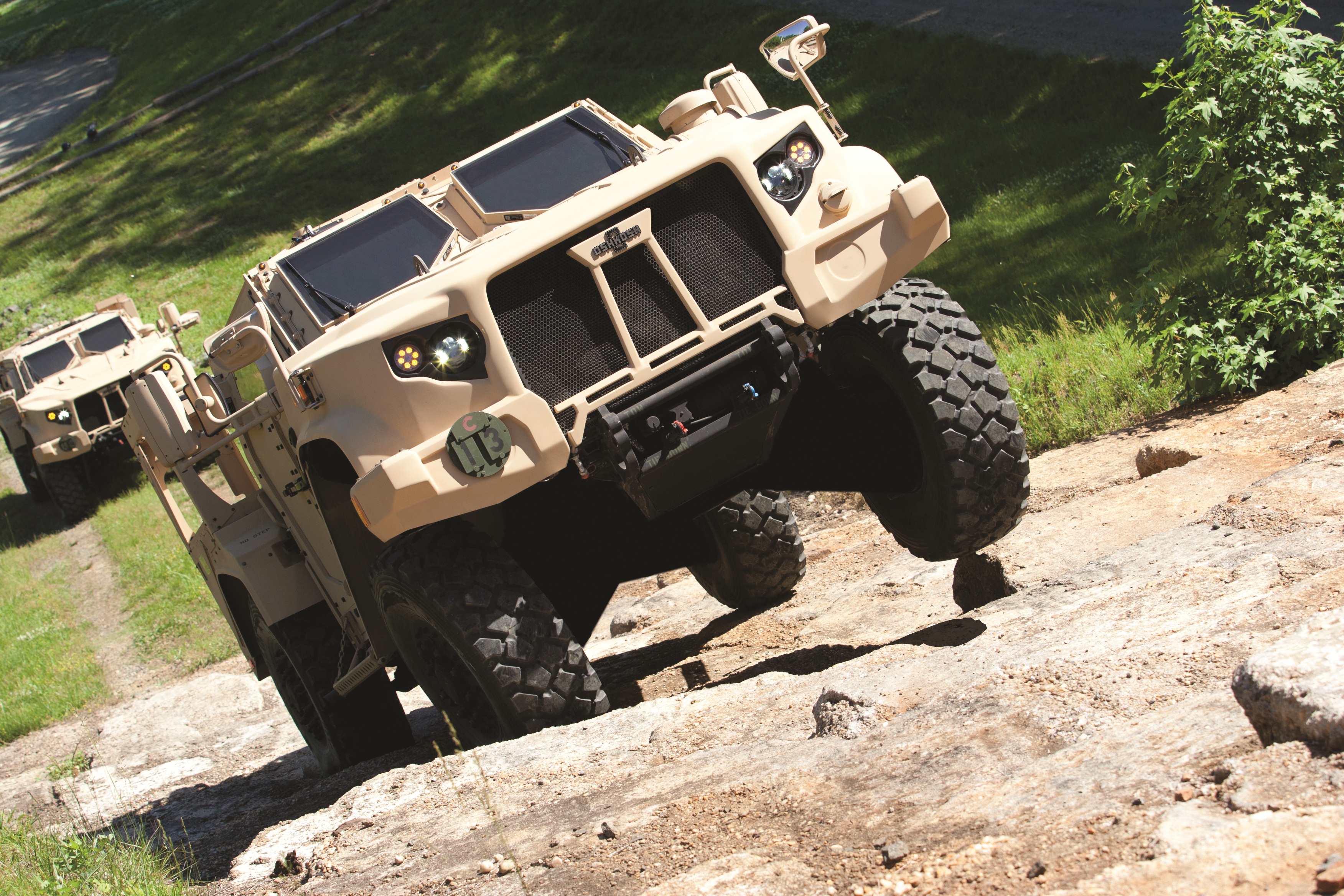
Back to the previous discussion, there are performance benefits to older technologies in some circumstances. But it is often a cost/complexity-related benefit and what people are willing to pay for. The US military, for example, shifted to independent suspensions for their light off-road vehicles over 30 years ago (Humvee, etc.), but cost isn't as much of an object and they are willing to pay for measured performance improvements. The Wrangler, by comparison, keeps its solid axles for a more traditional consumer market.
Image

On the other hand, sometimes, superior technology is abandoned due to cost. Offy's used unitized block and head with separate crankcase... but the construction was expensive to machine and largely eliminated when reliable head gaskets and stronger heads were developed. We now see a unitized block/head reappear in the ZEOD's engine, and hopefully new machining technology brings it back, but it went out of style due to production cost/complexity, not performance.
ImageImage Image

The overall point is that we should keep an open mind on new technology: not that new is automatically better but definitely not that old ways are automatically the best ways. In the big picture, CVT fluid cooling seems like a fairly simple engineering challenge to overcome. But to tackle that challenge, there needs to be a market willing to pay for it and the potential to keep the costs down to the point where it is profitable.

User avatar
MinisterofDOOM
Moderator
Posts: 30928
Joined: Wed May 19, 2004 5:51 pm
Car: 1962 Corvair Monza
1961 Corvair Lakewood
1974 Unimog 404
1997 Pathfinder XE
2005 Lincoln LS8
Former:
1995 Q45t
1993 Maxima GXE
1995 Ranger XL 2.3
1984 Coupe DeVille
Location: The middle of nowhere.

Post

I know how DOHC works. :) I must have worded that confusingly. It was in reference to the OHV layout, not DOHC. I was stating that OHV is compact but has limitations due to valvetrain simplicity, unlike DOHC but not too different from SOHC in terms of end result.

I'll reply with more detail later when I have more time.

User avatar
txchamps
Posts: 288
Joined: Thu Sep 11, 2014 9:14 am
Car: 2015 Versa Note SV, 2023 Kia Rio S
Location: Texas (Go Spurs!)

Post

It is not a problem. I simply misunderstood. I am so impoverished of true knowledge on the subject that my first assumption is that there's a gap in MY understanding :) . I appreciate your patience and generosity with a neophite (read that "newbie").


Return to “General Chat”