
New to the Z…
New to the Z…
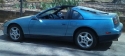
Hey guys, i acquired my first 300zx this morning. Bought it from a friend after its been sitting for awhile due to it not charging properly. I put it on a battery charger and it fired up and did not hesitate to stay running. It seems like the battery still is draining slowly, but I'm certain thats probably just a wiring issue with the alternator somewhere, or needs battery terminals. My bigger concern is the misfiring, it seems to idle great but when you tap the gas it hesitates most time, and really sputters. When you start to drive it, you have to rev it up to like 4000 rpm and then let the clutch out or it will sputter and have absolutely no acceleration. The power is also very restricted. Im going to dig around and see what I can come up with for a potential solution but it seems like a fuel delivery issue to me. Spark plugs have already been changed. Any input would be appreciated, thanks!
Re: New to the Z…
Welcome to Nico! Post pics of your Z when you can!
As for the issues you are describing, these cars are a bit finicky. A number of sensors may be malfunctioning (often just bad connections) and causing the car to run poorly.
Check the engine codes to see if there are any codes being thrown. http://www.nicoclub.com/archives/nissan ... ostic.html
Some of the codes won't throw the check engine light, some will. Some will actually put the car into a "limp home" mode where the car will run, but not well.
Check the injectors - http://www.twinturbo.net/ttnetfaq/FAQpa ... ctors.html
As far as spark plugs being changed, also make sure who ever changed them used the correct plugs. These cars run best on NGK .. and apparently the Autocraft plugs not so much.
Good luck!
As for the issues you are describing, these cars are a bit finicky. A number of sensors may be malfunctioning (often just bad connections) and causing the car to run poorly.
Check the engine codes to see if there are any codes being thrown. http://www.nicoclub.com/archives/nissan ... ostic.html
Some of the codes won't throw the check engine light, some will. Some will actually put the car into a "limp home" mode where the car will run, but not well.
Check the injectors - http://www.twinturbo.net/ttnetfaq/FAQpa ... ctors.html
As far as spark plugs being changed, also make sure who ever changed them used the correct plugs. These cars run best on NGK .. and apparently the Autocraft plugs not so much.
Good luck!
-
300ZXttZMAN

- Posts: 6800
- Joined: Mon Nov 22, 2010 4:07 pm
- Car: 1990 Nissan 300ZX TT 5spd pearl white
DD: 2008 Nissan Frontier NISMO pkg 4x4 Crew Cab - Location: Sulphur, LA 70665
- Contact:
Re: New to the Z…
Welcome to NICO! Check the injectors out to make sure they are all pulsing.
Re: New to the Z…
Thank you for the suggestions, plenty of information to sift through there to determine the issue. I'll keep it updated and put up some pictures when I can. Its not pretty at the moment!
-
Foosblood24

- Posts: 208
- Joined: Tue Feb 18, 2014 12:04 pm
- Car: 93 300ZX NA
- Location: Atlanta, GA
Re: New to the Z…
Went through the same thing when I first bought mine.
Injectors first.
Injectors first.
Re: New to the Z…
Thanks for the info guys. I spent a majority of last night checking and cleaning alot of the sensors and connections first, did the CAS, MAF, cleaned throttle bodies, among other things. The injectors seemed good too from what i could tell. A friends who is a nissan tech said it might be the Crank angle sensor, so i ordered one yesterday. We will see where it goes.
-
DCaff300ZX

- Posts: 4202
- Joined: Sun Jun 14, 2009 8:18 am
- Car: .
1993 CRP TT- Modified - Location: Tacoma, Washington
Re: New to the Z…
The CAS is an easy check and if working, would not need replacing...I'm surprised your "Nissan tech" has you buying parts without a reason, as that's the REALLY expensive way to fix a Z.
If the injectors are ohming out at the correct amount and all connectors to injectors are clean, then I'd be looking towards the CTS and those connections, and spark plug connections. If no improvement, I'd then look to the PTU and especially the harness, known for green residue and bad connections. No go, then I'd start thinking about vacuum leaks, checking all vacuum hoses and the PCV hoses for cracks/deterioration- very common. Another area of concern is the IACV (idle control valve) and hoses. If you make it that far and have ran codes and get none and still have a problem, then you will know that enough of the important systems are clean and working, and Consult or other scan testing will then have a basis to work from, and not a bunch of corrosion/wear possibilities with the areas I just went over.
Check back with us when you can report back exactly what you get in these areas and we can help a LOT more...
If the injectors are ohming out at the correct amount and all connectors to injectors are clean, then I'd be looking towards the CTS and those connections, and spark plug connections. If no improvement, I'd then look to the PTU and especially the harness, known for green residue and bad connections. No go, then I'd start thinking about vacuum leaks, checking all vacuum hoses and the PCV hoses for cracks/deterioration- very common. Another area of concern is the IACV (idle control valve) and hoses. If you make it that far and have ran codes and get none and still have a problem, then you will know that enough of the important systems are clean and working, and Consult or other scan testing will then have a basis to work from, and not a bunch of corrosion/wear possibilities with the areas I just went over.
Check back with us when you can report back exactly what you get in these areas and we can help a LOT more...
-
Ziggy1621

- Posts: 1137
- Joined: Sun Jun 10, 2012 5:57 pm
- Car: '90 Z32 TT (Shibui)
'90 Z32 2+0 NA
'68 311 Roadster
2004 Rx330
2011 BMW 550i (TT) - Location: Cocoa, Florida
- Contact:
Re: New to the Z…
Welcome to Nico!!!
Re: New to the Z…
Thanks for the suggestions! Im not claiming my friend to be a expert on this car, just someone with an idea. I have checked most of the items on your list, just not the vacuum hoses which i will do! However, I just replaced the CAS (not without a hassle i might add, what a b**** to get out. Ended up using an air chisel and busted it apart pretty much) and it runs ten times better. No sputtering on takeoff, power band seems strong, really a huge improvement. I feel like it still may have a slight misfire on idle but i haven't determined that for sure, I'm just saying that based on what i hear from the exhaust. There still is a big charging issue, it seems to die directly after a jump repeatedly, but at random. Its been holding a charge all this week (but with low voltage) but won't stay running today. One problem down, on to the next.DCaff300ZX wrote:The CAS is an easy check and if working, would not need replacing...I'm surprised your "Nissan tech" has you buying parts without a reason, as that's the REALLY expensive way to fix a Z.
If the injectors are ohming out at the correct amount and all connectors to injectors are clean, then I'd be looking towards the CTS and those connections, and spark plug connections. If no improvement, I'd then look to the PTU and especially the harness, known for green residue and bad connections. No go, then I'd start thinking about vacuum leaks, checking all vacuum hoses and the PCV hoses for cracks/deterioration- very common. Another area of concern is the IACV (idle control valve) and hoses. If you make it that far and have ran codes and get none and still have a problem, then you will know that enough of the important systems are clean and working, and Consult or other scan testing will then have a basis to work from, and not a bunch of corrosion/wear possibilities with the areas I just went over.
Check back with us when you can report back exactly what you get in these areas and we can help a LOT more...
-
RubyRed300ZX
- Posts: 417
- Joined: Thu Apr 29, 2010 2:24 pm
- Car: 1993 300zx Convertible
Re: New to the Z…
Dead Battery issue (or in your words, holding a charge): 1) make sure the terminals are clean. (2) make sure the battery has water. (3)make sure the battery ground wire to the body and engine are clean and secure. (4) Check the fuseable link (black rectangular box next to the battery and the cruise control pod) which is a blue wire in the furthest left hand (passenger side) slot. Pull the fuseable link and look for green corrosion in the connection slots.If green, clean the hell out of it. (5) with the battery cables disconnected from the battery, check for continuity from the alternator to the disconnected positive battery cable connector.
If all is good for the above, then have the battery checked to see if your battery is good. If that is good, then unfortunately you may have to pull the alternator to have it checked. The engine always runs off the battery. The alternator recharges the battery. So if you put a digital meter onto the battery, without the car running, you should see around 12 volts. Then start the car, and you should see it reading around 14.86 volts. The fact that your car dies almost immediately after disconnecting the jumper cables would seem to imply that the alternator is not getting a charge back up to the dead battery. Hence, the steps above to isolate the problem. A fully charged battery should allow the car to run for about 20 minutes without the alternator.
Pretty much all the wisdom I can offer. Check back with us to let us know what you found.
If all is good for the above, then have the battery checked to see if your battery is good. If that is good, then unfortunately you may have to pull the alternator to have it checked. The engine always runs off the battery. The alternator recharges the battery. So if you put a digital meter onto the battery, without the car running, you should see around 12 volts. Then start the car, and you should see it reading around 14.86 volts. The fact that your car dies almost immediately after disconnecting the jumper cables would seem to imply that the alternator is not getting a charge back up to the dead battery. Hence, the steps above to isolate the problem. A fully charged battery should allow the car to run for about 20 minutes without the alternator.
Pretty much all the wisdom I can offer. Check back with us to let us know what you found.
Re: New to the Z…
Great suggestions, thank you. We'll see if i have time to check out that stuff tonight. I do have a battery charger, so i could pull the terminals off and charge the battery completely too. just to see what happens with a fully charge battery i guess im saying.RubyRed300ZX wrote:Dead Battery issue (or in your words, holding a charge): 1) make sure the terminals are clean. (2) make sure the battery has water. (3)make sure the battery ground wire to the body and engine are clean and secure. (4) Check the fuseable link (black rectangular box next to the battery and the cruise control pod) which is a blue wire in the furthest left hand (passenger side) slot. Pull the fuseable link and look for green corrosion in the connection slots.If green, clean the hell out of it. (5) with the battery cables disconnected from the battery, check for continuity from the alternator to the disconnected positive battery cable connector.
If all is good for the above, then have the battery checked to see if your battery is good. If that is good, then unfortunately you may have to pull the alternator to have it checked. The engine always runs off the battery. The alternator recharges the battery. So if you put a digital meter onto the battery, without the car running, you should see around 12 volts. Then start the car, and you should see it reading around 14.86 volts. The fact that your car dies almost immediately after disconnecting the jumper cables would seem to imply that the alternator is not getting a charge back up to the dead battery. Hence, the steps above to isolate the problem. A fully charged battery should allow the car to run for about 20 minutes without the alternator.
Pretty much all the wisdom I can offer. Check back with us to let us know what you found.
-
RubyRed300ZX
- Posts: 417
- Joined: Thu Apr 29, 2010 2:24 pm
- Car: 1993 300zx Convertible
Re: New to the Z…
Just an afterthought, in case I wasn't clear on item No. 4, Remove the green plastic holder for the fuseable link (blue wire). Meaning don't yank the blue wire out of the holder. And, check this stabs on both the green holder as well as the sockets that the stabs plug into for corrosion.