
Hey there smart Nissan folks. I am in the planning stages of a 240 project and I am trying to decide on an engine for the project. I tried using the search feature but it kept coming up error so Im gonna ask here. I've read various articles and watched various videos on youtube regarding putting an RB26DETT in a 240 S13 but the one thing that I haven't been able to find would be any major issues with doing a swap of this nature.
What kind of issues could I expect to see and are they typically expensive to remedy?
And if anyone has any advice (Im a car guy but not a real mechanically experienced person) I have settled on a 240sx manual transmission and I plan on swapping in one of the following engines.
RB26DETT (preference)
2JZ GTE
SR20DET
VG30DETT
I know that each of these motors can produce serious power and my power goals for the project are 400-450 WHP. I plan on driving it as a fun DD, probably not much drifting or drag but you never know lol. Bottom line for the project is to build a car that I can have fun with that will beat my buddies Corvette with the LS3 (430hp as per GM).

New guy looking for info for project Planning.
-
GodzillaS15sx

- Posts: 5
- Joined: Mon Jan 18, 2016 4:36 am
- Car: In planning stages currently to build a 240sx (still investigating options for the motor), '14 Hyundai Elantra GT
-
themadscientist
- Posts: 26254
- Joined: Tue Nov 12, 2002 3:30 pm
- Car: R32 GTR, DR30 RS Turbo, BRZ, Lunchbox, NSR50 Sportster 883 Iron
- Location: Staring down at you with disdain from the spooky mountaintop castle.
Re: New guy looking for info for project Planning.
Well, you should start with your goals for the project. All your decisions will be easier and you will waste less time and money following dead ends if you have a complete vision for the project.
What is the desire for pulling out the KA24 in the first place? Is it missing? Is it blown up? If you just want to swap engines for s*** and giggles because you are weird, there's actually nothing wrong with that as long as you are honest with yourself about it. If you are after a certain power figure, a common metric that people measure their projects against, the KA24 will get you there and you will avoid all the BS of sourcing, swapping and maintaining an alien powerplant. If you are just all Cold Stone Creamery about it and just "gotta have it", ok, but accept the extra headaches that go with that now and don't complain later; you signed up for that s***.
The Main differences between the RB26 and other RB series engines from a slide it in perspective are:
1. The oil pan. RB26s are bolted to cast aluminum oil pans with integral front differential housings. This is substantially different from the stamped steel pans of RB20s and 25s. You can spend a huge chunk of change having the diff section hacked off and the hole welded up, but that's a PITA. The simpler approach is to use a commercially available adaptor plate to bolt the RWD pan to the bottom of the 26.
2. The turbos. The RB26 has two, 20s and 25s have one, respectively. You have to concern yourself with steering shaft clearance on a LHD car. That engine had no steering shaft in the way when it was bolted into the GT-R and there is certain to be a higher degree of problems with the twins versus a single. Now, if you are bashing into stuff, converting to a single could help, but you are spending more money.
3. Intake. The 26 has a more convenient intake setup than its little brothers, actually. The front facing surge tank is arguably easier to plumb than the across the top of the engine arrangement on the 20s and 25s. Seriously, Nissan, WTF?
Transmission mounting presents no greater challenge as you can use the same RWD transmission that will bolt to the 20 or 25, but opt for the 25 box over the 20, it's stronger.
The RB, the SR and the 2J are common enough that there are complete swap kits available, USE THEM! There's no point in reinventing the wheel so save yourself the expense and headache. VG30? I don't know if there is a kit for that, but having messed with those engines, IMO, stay away from them. They are the least desirable from an ease of installation and maintenance perspective and fully built can't really beat any of the others so it's a waste, unless, again, "gotta have it," then the same rule applies, shut up and accept the BS you agreed to when you picked it.
Now, again, if you want to beat that particular Vette, you can do that with the original engine if you put all that effort and expense you would have expended to jam a different engine in it into working the one that's already there.
What is the desire for pulling out the KA24 in the first place? Is it missing? Is it blown up? If you just want to swap engines for s*** and giggles because you are weird, there's actually nothing wrong with that as long as you are honest with yourself about it. If you are after a certain power figure, a common metric that people measure their projects against, the KA24 will get you there and you will avoid all the BS of sourcing, swapping and maintaining an alien powerplant. If you are just all Cold Stone Creamery about it and just "gotta have it", ok, but accept the extra headaches that go with that now and don't complain later; you signed up for that s***.
The Main differences between the RB26 and other RB series engines from a slide it in perspective are:
1. The oil pan. RB26s are bolted to cast aluminum oil pans with integral front differential housings. This is substantially different from the stamped steel pans of RB20s and 25s. You can spend a huge chunk of change having the diff section hacked off and the hole welded up, but that's a PITA. The simpler approach is to use a commercially available adaptor plate to bolt the RWD pan to the bottom of the 26.
2. The turbos. The RB26 has two, 20s and 25s have one, respectively. You have to concern yourself with steering shaft clearance on a LHD car. That engine had no steering shaft in the way when it was bolted into the GT-R and there is certain to be a higher degree of problems with the twins versus a single. Now, if you are bashing into stuff, converting to a single could help, but you are spending more money.
3. Intake. The 26 has a more convenient intake setup than its little brothers, actually. The front facing surge tank is arguably easier to plumb than the across the top of the engine arrangement on the 20s and 25s. Seriously, Nissan, WTF?
Transmission mounting presents no greater challenge as you can use the same RWD transmission that will bolt to the 20 or 25, but opt for the 25 box over the 20, it's stronger.
The RB, the SR and the 2J are common enough that there are complete swap kits available, USE THEM! There's no point in reinventing the wheel so save yourself the expense and headache. VG30? I don't know if there is a kit for that, but having messed with those engines, IMO, stay away from them. They are the least desirable from an ease of installation and maintenance perspective and fully built can't really beat any of the others so it's a waste, unless, again, "gotta have it," then the same rule applies, shut up and accept the BS you agreed to when you picked it.
Now, again, if you want to beat that particular Vette, you can do that with the original engine if you put all that effort and expense you would have expended to jam a different engine in it into working the one that's already there.
-
GodzillaS15sx
- Posts: 5
- Joined: Mon Jan 18, 2016 4:36 am
- Car: In planning stages currently to build a 240sx (still investigating options for the motor), '14 Hyundai Elantra GT
Re: New guy looking for info for project Planning.
Well, you should start with your goals for the project. I would like to achieve 400-450whp (more if its reasonable) but the car must retain drivability. I have a buddy with a 300zx with big whp and although it is fun to drive the heavy race clutch is tough to use in town when you are stop and go. All your decisions will be easier and you will waste less time and money following dead ends if you have a complete vision for the project. I have a pretty good idea in my head of how I want it to look in the end on the exterior and Im still working out the interior by looking at numerous threads and projects others have done.
What is the desire for pulling out the KA24 in the first place? TBH I know very little about the KA24 whereas the other motors I listed I am more familiar with. I do know that I want a turbo car for sure that is key! Is it missing? Is it blown up? If you just want to swap engines for s*** and giggles because you are weird, there's actually nothing wrong with that as long as you are honest with yourself about it. If you are after a certain power figure, a common metric that people measure their projects against, the KA24 will get you there and you will avoid all the BS of sourcing, swapping and maintaining an alien powerplant. If you are just all Cold Stone Creamery about it and just "gotta have it", ok, but accept the extra headaches that go with that now and don't complain later; you signed up for that s***.
The Main differences between the RB26 and other RB series engines from a slide it in perspective are:
1. The oil pan. RB26s are bolted to cast aluminum oil pans with integral front differential housings. This is substantially different from the stamped steel pans of RB20s and 25s. You can spend a huge chunk of change having the diff section hacked off and the hole welded up, but that's a PITA. The simpler approach is to use a commercially available adaptor plate to bolt the RWD pan to the bottom of the 26.
2. The turbos. The RB26 has two, 20s and 25s have one, respectively. You have to concern yourself with steering shaft clearance on a LHD car. That engine had no steering shaft in the way when it was bolted into the GT-R and there is certain to be a higher degree of problems with the twins versus a single. Now, if you are bashing into stuff, converting to a single could help, but you are spending more money.
3. Intake. The 26 has a more convenient intake setup than its little brothers, actually. The front facing surge tank is arguably easier to plumb than the across the top of the engine arrangement on the 20s and 25s. Seriously, Nissan, WTF?
Transmission mounting presents no greater challenge as you can use the same RWD transmission that will bolt to the 20 or 25, but opt for the 25 box over the 20, it's stronger.
The RB, the SR and the 2J are common enough that there are complete swap kits available, USE THEM! There's no point in reinventing the wheel so save yourself the expense and headache. VG30? I don't know if there is a kit for that, but having messed with those engines, IMO, stay away from them. They are the least desirable from an ease of installation and maintenance perspective and fully built can't really beat any of the others so it's a waste, unless, again, "gotta have it," then the same rule applies, shut up and accept the BS you agreed to when you picked it.
Now, again, if you want to beat that particular Vette, you can do that with the original engine if you put all that effort and expense you would have expended to jam a different engine in it into working the one that's already there.
All fair and valid points, I think its time to do some serious research into the KA24 and turbo setups.
What is the desire for pulling out the KA24 in the first place? TBH I know very little about the KA24 whereas the other motors I listed I am more familiar with. I do know that I want a turbo car for sure that is key! Is it missing? Is it blown up? If you just want to swap engines for s*** and giggles because you are weird, there's actually nothing wrong with that as long as you are honest with yourself about it. If you are after a certain power figure, a common metric that people measure their projects against, the KA24 will get you there and you will avoid all the BS of sourcing, swapping and maintaining an alien powerplant. If you are just all Cold Stone Creamery about it and just "gotta have it",
ok, but accept the extra headaches that go with that now and don't complain later; you signed up for that s***.The Main differences between the RB26 and other RB series engines from a slide it in perspective are:
1. The oil pan. RB26s are bolted to cast aluminum oil pans with integral front differential housings. This is substantially different from the stamped steel pans of RB20s and 25s. You can spend a huge chunk of change having the diff section hacked off and the hole welded up, but that's a PITA. The simpler approach is to use a commercially available adaptor plate to bolt the RWD pan to the bottom of the 26.
2. The turbos. The RB26 has two, 20s and 25s have one, respectively. You have to concern yourself with steering shaft clearance on a LHD car. That engine had no steering shaft in the way when it was bolted into the GT-R and there is certain to be a higher degree of problems with the twins versus a single. Now, if you are bashing into stuff, converting to a single could help, but you are spending more money.
3. Intake. The 26 has a more convenient intake setup than its little brothers, actually. The front facing surge tank is arguably easier to plumb than the across the top of the engine arrangement on the 20s and 25s. Seriously, Nissan, WTF?
Transmission mounting presents no greater challenge as you can use the same RWD transmission that will bolt to the 20 or 25, but opt for the 25 box over the 20, it's stronger.
The RB, the SR and the 2J are common enough that there are complete swap kits available, USE THEM! There's no point in reinventing the wheel so save yourself the expense and headache. VG30? I don't know if there is a kit for that, but having messed with those engines, IMO, stay away from them. They are the least desirable from an ease of installation and maintenance perspective and fully built can't really beat any of the others so it's a waste, unless, again, "gotta have it," then the same rule applies, shut up and accept the BS you agreed to when you picked it.
Now, again, if you want to beat that particular Vette, you can do that with the original engine if you put all that effort and expense you would have expended to jam a different engine in it into working the one that's already there.
All fair and valid points, I think its time to do some serious research into the KA24 and turbo setups.
-
themadscientist
- Posts: 26254
- Joined: Tue Nov 12, 2002 3:30 pm
- Car: R32 GTR, DR30 RS Turbo, BRZ, Lunchbox, NSR50 Sportster 883 Iron
- Location: Staring down at you with disdain from the spooky mountaintop castle.
Re: New guy looking for info for project Planning.
Good news, we have a vibrant 240 and KA24 community here and there is a wealth of knowledge on these things. I'm the CA/RB/FJ/L guy so I can't help much on the KA specifics other than what I have observed. The connecting rods appear to be a weak link. Expect any build to start with a full rotating assembly. The chain driven cams are what I would prefer over belt. Iron block, good stuff. Were I stateside I would probably use the KA over swaps.
-
GodzillaS15sx
- Posts: 5
- Joined: Mon Jan 18, 2016 4:36 am
- Car: In planning stages currently to build a 240sx (still investigating options for the motor), '14 Hyundai Elantra GT
Re: New guy looking for info for project Planning.
I this is a stupid question but which KA is better for a project build SOHC or DOHC. I personally am of the belief that more air in and more air out is better but I have heard of DOHC engines such as the Chevy Quad 4 (2.4L) that were absolute nightmares. Are there any concerns with either model specifically or would one be better to make power over the other?
-
themadscientist
- Posts: 26254
- Joined: Tue Nov 12, 2002 3:30 pm
- Car: R32 GTR, DR30 RS Turbo, BRZ, Lunchbox, NSR50 Sportster 883 Iron
- Location: Staring down at you with disdain from the spooky mountaintop castle.
Re: New guy looking for info for project Planning.
I'm not sure which flows better, but looking at pictures I have some opinions.
KA24E head, mmm, rockers? Not really pleased with that. Now, the Ls used rockers to great effect, BUT the rockers were under the cam not riding on top. It may not really be an issue, but I would prefer under rather than over. Even the accursed SR was under, but they screwed that up by using one lobe to actuate two lifters.

Three valves in kind of a hemi head, not digging it.
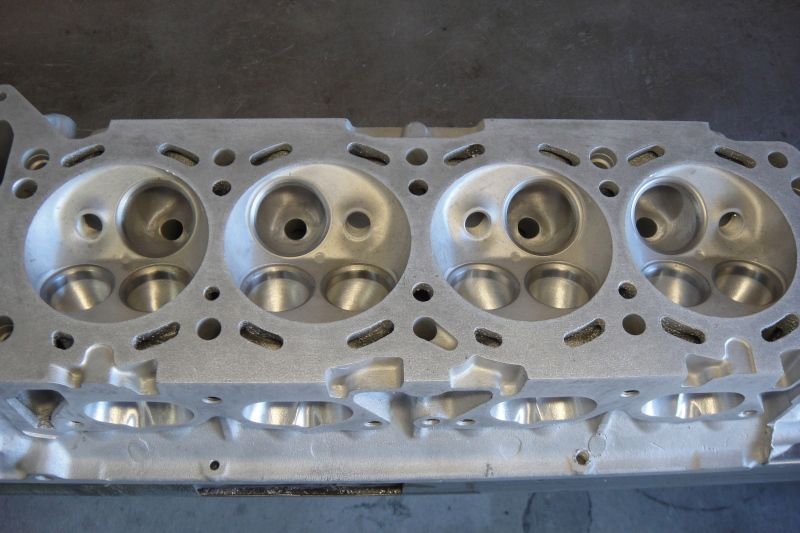
KA24DE head, now you're talking, cam on bucket.

Look at the port angles or should I say lack of angle. It's almost a straight shot to the back of the valves with virtually no short side radius, freaking nice right there.

Ah, yes, modern pentroof chambers, that's good.

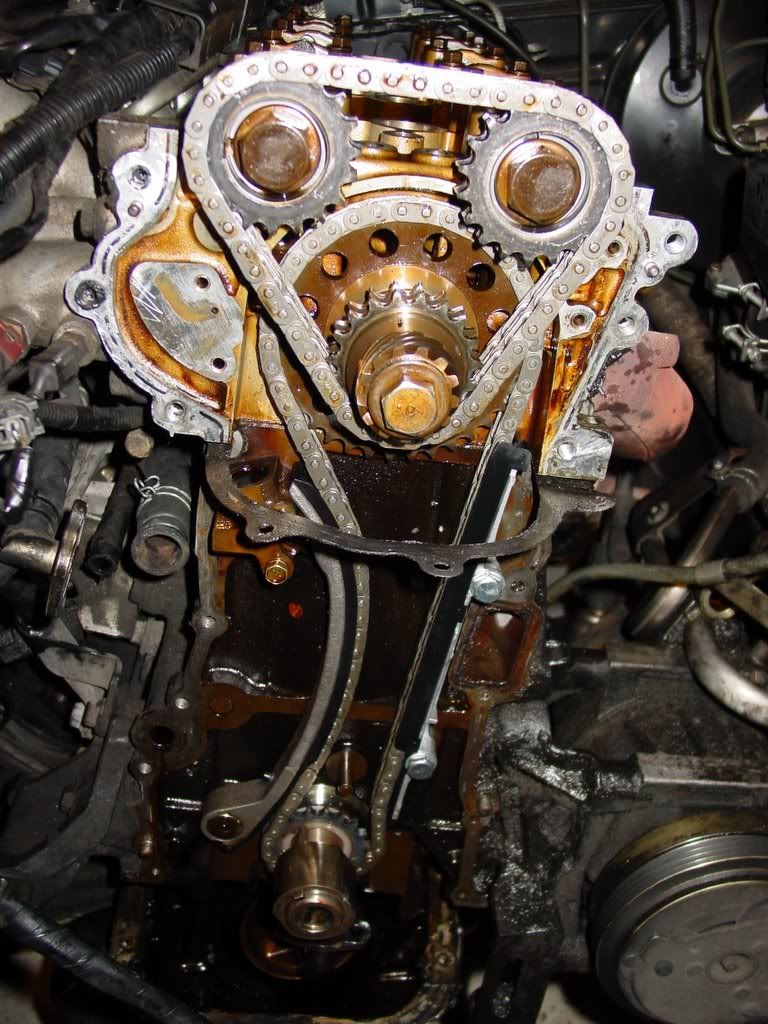
I see a lot of L heritage in that lower timing chain setup. It's like they turned the SOHC cam sproket into a transfer sprocket and added a second chain to drive twin cams.
KA24DE
L28

I can see why that guy could chop three KA heads to make a twin cam L28 head.
I hope some of the KA gurus will pick up the baton and drop some real world experience on this, but just from looking at the two choices, the twin cam would be my preference.
KA24E head, mmm, rockers? Not really pleased with that. Now, the Ls used rockers to great effect, BUT the rockers were under the cam not riding on top. It may not really be an issue, but I would prefer under rather than over. Even the accursed SR was under, but they screwed that up by using one lobe to actuate two lifters.
Three valves in kind of a hemi head, not digging it.
KA24DE head, now you're talking, cam on bucket.
Look at the port angles or should I say lack of angle. It's almost a straight shot to the back of the valves with virtually no short side radius, freaking nice right there.
Ah, yes, modern pentroof chambers, that's good.
I see a lot of L heritage in that lower timing chain setup. It's like they turned the SOHC cam sproket into a transfer sprocket and added a second chain to drive twin cams.
KA24DE
L28
I can see why that guy could chop three KA heads to make a twin cam L28 head.
I hope some of the KA gurus will pick up the baton and drop some real world experience on this, but just from looking at the two choices, the twin cam would be my preference.
-
TheRoadShark
- Posts: 67
- Joined: Fri Sep 13, 2013 11:39 pm
- Car: '93 S13 Coupe
RB25DET S2 @ 10psi
Silvia conversion
Re: New guy looking for info for project Planning.
Also worth noting that there's a much wider variety of aftermarket parts available for the KA24DE. That's not to say that you can't make a wikkid build with the KA24E - I know there's at least one here on NICO - but the DE seems like it has much more gong for it 
-
Lobo240sx

- Posts: 779
- Joined: Wed Dec 01, 2010 7:39 am
- Car: 1991 Nissan 240sx Coupe SR2.35DET Redtop Build
- Location: Austin, Texas USA
Re: New guy looking for info for project Planning.
RB26DETT (preference) - Great engine but too many temperamental oil gallery/pump issues. Make plans to eat rice cakes and Roman noodles because your pocket is going to have a big hole in it if you plan on building it right the 1st time. There are better kits now to do this swap easier. Do some more research if you do decide to go RB.
2JZ GTE - Again great engine. Toyota says they "accidentally" over engineered it by mistake. Not buying it but the stock bottom end can handle well over your power goal. This would be my choice or get the 2JZ-GE with a Compound turbo Setup. Marc's Z31 with this setup back in '08-'10? was insane. Look up Z31 Street Fighter.
SR20DET VS. KA24DE+T blah blah blah - Yeah Yeah Yeah An Sr20 would pull a premium one week before race wars. Seriously great platform a long with the KA24DE+T when built correctly. Both engines have their ups and downs. Want more torque on the low end? KA24DE+T. Top end HP SR20DET. The KA24DE has a much better head as stated above with the cam on bucket design. The Head for the SR you'll need those Rocker arm stoppers so they don't pop off. 
It's all about preference and what you are looking for the car to do. Plus if you already have a healthy KA24de these days you can build them for a reasonable price. I remember in '01-03? guy spent well over 10k on a s14 and only made 330whp on a KA-T. Now the tuning/aftermarket options are much better.
KA24ET - From my experience stock these engines get very hot. You are going to need some kind of methanol or water injection to keep your temps down if you go turbo, supercharger, or both like someone was running on here a few years back. Badass build BTW .
VG30DETT - These engines are bada$$ if you build it right. If you try to put the stock engine in without building it, you better be daily driving it on low boost.
Also, look at some more engines like the under dog CA18DET. They can be nice and quicker than the SR20 if built/tuned correctly. Whatever platform you decide, check out your local tuning shop to be sure they are going to be able to properly tune it so you can kicka$$!
2JZ GTE - Again great engine. Toyota says they "accidentally" over engineered it by mistake. Not buying it but the stock bottom end can handle well over your power goal. This would be my choice or get the 2JZ-GE with a Compound turbo Setup. Marc's Z31 with this setup back in '08-'10? was insane. Look up Z31 Street Fighter.
SR20DET VS. KA24DE+T blah blah blah - Yeah Yeah Yeah An Sr20 would pull a premium one week before race wars.
Seriously great platform a long with the KA24DE+T when built correctly. Both engines have their ups and downs. Want more torque on the low end? KA24DE+T. Top end HP SR20DET. The KA24DE has a much better head as stated above with the cam on bucket design. The Head for the SR you'll need those Rocker arm stoppers so they don't pop off. It's all about preference and what you are looking for the car to do. Plus if you already have a healthy KA24de these days you can build them for a reasonable price. I remember in '01-03? guy spent well over 10k on a s14 and only made 330whp on a KA-T. Now the tuning/aftermarket options are much better.
KA24ET - From my experience stock these engines get very hot. You are going to need some kind of methanol or water injection to keep your temps down if you go turbo, supercharger, or both like someone was running on here a few years back. Badass build BTW .
VG30DETT - These engines are bada$$ if you build it right. If you try to put the stock engine in without building it, you better be daily driving it on low boost.
Also, look at some more engines like the under dog CA18DET. They can be nice and quicker than the SR20 if built/tuned correctly. Whatever platform you decide, check out your local tuning shop to be sure they are going to be able to properly tune it so you can kicka$$!