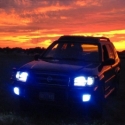

So I tinted the tails of my pathfinder and by the time I got done all the little tiny thin coats they are pretty darn black!!! lol, anyways, in low light there isnt much light output, only when it gets pith black can you really see the oem bulb anymore shining red.
My oem bulb is a 7443 and I want to replace it with a BRIGHTER bulb. I figured LED would be the brightest. This bulb seemed to be the best in my eyes but I have no experience, build quality and led count and pattern just looked good to me.
http://cgi.ebay.com/ebaymotors/2-X-Red- ... ccessories
Any ideas on how to get good light output here? Would these led's actuall make a noticeable light output, so people could see my running lights better??

LED tail light bulbs for safety?? Are they really brighter??
-
AZ89two4Tsx

- Posts: 13634
- Joined: Sat Mar 08, 2008 8:02 am
Re: LED tail light bulbs for safety?? Are they really bright
Solution:
Don't "smoke" your tail lights. It looks dumb if they're too dark and can be dangerous.
If they're so dark that you can barely see them at night, then it looks stupid in the daytime.
Don't "smoke" your tail lights. It looks dumb if they're too dark and can be dangerous.
If they're so dark that you can barely see them at night, then it looks stupid in the daytime.
-
PEZi
- Posts: 20441
- Joined: Thu Dec 11, 2008 8:21 am
- Car: Mitsubishi Lancer Evolution IX Mitsubishi Racing Edition
- Location: Pikes Peak, CO
- Contact:
Re: LED tail light bulbs for safety?? Are they really bright
playing devils advocate (suprised?).... i think that considering we have had tons of these threads and no REAL solutions besides 'don't do it'... i'll offer insight from what i've seenAZ89two4Tsx wrote:Solution:
Don't "smoke" your tail lights. It looks dumb if they're too dark and can be dangerous.
LEDs make the tail lights very visible for the car behind you.... they are nearly invisible from any sort of angle however.... more than 60 degrees from the perpendicular and LED's are basically worthless
my suggestion... get the brightest bulb you can.... and prolly just don't over-do the tint... which it sounds like you may have
this part has always bothered me.... they look just like normal tail lights at night (assuming you didn't make tint them to the extreme of course) ... harder to see? BS... daytime sure... night time... BSAZ89two4Tsx wrote:
If they're so dark that you can barely see them at night
Re: LED tail light bulbs for safety?? Are they really bright
are the ones I posted bright?? Or is that a cheap one? quality one?? stick with a bright halogen perhaps??
-
PEZi
- Posts: 20441
- Joined: Thu Dec 11, 2008 8:21 am
- Car: Mitsubishi Lancer Evolution IX Mitsubishi Racing Edition
- Location: Pikes Peak, CO
- Contact:
Re: LED tail light bulbs for safety?? Are they really bright
i stuck with halogen... never heard anything about the one you posted
-
Rev_D21

- Posts: 5946
- Joined: Sun Jan 12, 2003 9:49 pm
- Car: 1986.5 D21 LB HD 2WD V6 5Speed
1991 D21 Reg 2WD Auto
1995 D21 Reg 2WD 5Spd
1996 D21 Reg 4WD 5Spd
2012 Versa 1.6S 5-Speed - Location: Somwhere in Western NY
- Contact:
Re: LED tail light bulbs for safety?? Are they really bright
LEDs are not brighter but rather have cleaner color response along with fast reaction times. A bulb that reacts faster gives the car behind you earlier warning times to your intentions. They will not work well behind tinted taillights.
-
Alfador
- Posts: 3043
- Joined: Thu May 19, 2005 4:55 pm
- Car: 1990 Nissan 240SX Hatch
- Location: The People's Republic of Taxachusetts
- Contact:
Re: LED tail light bulbs for safety?? Are they really bright
The only tangible benefit I've seen from LED tail lights is the fact that you don't really have filaments to burn out. Maybe I'm wrong on this but you'll notice all "real" LED tail lights, such as cars that were manufactured with them, have a huge array of them taking up the space of a normal tail light, rather than a few clustered together where a normal bulb would go. Pretty sure that's needed for proper visibility, so I really doubt they'd cut through your smoke job any better than a bulb.
-
Urabus GodofTraction

- Posts: 6178
- Joined: Wed Nov 03, 2004 4:36 pm
- Car: 2002 Subaru WRX Wagon
2004 Suzuki SV650
1988 Toyota Land Cruiser
1994 Honda XR600R
Re: LED tail light bulbs for safety?? Are they really bright
Pretty sure my stance on this issue is widely known... What is it with QX4s and wanting to get rear-ended?
Re: LED tail light bulbs for safety?? Are they really bright
Is there possibly just a much brighter halogen bulb avilable??
Is there not a way get bright a** 7443 bulbs in the oem sockets??
Dont make me add a gay LED brake bar on the bottom of my hatch here guys....
Is there not a way get bright a** 7443 bulbs in the oem sockets??
Dont make me add a gay LED brake bar on the bottom of my hatch here guys....
-
PEZi
- Posts: 20441
- Joined: Thu Dec 11, 2008 8:21 am
- Car: Mitsubishi Lancer Evolution IX Mitsubishi Racing Edition
- Location: Pikes Peak, CO
- Contact:
Re: LED tail light bulbs for safety?? Are they really bright
in genral... the last didgits of your sylvania number refer to the socket of which they fit into.... get the highest number available via the first 2 digits of sylvania and that's the brightest available halogen

Re: LED tail light bulbs for safety?? Are they really bright
Really? I mean...Really?Reverend D21 wrote: A bulb that reacts faster gives the car behind you earlier warning times to your intentions.
Yes I know it may TECHNICALLY be true, but come on man....
"whew, its a good thing you had LED tail lights, totally would have hit you if we would have had to wait all that time for a normal bulb to light up"

Re: LED tail light bulbs for safety?? Are they really bright
I kinda disregarded that one to haha
-
AZ89two4Tsx
- Posts: 13634
- Joined: Sat Mar 08, 2008 8:02 am
Re: LED tail light bulbs for safety?? Are they really bright
Says the guy who you can't see at night!
-
C-Kwik

- Moderator
- Posts: 8070
- Joined: Thu Aug 01, 2002 9:28 pm
- Car: 2013 Chevy Volt, 1991 Honda CRX DX
Re: LED tail light bulbs for safety?? Are they really bright
The difference between a close call and a light tap on the rear bumper:Red coupe wrote:Really? I mean...Really?
Yes I know it may TECHNICALLY be true, but come on man....
"whew, its a good thing you had LED tail lights, totally would have hit you if we would have had to wait all that time for a normal bulb to light up"
If you cause damage (even minor), you are responsible for it. This is a mild scenario.
Consider if things started unfolding when people are driving along at 60. That's 88 feet per second. 0.2 seconds less response equates to 17.6 feet travelled before you react. And that will be at least 0.2 seconds later that you will be braking after the guy in front of you. That will be eating away at the distance between your vehicles in a hurry even once you get on the brakes. If that isn't convincing, heres a more technical paper on the subject:
http://chemlinks.beloit.edu/BlueLight/p ... 1155-3.pdf
-
MinisterofDOOM

- Moderator
- Posts: 30928
- Joined: Wed May 19, 2004 5:51 pm
- Car: 1962 Corvair Monza
1961 Corvair Lakewood
1974 Unimog 404
1997 Pathfinder XE
2005 Lincoln LS8
Former:
1995 Q45t
1993 Maxima GXE
1995 Ranger XL 2.3
1984 Coupe DeVille - Location: The middle of nowhere.
Re: LED tail light bulbs for safety?? Are they really bright
These days there are lots of options for OEM-replacement LEDs. There are even arrays designed to combat the narrow visibility range mentioned above. Even Autozone carries them anymore. A lot of them are sized and shaped like a standard incandescent (tail lights aren't halogen) and designed to work well with stock reflectors, housings, and diffuser setups.CanuckQx4 wrote:Is there possibly just a much brighter halogen bulb avilable??
Is there not a way get bright a** 7443 bulbs in the oem sockets??
Dont make me add a gay LED brake bar on the bottom of my hatch here guys....
Stuff like this, for example:

I've been meaning to get a set of those for my turn signals because the amber lamp looks terrible inside the clear lens.
-
Rev_D21
- Posts: 5946
- Joined: Sun Jan 12, 2003 9:49 pm
- Car: 1986.5 D21 LB HD 2WD V6 5Speed
1991 D21 Reg 2WD Auto
1995 D21 Reg 2WD 5Spd
1996 D21 Reg 4WD 5Spd
2012 Versa 1.6S 5-Speed - Location: Somwhere in Western NY
- Contact:
Re: LED tail light bulbs for safety?? Are they really bright
Red coupe wrote:Really? I mean...Really?Reverend D21 wrote: A bulb that reacts faster gives the car behind you earlier warning times to your intentions.
Yes I know it may TECHNICALLY be true, but come on man....
"whew, its a good thing you had LED tail lights, totally would have hit you if we would have had to wait all that time for a normal bulb to light up"
What is your argument again?
-
PEZi
- Posts: 20441
- Joined: Thu Dec 11, 2008 8:21 am
- Car: Mitsubishi Lancer Evolution IX Mitsubishi Racing Edition
- Location: Pikes Peak, CO
- Contact:
Re: LED tail light bulbs for safety?? Are they really bright
once again... i find this irrelevant... granted i didn't tint mine to f*** dark as hell mode.... but at night the tinted tails are just as visible as any other lightAZ89two4Tsx wrote:Says the guy who you can't see at night!

Re: LED tail light bulbs for safety?? Are they really bright
Not that the effect isnt there... But you, and your paper are grossly over stating it.C-Kwik wrote:The difference between a close call and a light tap on the rear bumper:Red coupe wrote:Really? I mean...Really?
Yes I know it may TECHNICALLY be true, but come on man....
"whew, its a good thing you had LED tail lights, totally would have hit you if we would have had to wait all that time for a normal bulb to light up"
If you cause damage (even minor), you are responsible for it. This is a mild scenario.
Consider if things started unfolding when people are driving along at 60. That's 88 feet per second. 0.2 seconds less response equates to 17.6 feet travelled before you react. And that will be at least 0.2 seconds later that you will be braking after the guy in front of you. That will be eating away at the distance between your vehicles in a hurry even once you get on the brakes. If that isn't convincing, heres a more technical paper on the subject:
http://chemlinks.beloit.edu/BlueLight/p ... 1155-3.pdf
Did you bother to check the source? It is the guy selling the product.
People are not going to sit and wait for the max output of the light to start breaking. The article says the typical range of incandescent bulbs is 100ms to 300ms to fully illuminate. Then for all their cases and graphs they use the worst case bulb, one with a 300ms response time. Also notice that due to the shape of a output vs time curve total time to light is very deceptive as the bulb is at 75% with in the first 40% of the time it takes to turn on. If this general relation holds true a good bulb would be at 75% output by 40ms and an average bulb by 60ms.
So even worst case the bulb is at half brightness, which is more then visible, by 100ms... And people are still going to see light and be signaled before half brightness, even 1/10th the output of a fully lit bulb should be visible, but lets error on caution and say I can't see it until 1/3 of its max output... This occurs on even the worst bulbs they included in their studies by 65ms. At your 88 feet per second .065s later you are 5.7 feet down the road, not nearly 20.
Combine this with the fact that brake pedal lights are arbitrarily triggered by a switch somewhere along their travel, so that the switching of the light does not correspond in any way with braking force or deceleration, then consider that the difference in stopping distance from one vehicle to another is bound to be much more then 5.7 feet and your really reaching here.
-
Alfador
- Posts: 3043
- Joined: Thu May 19, 2005 4:55 pm
- Car: 1990 Nissan 240SX Hatch
- Location: The People's Republic of Taxachusetts
- Contact:
Re: LED tail light bulbs for safety?? Are they really bright
Agreed. The time timeframe difference between an incandescent filament and an LED alerting a driver is insignificant in light of other factors. Hell, center high mounted stop lamps ("third eye" brake lights) had a much bigger effect on stopping time, and that's what that pdf from HP is really about.
Let's really be honest here. Rear end collisions are hardly ever "light taps" anyway, regardless, and if someone is following at a speed and distance where this matters, they are way too close/fast to begin with.
Let's really be honest here. Rear end collisions are hardly ever "light taps" anyway, regardless, and if someone is following at a speed and distance where this matters, they are way too close/fast to begin with.
-
C-Kwik
- Moderator
- Posts: 8070
- Joined: Thu Aug 01, 2002 9:28 pm
- Car: 2013 Chevy Volt, 1991 Honda CRX DX
Re: LED tail light bulbs for safety?? Are they really bright
Did you bother to read the entire article? Selling a product or not, consider the citations of studies by independent groups. Perhaps I should have went straight to the sources, but I didn't have time to go reading through two articles at the time.Red coupe wrote:Not that the effect isnt there... But you, and your paper are grossly over stating it.
Did you bother to check the source? It is the guy selling the product.
I agree with the fact that there is illumination that occurs during the rise time. But you have to look more closely at the article to find that another study found that people react differently to each on the order of 200 ms or more depending on the circumstances. A look at their source reveals a much more comprehensive study that includes the human factors:Red coupe wrote:People are not going to sit and wait for the max output of the light to start breaking. The article says the typical range of incandescent bulbs is 100ms to 300ms to fully illuminate. Then for all their cases and graphs they use the worst case bulb, one with a 300ms response time. Also notice that due to the shape of a output vs time curve total time to light is very deceptive as the bulb is at 75% with in the first 40% of the time it takes to turn on. If this general relation holds true a good bulb would be at 75% output by 40ms and an average bulb by 60ms.
http://deepblue.lib.umich.edu/bitstream ... 01.001.pdf
Ultimately, the number the article uses comes from this study. Understand that the lower number comes from more ideal circumstances. Put the light in the peripheral or an ambient light on the brake light itself and it can increase response times.
Surely, the difference time between vehicle deceleration and brake light trigger time will vary, but that can be in either direction. But what such a study would conclude is that regardless of the relationship between trigger time and braking response is, the difference in the human response time will still remain valid.Red coupe wrote:Combine this with the fact that brake pedal lights are arbitrarily triggered by a switch somewhere along their travel, so that the switching of the light does not correspond in any way with braking force or deceleration, then consider that the difference in stopping distance from one vehicle to another is bound to be much more then 5.7 feet and your really reaching here.
Wrong. Light rear enders occur quite regularly. I've handled a lot of claims involving nothing more than replacing the bumper covers for rear enders. They are usually not highly visible as accidents as the damage is not as readily apparent. Police are rarely there to take a report. And even a percentage of them don't actually get reported to insurance companies. But that's not the only bit of significance in this issue. Accidents aren't just about hit or miss. A miss is absolute, but with a hit, there is the severity of impact to consider. And this is dictated primarily by the speeds, or more accurately, the difference in speeds. The sooner one starts braking, the less speed they will carry into the impact.Alfador wrote:Let's really be honest here. Rear end collisions are hardly ever "light taps" anyway, regardless, and if someone is following at a speed and distance where this matters, they are way too close/fast to begin with.
Being too close and/or too fast is true regardless of lamp type, but the reality is that people do drive too fast and follow too closely. Accidents happen. People are fallible. But these factors are not reason to not implement technology that will reduce the number of accidents and/or their severity.
-
Rev_D21
- Posts: 5946
- Joined: Sun Jan 12, 2003 9:49 pm
- Car: 1986.5 D21 LB HD 2WD V6 5Speed
1991 D21 Reg 2WD Auto
1995 D21 Reg 2WD 5Spd
1996 D21 Reg 4WD 5Spd
2012 Versa 1.6S 5-Speed - Location: Somwhere in Western NY
- Contact:
Re: LED tail light bulbs for safety?? Are they really bright
[youtube]http://www.youtube.com/watch?v=W9togtWBiw4[/youtube]
[youtube]http://www.youtube.com/watch?v=huF9g4z50wc[/youtube]
One can clearly see the time difference in the above videos.
[youtube]http://www.youtube.com/watch?v=huF9g4z50wc[/youtube]
One can clearly see the time difference in the above videos.
Re: LED tail light bulbs for safety?? Are they really bright
The mere fact that they have been tampering with the eletronics has me throwing this one out. I have NEVER seen a tail light turn on that slow.Reverend D21 wrote:[youtube]http://www.youtube.com/watch?v=W9togtWBiw4[/youtube]
[youtube]http://www.youtube.com/watch?v=huF9g4z50wc[/youtube]
One can clearly see the time difference in the above videos.
-
PoorManQ45

- Posts: 16676
- Joined: Fri Jul 02, 2004 5:13 pm
Re: LED tail light bulbs for safety?? Are they really bright
Red coupe wrote: The mere fact that they have been tampering with the eletronics has me throwing this one out. I have NEVER seen a tail light turn on that slow.
It's not actually that slow, it's that you are seeing a reference point that is much faster.
Anyways, LEDs in a reflector housing are like HIDs in a reflector housing. Just not designed to maximize output to the correct locations. Overall output of the LEDs can be greater, but where the light goes is the key.
-
Rev_D21
- Posts: 5946
- Joined: Sun Jan 12, 2003 9:49 pm
- Car: 1986.5 D21 LB HD 2WD V6 5Speed
1991 D21 Reg 2WD Auto
1995 D21 Reg 2WD 5Spd
1996 D21 Reg 4WD 5Spd
2012 Versa 1.6S 5-Speed - Location: Somwhere in Western NY
- Contact:
Re: LED tail light bulbs for safety?? Are they really bright
Watch a tractor-trailer set up that has LED on the tractor and incandescent lamps on the trailer, you see how much faster the LEDs react. Let me make one last point on that note. If they weren't safer and more efficient you wouldn't see school buses switch over to LED exclusively. Almost all new school buses use LED lighting in all positions except for the headlights. The only complaint I have heard regarding LEDs in the heavy trucking industry is that they do not generate enough heat to melt snow off the lamps while the trucks are driving; the drivers have to periodically brush the snow off of them. Peterbilt offers a 10 year warranty on all LEDs it sells, incandescent bulbs about 30 seconds.
-
PoorManQ45
- Posts: 16676
- Joined: Fri Jul 02, 2004 5:13 pm
Re: LED tail light bulbs for safety?? Are they really bright
There is no doubt that LEDs light up faster and are more efficient then Incandescent bulbs.
The problems arise when you put an LED in a reflector housing that was designed for a standard bulb.
The problems arise when you put an LED in a reflector housing that was designed for a standard bulb.
-
Rev_D21
- Posts: 5946
- Joined: Sun Jan 12, 2003 9:49 pm
- Car: 1986.5 D21 LB HD 2WD V6 5Speed
1991 D21 Reg 2WD Auto
1995 D21 Reg 2WD 5Spd
1996 D21 Reg 4WD 5Spd
2012 Versa 1.6S 5-Speed - Location: Somwhere in Western NY
- Contact:
Re: LED tail light bulbs for safety?? Are they really bright
The more nodes the better. LEDs with 180 degree of coverage will work well inside a reflector housing designed for regular bulbs. The light is more directional I admit but if you buy LED bulbs with more nodes the results can be better than regular bulbs.
-
PoorManQ45
- Posts: 16676
- Joined: Fri Jul 02, 2004 5:13 pm
Re: LED tail light bulbs for safety?? Are they really bright
I do agree that plug and play LEDs have come a long way. They will work good in some cars, but then you'll find some that they don't work well in. It's kind of hit or miss and you don't really know until you try it.
-
C-Kwik
- Moderator
- Posts: 8070
- Joined: Thu Aug 01, 2002 9:28 pm
- Car: 2013 Chevy Volt, 1991 Honda CRX DX
Re: LED tail light bulbs for safety?? Are they really bright
What tampering are you referring to? It only looks like they replaced the bulbs. And it looks consistent with the timing I see between cars that come from the factory with incandescent taillights and high mount LEDs. In fact, the Santa Fe in the second video has an LED high mount.Red coupe wrote:The mere fact that they have been tampering with the eletronics has me throwing this one out. I have NEVER seen a tail light turn on that slow.
I'll tack on that I've noticed a number of ambulances with LED taillights. They even took things a step further. The high mount light worked as normal. But the tails on either side turn on and then blink off really fast and then stay on. It really grabs your attention. Not sure it helps with overall response, but its an interesting idea that I would like to see more data on.Reverend D21 wrote:Let me make one last point on that note. If they weren't safer and more efficient you wouldn't see school buses switch over to LED exclusively. Almost all new school buses use LED lighting in all positions except for the headlights.
Re: LED tail light bulbs for safety?? Are they really bright
This is what I experienced when i had LED tails on my car (no tint). In bright sun, people had a really hard time seeing my lights. Awesome at night though.PEZi720 wrote:playing devils advocate (suprised?).... i think that considering we have had tons of these threads and no REAL solutions besides 'don't do it'... i'll offer insight from what i've seenAZ89two4Tsx wrote:Solution:
Don't "smoke" your tail lights. It looks dumb if they're too dark and can be dangerous.
LEDs make the tail lights very visible for the car behind you.... they are nearly invisible from any sort of angle however.... more than 60 degrees from the perpendicular and LED's are basically worthless
So I ditched them and went back to stock.
-
PoorManQ45
- Posts: 16676
- Joined: Fri Jul 02, 2004 5:13 pm
Re: LED tail light bulbs for safety?? Are they really bright
2the40 wrote: This is what I experienced when i had LED tails on my car (no tint). In bright sun, people had a really hard time seeing my lights. Awesome at night though.
So I ditched them and went back to stock.
Yep, LEDs are a point-source lighting system.