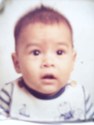
And, yet, does not receive the true vindication that he deserves: http://www.nytimes.com/2012/01/02/nyreg ... avery.html
Sad.

Z



I agree with you. It is sad!szh wrote:He was the only victim of 9/11 who was initially treated as a terrorlst because of his name - and was ultimately cleared after five months of suspicion: http://www.nytimes.com/2011/05/25/nyreg ... lized.html
And, yet, does not receive the true vindication that he deserves: http://www.nytimes.com/2012/01/02/nyreg ... avery.html
Sad.
Z


Not all. Just most of the wrongs.szh wrote:Umm ... what did my post and links have to do with the Republican Party?
Interesting how you seem to think that all wrongs in this country can be laid oh-so-conveniently at their doorstep.
Z
Oh my God, SHUT UP ALREADY.telcoman wrote:Not all. Just most of the wrongs.szh wrote:Umm ... what did my post and links have to do with the Republican Party?
Interesting how you seem to think that all wrongs in this country can be laid oh-so-conveniently at their doorstep.
Z
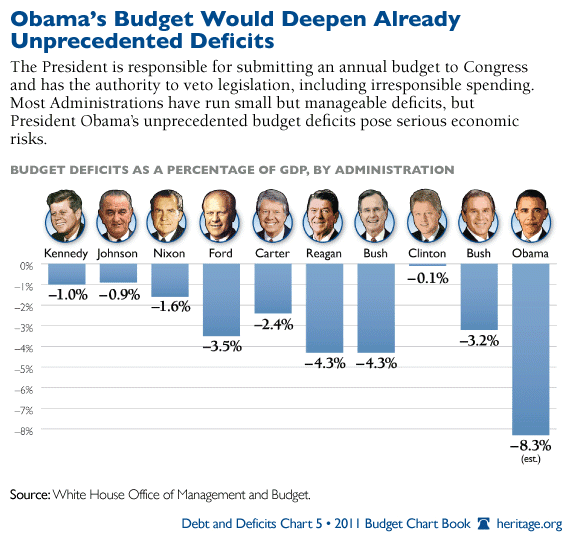
Who was responsible for running this country into a ditch with massive unfunded spending for two unpaid for wars.

Will do!AZhitman wrote:Z, can you post the text of the article? It requires a NYT account, and given some of their silly decisions (insider webmaster stuff), I'd rather them not have my support (or my email address).

Absent Police Cadet Sought After Disappearance
By JIM DWYER and DANIEL J. WAKIN
Published: October 12, 2001
A police cadet who went off to work the morning of the World Trade Center attack has not been seen since, prompting unusual attention from the New York Police Department and federal authorities.
A flier with a picture of the cadet, Mohammad Hamdani, 23, has been circulated among police officers. A joint terrorlst task force of the Police Department and the F.B.I. want to talk to him, government officials said yesterday.
But the case remained as mysterious as Mr. Hamdani's disappearance. He was last seen the morning of Sept. 11 as he left to take the Q38 bus from his home at 34-31 204th Street in Bayside, Queens, said his aunt, Dr. Shahnez Razzk. He worked in Manhattan in a research job at Rockefeller University, she said yesterday.
Mr. Hamdani's parents and two brothers are distraught over his disappearance, said Dr. Razzk, a physician in Britain who said she came to stay with the family for moral support.
Yesterday, the others left on a pilgrimage to Mecca, where they planned to pray for Mr. Hamdani's return, she said.
On Tuesday, she said, several investigators, whom she described as C.I.A. officials, visited the house.
According to Dr. Razzk, they wanted to help investigate Mr. Hamdani's disappearance.
''The C.I.A., when they were here, were very friendly,'' she said. ''The one agent, she was totally moved. She had tears in her eyes. They were here to help.''
Dr. Razzk described Mr. Hamdani, who was born in Pakistan, as a compassionate person who dreamed of becoming a doctor, like other members of the family. He was an avid fan of ''Star Wars'' and basketball, and loved to read.
Mr. Hamdani had enrolled in the Police Department's cadet program, in which young people receive tuition money in exchange for working at the department, often in low-level positions. They also get preference in admission to the police force.
Mr. Hamdani took the police test and did well, according to government officials. His aunt said he had recently graduated from Queens College.
At the family's house, where Mr. Hamdani lived with his parents and a younger brother, an American flag fluttered in the breeze, its pole attached to the front porch behind a neatly kept lawn.
Mohammad Salman Hamdani:An All-American Jedi
Published: March 9, 2003
More than anything else, Mohammad Salman Hamdani wanted people to see him for who he truly was, not for who he seemed to be.
He was an American citizen, and he hated it when his two younger brothers teased him by saying, "Why don't you go back to Pakistan," where he had been born. He could not say the same to them because they were born in the United States after his family immigrated when he was 13 months old.
He wanted to be seen as an all-American kid. He wore No. 79 on the high school football team in Bayside, Queens, where he lived, and liked to be called Sal. When he graduated from Queens College in 2001 and did not get into an American medical school, he refused to apply to schools in any other country. He told his parents he intended to be an American doctor.
He became a research assistant at Rockefeller University and drove an ambulance part time. One Christmas he sang in Handel's "Messiah" in Queens. He saw all the "Star Wars" movies, and it was well known that his new Honda was the one with "Yung Jedi" license plates.
And yet, some people continued to see him as something he was not. After Mr. Hamdani, 23, disappeared on Sept. 11, ugly rumors circulated: he was a Muslim and worked in a lab; he might have been connected to a terrorlst group. Months later the truth came out. Mr. Hamdani's remains had been found near the north tower, and he had gone there to help people he did not know.
And then, at last, everyone could see Mr. Hamdani for what he truly was.
A Legacy for a Son Whose Character, After 9/11, Was Misjudged
By JIM DWYER
Published: May 24, 2011
If memory serves, the police captain met me over coffee on a Wednesday night in October 2001, when the world was dizzy with menace. He passed along word of a fresh worry. A young Muslim chemist, who worked in an advanced biochemistry laboratory in Midtown, had vanished on the morning of Sept. 11. Because he had once been a member of a police cadet program, he had an ID card that gave him access to police facilities. His name was Mohammad Salman Hamdani, and the captain had just been faxed a flier about him.
On it, next to a picture of Mr. Hamdani, 23, in cadet uniform, were a few handwritten notes, including: “Hold and detain. Notify: major case squad.” By the next morning, versions of the flier had arrived in police station houses across the city. Investigators had already gone through Mr. Hamdani’s computer at his family’s home. They confiscated a picture from the refrigerator door that showed him with a student from Afghanistan.
One newspaper asked, “Missing or Hiding?” I wrote a short article that was headlined, “Absent Police Cadet Sought After Disappearance.” It was factually impeccable. Also, cosmically false.
On Tuesday morning, nearly a decade later, the Salman Hamdani memorial scholarship was awarded to Anam Ahmed, a senior graduating from Queens College and heading for medical school. In the true arc of Mr. Hamdani’s life, any association with his name is a high honor.
His family arrived in Queens from Pakistan when he was 13 months old, the first of three sons. He grew up in Bayside, played football, was a “Star Wars” fan and flew the American flag on every national holiday. (His younger brothers, born in the United States, teased him by telling him to go back to Pakistan.) At Christmastime, he sang Handel’s “Messiah”; the license plates on his car said YUNG JEDI. His father, Saleem, ran a candy store on Manhattan Avenue in Greenpoint, Brooklyn, and his mother, Talat, taught English.
There were doctors in the family, and Salman — the name his family called him — intended to become one. The police cadet program helped pay his tuition at Queens College. He became an emergency medical technician and got a part-time job driving ambulances.
After taking organic chemistry, he was selected to work with two other students as a research assistant for their professor. In the small quarters of the laboratory, he was a perfect fit. “In science, you don’t always have everything you need, so you have to make do,” said Steven Rodriguez, a neuroscientist at Massachusetts General Hospital who had been one of the assistants. “He was resourceful.”
Short on money for a summer program in England, he decided to go anyway, unconcerned about details like a place to live. Eli Ron, a postdoctoral fellow at Florida State University and the other lab partner, remembered: “Sal just brought a list of hostels, and then he made an arrangement with a person renting an apartment where he would help out. I thought it was unbelievable. He was like that with everything.”
Mr. Hamdani graduated in June 2001 without a medical school acceptance, and got a job as a lab assistant at Rockefeller University. To get there, he took a bus from Bayside to the No. 7 train in Flushing. On the morning of Sept. 11, he headed into Manhattan. Perhaps he saw the towers burning from the elevated tracks in Queens. “He would have found a way to get down there,” Mr. Ron said.
Midnight came with no word. “We went from hospital to hospital,” Ms. Hamdani said this week. “It was a search in futility, but it was necessary.” Her son became one of the missing that wallpapered the city. Then the other flier, with his police identification photo, began circulating. A copy made its way to William Hersh, the organic chemistry professor at Queens College. “I immediately called the F.B.I. and said, ‘Look, this guy is not a terrorlst,’ ” he said. “I never heard from them.”
The Hamdanis hoped he was secretly incarcerated somewhere. The next March, detectives arrived at their door one night, with word that his remains, found at the trade center site, had been identified. He had no business being there on the morning of 9/11, other than to help people who needed it.
A few weeks ago, Ms. Hamdani, now a widow, met with President Obama at ground zero. “I thanked him for bringing Bin Laden to justice,” she said. “It sent a strong message that after 10 years my president invited us to meet. It meant my country is standing with us in solidarity.”
After presenting Ms. Ahmed with the honor, Ms. Hamdani said she felt relieved that it would be awarded annually. “His legacy is established,” she said.
Obscuring a Muslim Name, and an American’s Sacrifice
Talat Hamdani, 60, has fought for her son Mohammad Salman Hamdani to be given credit on the Sept. 11 memorial as an early responder.
By SHARON OTTERMAN
Published: January 1, 2012
He was buried after the Sept. 11 attacks with full honors from the New York Police Department, and proclaimed a hero by the city’s police commissioner. He is cited by name in the Patriot Act as an example of Muslim-American valor.
And Representative Keith Ellison of Minnesota, one of two Muslim members of Congress, was brought to tears during a Congressional hearing in March while describing how the man, a Pakistani-American from Queens, had wrongly been suspected of involvement in the attacks, before he was lionized as a young police cadet who had died trying to save lives.
Despite this history, Mohammad Salman Hamdani is nowhere to be found in the long list of fallen first responders at the National September 11 Memorial in Lower Manhattan.
Nor can his name be found among those of victims whose bodies were found in the wreckage of the north tower, where his body was finally discovered in 34 parts.
Instead, his name appears on the memorial’s last panel for World Trade Center victims, next to a blank space along the south tower perimeter, with the names of others who did not fit into the rubrics the memorial created to give placements meaning. That section is for those who had only a loose connection, or none, to the World Trade Center.
The placement of Mr. Hamdani’s name has fueled the continuing concern and anger about how his legacy was treated soon after the Sept. 11 attacks, when, apparently because of his Pakistani roots, Muslim religion and background as a biochemistry major at Queens College, he fell under suspicion.
His name appeared on a flier faxed to police stations; newspaper headlines amplified his status as a person wanted for questioning.
“They do not want anyone with a Muslim name to be acknowledged at ground zero with such high honors,” his mother, Talat Hamdani, 60, said last week at her home in Lake Grove on Long Island, her voice filled with pain. “They don’t want someone with the name Mohammad to be up there.”
To Mrs. Hamdani, that her son would not be recognized at the memorial as an official first responder was the latest in a series of injustices that began with a knock on her door from two police officers in October 2001. She, her husband and two other sons had been searching morgues and hospitals for his body. But the officers wanted to ask questions, and they asked for a picture from the refrigerator that showed Mr. Hamdani, 23 when he died, at his Queens College graduation next to a friend who Mrs. Hamdani had told them was from Afghanistan.
It was around the same time that Mr. Hamdani’s official police cadet picture was circulating through police stations on a flier with the handwritten words “Hold and detain. Notify: major case squad,” The New York Times later reported. Investigators visited Mr. Hamdani’s dentist and confiscated his dental records, his mother learned.
It was not until March 2002, when the family was finally informed that Mr. Hamdani’s remains had been found in the wreckage more than five months earlier, that the public cloud over his name cleared.
It turned out his was a classic New York story. His family had immigrated from Pakistan when he was 13 months old, his father opening a candy store, his mother becoming a middle school teacher. Mr. Hamdani attended Catholic school in Greenpoint, Brooklyn, until the eighth grade, and then played football for Bayside High School in Queens.
He became a certified emergency medical technician and spent a year volunteering for MetroCare, a private ambulance company. He was a police cadet for three years and had taken the test to enter the academy, but was waiting to see if he was accepted to medical school.
On the morning of Sept. 11, 2001, his family and friends believed, Mr. Hamdani, traveling to work at a DNA analysis lab at Rockefeller University, must have seen the burning towers from the elevated subway tracks in Queens and gone down to help.
“We have an example of how one can make the world better,” Mayor Michael R. Bloomberg said of Mr. Hamdani. The mayor was one of the dignitaries who appeared at Mr. Hamdani’s funeral, which was held with full police honors at a mosque off East 96th Street in April 2002.
“Salman stood up when most people would have gone in the other direction,” Mr. Bloomberg said.
For years, Mrs. Hamdani believed that the police had fully acknowledged her son’s sacrifice. She cherished the weighty brass police cadet badge that the police commissioner, Raymond W. Kelly, had given her, to dispel any doubts about who her son had been.
So it was with shock that she received a notification from the Sept. 11 memorial in 2009 that Mr. Hamdani’s name would be listed among those with “loose connections” to the World Trade Center where they died.
Because he was only a cadet, the police did not include Hamdani on the list of their fallen in the attacks.
She tried calling politicians, even writing a letter to President Obama, from whom she received a respectful but vague hand-signed reply. Her son’s placement had fallen through bureaucratic cracks.
There is no section at the memorial for informal rescue workers, first responders in the literal sense, who were believed to have voluntarily gone to the towers to help but who were not yet full-fledged members of an approved first-responder agency.
Organized groups of victims’ family members settled on the concept of “meaningful adjacency” to guide the placement of names, allowing them to place victims’ names next to those of people they worked with or knew. That was no help in the case of Mr. Hamdani, who had apparently not known anyone there.
“That’s where the model falls down,” said Thomas H. Rogér, a member of the memorial foundation’s board who was deeply involved in those discussions. “That was the sad part about it. If you weren’t affiliated with one of the groups that had a constituency that was at the table, when we were carrying out all these negotiations, then nobody was representing your cause.”
Meanwhile, the Police Department did not include Mr. Hamdani’s name on its own list of the fallen because “he was still a student,” said Paul J. Browne, a department spokesman. A police cadet is the equivalent of a paid college intern with the department, Mr. Browne said, and is not a full-fledged police officer or a recruit enrolled at the academy.
“But that did not take away from Mohammad’s actions that day,” Mr. Browne said in an e-mail. “If anything, it magnified them. He didn’t have to respond. It wasn’t his job, but he did anyway.”
Linda Sarsour, the director of the Arab American Association of New York City, said acknowledging Mr. Hamdani as a first responder “would be a great gesture to say to the community that we recognize that we have Muslim-Americans who risked their lives or lost their lives on that day, and for that we thank you.”
Mr. Rogér, of the memorial foundation, wondered if Mr. Hamdani’s name could appear in the Police Department’s section of the memorial with an asterisk noting that he was a police cadet. The Rev. Chloe Breyer, the executive director of the Interfaith Center of New York, also suggested some compromise.
“It shows an enormous lack of imagination on the part of the N.Y.P.D. and museum not to figure out a way to acknowledge adequately the special sacrifice he made and that his mother endures daily,” she said in an e-mail.
Mrs. Hamdani, who has started a Queens College scholarship in her son’s name, is still unsure of how much she wants to press the issue. Pride, in the end, is the overwhelming feeling she has for her son.
“You are equal no matter where you are buried, whether your name is there or not,” Mrs. Hamdani recalled saying as she stood before his name and the memorial’s pouring waterfalls on the 10th anniversary of the attacks. “By your actions the world remembers you.”
This may have some basis for why it happened ... well, at least in use of profiling (whether you consider that right or wrong is a different issue entirely!).AZhitman wrote:More importantly, this raises another question: Why the "instant suspicion" soon after the attacks? To my knowledge, on September 10, 2001, we hadn't really identified "the enemy". We weren't, to my recollection, anticipating an attack on US soil from radicals of middle-eastern descent... so this begs the question, why would he have been any more scrutinized than any other first responder (given the very limited amount of knowledge we had at the time)?