The QX4 has been around long enough to compare the different years, but if the comparison is only with reliability, lack of breakdown and reasonable service, wear out, replacement and likability...how would you rate your particular year?
It seems to me the 1997, the first year of production, Nissan over built the QX4. My reasoning is in the large suspension parts, the simple OBDII diagnostics, the robust electronics in engine control, the long lasting parts in all the windows and creature comforts.
I read of all the various problems others are having or had, what are your thoughts of different years, does one year stand out? If you owned more than a single year is one better?
To start: My '97 was bought used in '98. Rated at 24 MPG Hwy I always get 30-31 Hwy, City is bad and winter is bad but when warmed in any weather at Hwy it is consistent. Stating its 14th year on the road it is in good shape, but regular routine maintenance is a must, no different than any other 4x4. With its low HP but adequate it has lasted so far the second longest, with a Ford Bronco at 20 years. Will it reach 20 years, I think very easily.

First QX4
-
m0nkeyprince
- Posts: 329
- Joined: Sat Jul 10, 2010 7:03 am
- Car: 1998 Qx4
- Location: Bay Area, CA
Re: First QX4
whoah howd you get more then 20 mpg? i always get 18-19 mpg combined, and thats with me TRYING to conserve some fuel. i like my 98' even if it does lack some speed, its very reliable, no parts have failed on me suddenly or anything. love my qx haha
Re: First QX4
MPG@30 hwy driving: Was easy to get with this QX4, even the dealer stated that the MPG seemed high and more or less said I was nuts. Distance along with the recorded number of liters then with a Canadian gallon at 4.54 liters did the math and voila 30-31 MPG. Remember a U.S. gallon is about 20% smaller and I'm talking Imperial gallon compared to U.S. gallon. At U.S. gallon the 30-31 MPG becomes 31 x .80 or about 24.8 miles to a US gallon.
How is this possible, the Canadian published MPG is 24 Miles to Imp Gallon, I am at 30-31.
This is a consistent MPG only at highway driving with speeds at 100 Km (62 MPH) and non stop and go.
Stay at 100 KPH, feather the gas peddle, slow down before braking, keep brake friction material clean and properly adjusted, use regular gas, keep throttle body clean, use only synthetic oils (Mobil 1), keep transmission oils clean by changing yearly, keep tire at 33 up to 36 PSIG instead of what car nameplate states, keep air, oil, gas filter clean. I try to never use high test gas, no additives in oil or gas tank, keep coolant system clean and change every 2 years. Use distilled or RO water never tap water and anti-freeze for aluminum at 55-60%.
Also you must anticipate, be aware because they are out to get you!
Now the 3.3 is generally under powered, I use the tach to be certain the transmission does its thing and at speeds over 100 KmPH or 62 MPH the 3.3 can suck gas to make its maximum HP but its torque rating is at a lower RPM and after all going requires torque, but going fast takes HP and the traffic today is a mess. It makes no sense to me to drive faster than the conditions will allow...I use my motorcycle for thrills at the rated speeds around the country.
Keeping the 1997 QX4 in tune is very simple and when done the first time it has a habit of staying there. Spark plug condition are always examined.
As I stated earlier Nissan did good by this 97 QX4, but made changes, are these changes that were made a good or not so good. Going faster is not a problem but going faster sooner is a downfall for the first QX4. If your not in a hurry the 1997 QX4 is just right. Oh! the biggest fault of the 1997 QX4 is the back seat. If I got into the back seat before buying this car...I would have walked away. Long trips in the rear seat are impossible. Otherwise the vehicle is a keeper. It held its price for about 6 years but now at 14 years its worth to me the cost of another vehicle but to a buyer I would guess $1000 to $5000 and I think that it pushing it.
How is this possible, the Canadian published MPG is 24 Miles to Imp Gallon, I am at 30-31.
This is a consistent MPG only at highway driving with speeds at 100 Km (62 MPH) and non stop and go.
Stay at 100 KPH, feather the gas peddle, slow down before braking, keep brake friction material clean and properly adjusted, use regular gas, keep throttle body clean, use only synthetic oils (Mobil 1), keep transmission oils clean by changing yearly, keep tire at 33 up to 36 PSIG instead of what car nameplate states, keep air, oil, gas filter clean. I try to never use high test gas, no additives in oil or gas tank, keep coolant system clean and change every 2 years. Use distilled or RO water never tap water and anti-freeze for aluminum at 55-60%.
Also you must anticipate, be aware because they are out to get you!
Now the 3.3 is generally under powered, I use the tach to be certain the transmission does its thing and at speeds over 100 KmPH or 62 MPH the 3.3 can suck gas to make its maximum HP but its torque rating is at a lower RPM and after all going requires torque, but going fast takes HP and the traffic today is a mess. It makes no sense to me to drive faster than the conditions will allow...I use my motorcycle for thrills at the rated speeds around the country.
Keeping the 1997 QX4 in tune is very simple and when done the first time it has a habit of staying there. Spark plug condition are always examined.
As I stated earlier Nissan did good by this 97 QX4, but made changes, are these changes that were made a good or not so good. Going faster is not a problem but going faster sooner is a downfall for the first QX4. If your not in a hurry the 1997 QX4 is just right. Oh! the biggest fault of the 1997 QX4 is the back seat. If I got into the back seat before buying this car...I would have walked away. Long trips in the rear seat are impossible. Otherwise the vehicle is a keeper. It held its price for about 6 years but now at 14 years its worth to me the cost of another vehicle but to a buyer I would guess $1000 to $5000 and I think that it pushing it.
-
Empty V

- Posts: 2308
- Joined: Mon Jan 21, 2008 10:53 am
- Car: 2001 Infiniti QX4
1982 Chevy Corvette C3 Shark
Re: First QX4
The only R50 I've driven is the one I own and obviously I dig it. As far as MPG goes here's where I was at with bad coils and a bad MAF. Everything is operating normally and I've switched over to 33" tires. I'm about to my my speedo which is off by 10.9%. Once I get that done I'll post up my new MPG.


-
Buzzman
- Posts: 2079
- Joined: Fri Feb 02, 2007 2:35 pm
- Car: 2016 Lexus RX 350
2023 Kia Stinger Elite V6 AWD.
Re: First QX4
Well, I average about 17 MPG (U.S.) with 60-40 city/hwy driving (I'm in Canada).ARKQX33V6 wrote: How is this possible, the Canadian published MPG is 24 Miles to Imp Gallon, I am at 30-31.
This is a consistent MPG only at highway driving with speeds at 100 Km (62 MPH) and non stop and go.
Stay at 100 KPH, feather the gas peddle, slow down before braking, keep brake friction material clean and properly adjusted, use regular gas, keep throttle body clean, use only synthetic oils (Mobil 1), keep transmission oils clean by changing yearly, keep tire at 33 up to 36 PSI instead of what car nameplate states, keep air, oil, gas filter clean. I try to never use high test gas, no additives in oil or gas tank, keep coolant system clean and change every 2 years.
Now the 3.3 is generally under powered, I use the tach to be certain the transmission does its thing and at speeds over 100 KmPH or 62 MPH the 3.3 can suck gas to make its maximum HP but its torque rating is at a lower RPM and after all going requires torque, but going fast takes HP and the traffic today is a mess. It makes no sense to me to drive faster than the conditions will allow...I use my motorcycle for thrills at the rated speeds around the country.
Even at the best of times I can barely push past 20 MPG.
After reading your post, I suppose I could improve my mileage by driving like my 89 year old mother, but I simply don't have the patience or will power to drive like you do (don't take it personally btw).
I usually cruise at 120 KPH on the freeways, and generally like to get going fairly quickly when the light turns green.
I also use my truck for my business (contractor/renovator), so I carry extra weight all the time.
Having said that, I am pretty particular on regular maintenance and upkeep, and I make sure my truck is always up to scratch mechanically.
I'm glad for you that you can squeeze that many miles out of a drop of gas, but it's something I'll never achieve.
Cheers.

-
Innovazn

- Posts: 1186
- Joined: Sun Jan 17, 2010 2:55 pm
- Car: Yellow 1998 Nissan R34 Skyline RB25DET 5 MT - Current
White 2012 Nissan Altima Coupe 3.5SR 6MT - Salvage (T-Boned at left turn)
White 2002 Nissan Pathfinder LE - SOLD (blew the engine) - Location: Burnaby B.C. Canada
Re: First QX4
i need to tune up my truck... best ive gotten so far was like 16... and that was when my mom used my truck..... i usually tap out at 14-15 MPG and i have to fill every 8 - 9 days with 89octane.
-
Densetsu

- Posts: 557
- Joined: Wed Mar 12, 2008 5:50 am
- Car: 2004 Nissan Pathfinder Chinook
Prev: 2003 Nissan Pathfinder Chilkoot - Location: Edmonton, AB
Re: First QX4
ARK, no offence, but telling us your fuel economy in Canadian gallons is stupid and deceptive. Since we're a metric country (fuel pumps in Canada changed to litres in 1981), whenever I see 'MPG' I assume it's in US gallons. Just a pet peeve of mine -- I just think that Canadians should either use L/100km or US MPG, especially on Internet forums where there is a large American demographic.
(Though at least you're nowhere near as bad as my two friends... they rate fuel economy on fuel tanks, not volume. One conversation had them genuinely perplexed when Aaron's compact car and Logan's half-ton truck both got 600 km on a tank of gas. "How the hell did your giant truck get the same fuel economy as my car?" I just stood there, amazed at how idiotic this discussion was -- it didn't click in for either of them that the compact car's fuel tank was 60L and the truck had a 120L tank.)
Anyways, the most I've gotten was something like 23MPG (ahem, US gallons) -- but that was on a mostly-highway trip from the Rocky Mountains to Edmonton, so there was a lot of downhill driving. On mostly level ground, I get around 20-21 MPG on the highways in the summer -- I don't speed a lot, usually 10km/h (~6mph) over the limit. Not much of a passer or weaver either... on the highways, I like to set the cruise, sit back, and relax.
The powretrain on my '03 was always good to me; I could still easily pass people in the mountains while loaded down with camping gear and towing a boat. It's a good urban vehicle a Canadian winter, even better when you pop on a set of good winter tires and leave it in 4hi. The Auto 4WD is OK... when I did slip, it usually took a half-second for me to feel the traction come back. In some cases (like traffic circles) this could be an issue... so don't delude yourself into just leaving it in auto and driving like you would in summer. (Of course, that's a good rule of thumb for any winter driving, regardless of your vehicle's capabilities.)
The most important thing: good maintenance. My dad taught me lots of things about vehicle maintenance, but one thing where we always bashed heads is on the topic of maintenance schedules. I take a proactive approach, treating the maintenance schedule like a bible. Aside from oil changes, my dad takes a reactive approach, waiting for problems to show up and THEN doing repairs. (He's convinced that the car manufacturers, car dealerships, independent garages, and auto parts companies are all in cahoots, and that owners' manual tells you to do maintenance "too often" -- so even if you skip the dealerships/garages and go to the auto parts companies for fluids/filters/etc to do your own maintenance, the parts companies still give a kickback to the car manufacturers. Whatever.)
Anyways, I've never had a major problem with any of my vehicles, and when you do regular maintenance, you keep your vehicle running it's best. More power, more fuel efficiency, and less chances of having sudden troubles.
Anyways...
The body, on the other hand, can be a huge issue if you're not careful. Rust is very common on Pathys/QX4s wherever there's salt used on the roads in the winter. My '03 had tons of rust, especially in the wheel wells. When I bought my '04 this summer, I made sure there was very little rust on it, and I plan on spraying it down with an anti-rust oil spray before the winter, and doing so every year.
(Though at least you're nowhere near as bad as my two friends... they rate fuel economy on fuel tanks, not volume. One conversation had them genuinely perplexed when Aaron's compact car and Logan's half-ton truck both got 600 km on a tank of gas. "How the hell did your giant truck get the same fuel economy as my car?" I just stood there, amazed at how idiotic this discussion was -- it didn't click in for either of them that the compact car's fuel tank was 60L and the truck had a 120L tank.)
Anyways, the most I've gotten was something like 23MPG (ahem, US gallons) -- but that was on a mostly-highway trip from the Rocky Mountains to Edmonton, so there was a lot of downhill driving. On mostly level ground, I get around 20-21 MPG on the highways in the summer -- I don't speed a lot, usually 10km/h (~6mph) over the limit. Not much of a passer or weaver either... on the highways, I like to set the cruise, sit back, and relax.
The powretrain on my '03 was always good to me; I could still easily pass people in the mountains while loaded down with camping gear and towing a boat. It's a good urban vehicle a Canadian winter, even better when you pop on a set of good winter tires and leave it in 4hi. The Auto 4WD is OK... when I did slip, it usually took a half-second for me to feel the traction come back. In some cases (like traffic circles) this could be an issue... so don't delude yourself into just leaving it in auto and driving like you would in summer. (Of course, that's a good rule of thumb for any winter driving, regardless of your vehicle's capabilities.)
The most important thing: good maintenance. My dad taught me lots of things about vehicle maintenance, but one thing where we always bashed heads is on the topic of maintenance schedules. I take a proactive approach, treating the maintenance schedule like a bible. Aside from oil changes, my dad takes a reactive approach, waiting for problems to show up and THEN doing repairs. (He's convinced that the car manufacturers, car dealerships, independent garages, and auto parts companies are all in cahoots, and that owners' manual tells you to do maintenance "too often" -- so even if you skip the dealerships/garages and go to the auto parts companies for fluids/filters/etc to do your own maintenance, the parts companies still give a kickback to the car manufacturers. Whatever.)
Anyways, I've never had a major problem with any of my vehicles, and when you do regular maintenance, you keep your vehicle running it's best. More power, more fuel efficiency, and less chances of having sudden troubles.
Anyways...
The body, on the other hand, can be a huge issue if you're not careful. Rust is very common on Pathys/QX4s wherever there's salt used on the roads in the winter. My '03 had tons of rust, especially in the wheel wells. When I bought my '04 this summer, I made sure there was very little rust on it, and I plan on spraying it down with an anti-rust oil spray before the winter, and doing so every year.
Re: First QX4
Geez I seem to have hit a sore spot, but km or miles and distance in feet, miles or km all come out in the wash. It's not my fault conversion must take place. At least I recorded the MPG in Imperial to clarify because U.S. persons on the most part are not familiar with the number of liters in a gallon whether Imp or US. And to compare MPG to tank fulls of fuel is just stupid as you noted.
I have owned, driven maintained this car for 250,000 Km or .62 x 250,000 for miles whether US or Canadian. Conversion needed again. In that, close to 13 years the fuel situation stays about the same if my driving habits stay the same. Driving at 120 Km per hour puts the RPM up along with combustion along with more fuel, more air. My QX4 derives its max torque at 2800 RPM but at 2300 RPM I am doing 62 mph or 100 Kph. The speed limit, so that is where I drive. It will rev up to red line if needed but being aware and within the limits makes driving a bit less haggard. Driving Toronto area traffic is not to be taken lightly.
I do my own maintenance, which means I would not prefer to be under it but rather in it. Driving the vehicle hard makes for more work, I'm not into more work. I do tune ups, break downs rebuilds of every part, I am very familiar with this QX4 and because it sees no dealers, no strange mechanics, it runs as it should.
I think my QX4 is or has been a good vehicle and that was the reasoning for the original post...to get an idea of other QX4 vehicles. Is one year better than another. I appreciate your response, I take no offense, but your your pet peeve "Just a pet peeve of mine -- I just think that Canadians should either use L/100km or US MPG, especially on Internet forums where there is a large American demographic" is exactly that your pet peeve.
Distance, time and amounts of fuel are all relational especially when economy of use is paramount. These numbers are critical when speed HP or Kilo-watts are needed to mark the output of an engine which is important to some of the members here. Just want to compare and see what others expect from their QX4. Are they getting their money's worth.
Taking a vehicle to others to repair or maintain costs only a bit of time and lots of money but doing all repairs and maintenance takes time, money and learning with a great deal of effort.
I have owned, driven maintained this car for 250,000 Km or .62 x 250,000 for miles whether US or Canadian. Conversion needed again. In that, close to 13 years the fuel situation stays about the same if my driving habits stay the same. Driving at 120 Km per hour puts the RPM up along with combustion along with more fuel, more air. My QX4 derives its max torque at 2800 RPM but at 2300 RPM I am doing 62 mph or 100 Kph. The speed limit, so that is where I drive. It will rev up to red line if needed but being aware and within the limits makes driving a bit less haggard. Driving Toronto area traffic is not to be taken lightly.
I do my own maintenance, which means I would not prefer to be under it but rather in it. Driving the vehicle hard makes for more work, I'm not into more work. I do tune ups, break downs rebuilds of every part, I am very familiar with this QX4 and because it sees no dealers, no strange mechanics, it runs as it should.
I think my QX4 is or has been a good vehicle and that was the reasoning for the original post...to get an idea of other QX4 vehicles. Is one year better than another. I appreciate your response, I take no offense, but your your pet peeve "Just a pet peeve of mine -- I just think that Canadians should either use L/100km or US MPG, especially on Internet forums where there is a large American demographic" is exactly that your pet peeve.
Distance, time and amounts of fuel are all relational especially when economy of use is paramount. These numbers are critical when speed HP or Kilo-watts are needed to mark the output of an engine which is important to some of the members here. Just want to compare and see what others expect from their QX4. Are they getting their money's worth.
Taking a vehicle to others to repair or maintain costs only a bit of time and lots of money but doing all repairs and maintenance takes time, money and learning with a great deal of effort.
-
Densetsu
- Posts: 557
- Joined: Wed Mar 12, 2008 5:50 am
- Car: 2004 Nissan Pathfinder Chinook
Prev: 2003 Nissan Pathfinder Chilkoot - Location: Edmonton, AB
Re: First QX4
Edit: I'm not letting you pull me into a flame war. I'll just stick with my original request of "please use the standard units of measurement for Canada/Europe/Japan or the US -- L/100km or US MPG." Don't spew out figures in antiquated units of measurement that could be interpreted to be a currently accepted unit of measurement, forcing us to make assumptions on what you're talking about.
Re: First QX4
I know what you are saying, the problem is in North America as well in other places around the world economy of driving is expressed in many ways with no ISO. So being politically correct I explained I was using Imperial measure.
From Wikipedia
Fuel consumption
the amount of fuel used per unit distance; most commonly, litres per 100 kilometres (L/100 km). This measure is used in Europe, China, Canada, Australia and New Zealand. Lower values mean better fuel consumption: you use less fuel to travel the same distance.
Fuel economy
the distance traveled per unit of fuel used; most commonly miles per gallon (mpg) or kilometres per litre (km/L). This measure is used in the UK, U.S. (mpg) and Japan, Netherlands and Latin America (km/L). If mpg is used, it is important to know which gallon is being referred to; the U.S. gallon or the imperial gallon. The imperial gallon is about 20% larger than the U.S. gallon. Higher values of mpg means travelling further for the same amount of fuel.
Since MPG is so offensive to you I will try the liters per 100 km. In Canada within many skilled trades both imperial and metric are used and done so very badly. In lumber you can buy sheet goods in metric scale, but lumber is sold in inches 2x4, and electricians install pipe that is 10 feet long and the diameter is a not even close but metric value. We do this in many places.
I agree with you about a metric value but the fact is we are multi dimensional and imperial is still a fact and is not antiquated since it is still in use. How do you measure torque in ft lbs or N/M. When we went metric we should have gone all the way, but we did not and as a result some of us are conversant in both, some are not. No deception was intended and the measurement used was not stupid or archaic, just another way of telling what it is or was. This simply may be a matter of age, when the learning process was done for the two of us. The more things change, the more they stay the same.
From Wikipedia
Fuel consumption
the amount of fuel used per unit distance; most commonly, litres per 100 kilometres (L/100 km). This measure is used in Europe, China, Canada, Australia and New Zealand. Lower values mean better fuel consumption: you use less fuel to travel the same distance.
Fuel economy
the distance traveled per unit of fuel used; most commonly miles per gallon (mpg) or kilometres per litre (km/L). This measure is used in the UK, U.S. (mpg) and Japan, Netherlands and Latin America (km/L). If mpg is used, it is important to know which gallon is being referred to; the U.S. gallon or the imperial gallon. The imperial gallon is about 20% larger than the U.S. gallon. Higher values of mpg means travelling further for the same amount of fuel.
Since MPG is so offensive to you I will try the liters per 100 km. In Canada within many skilled trades both imperial and metric are used and done so very badly. In lumber you can buy sheet goods in metric scale, but lumber is sold in inches 2x4, and electricians install pipe that is 10 feet long and the diameter is a not even close but metric value. We do this in many places.
I agree with you about a metric value but the fact is we are multi dimensional and imperial is still a fact and is not antiquated since it is still in use. How do you measure torque in ft lbs or N/M. When we went metric we should have gone all the way, but we did not and as a result some of us are conversant in both, some are not. No deception was intended and the measurement used was not stupid or archaic, just another way of telling what it is or was. This simply may be a matter of age, when the learning process was done for the two of us. The more things change, the more they stay the same.
-
Buzzman
- Posts: 2079
- Joined: Fri Feb 02, 2007 2:35 pm
- Car: 2016 Lexus RX 350
2023 Kia Stinger Elite V6 AWD.
Re: First QX4
Well, this thread has turned into more than just about gas mileage/kilometerage...interesting.
As a Canadian, I have to agree that the units of measure used to figure out gas usage is a pain. Litres, imperial gallons, U.S. gallons. What a pain.
When I calculate my fuel usage, I use a unit conversion website. I just punch in my distance traveled, litres used, and it calculates my usage in all three measures. Very handy and quick.
Now, I have to agree with ARKQX about how Canada handled the metric conversion. In a word, it was and has been a mess.
I'm in the renovation business, and I shop at Home Depot almost every day. As an example, lumber is still sold by the inch and foot (2X4X8 studs), but paint is sold by the litre, and other stuff is somewhere in between. There are metric nuts and bolts and imperial nuts and bolts, and I have to carry double the tools to accommodate both. It's ridiculous.
This stuff goes beyond the lumber yard too. Take buying car stuff: Tires still means your dealing in inches (rim size), windshield wipers are in inches (26's on mine, I think), but oil and windshield washer fluid is in litres. It just goes on and on.
Oh, and don't get us going on the grocery stores. Try buying sandwich meat in grams, (but hey, it's still a pound of butter).
I still haven't figured it all out.
By the way, it's 12 degrees outside right now, and we've had 13 mm of rain today. Is that hot or cold or wet......?
Oh, one more thing, even sex has gone metric. We don't do a 69 anymore. Now we do a 176....lol.
As a Canadian, I have to agree that the units of measure used to figure out gas usage is a pain. Litres, imperial gallons, U.S. gallons. What a pain.
When I calculate my fuel usage, I use a unit conversion website. I just punch in my distance traveled, litres used, and it calculates my usage in all three measures. Very handy and quick.
Now, I have to agree with ARKQX about how Canada handled the metric conversion. In a word, it was and has been a mess.
I'm in the renovation business, and I shop at Home Depot almost every day. As an example, lumber is still sold by the inch and foot (2X4X8 studs), but paint is sold by the litre, and other stuff is somewhere in between. There are metric nuts and bolts and imperial nuts and bolts, and I have to carry double the tools to accommodate both. It's ridiculous.
This stuff goes beyond the lumber yard too. Take buying car stuff: Tires still means your dealing in inches (rim size), windshield wipers are in inches (26's on mine, I think), but oil and windshield washer fluid is in litres. It just goes on and on.
Oh, and don't get us going on the grocery stores. Try buying sandwich meat in grams, (but hey, it's still a pound of butter).
I still haven't figured it all out.
By the way, it's 12 degrees outside right now, and we've had 13 mm of rain today. Is that hot or cold or wet......?
Oh, one more thing, even sex has gone metric. We don't do a 69 anymore. Now we do a 176....lol.
-
Densetsu
- Posts: 557
- Joined: Wed Mar 12, 2008 5:50 am
- Car: 2004 Nissan Pathfinder Chinook
Prev: 2003 Nissan Pathfinder Chilkoot - Location: Edmonton, AB
Re: First QX4
Well, I don't really have a qualm with most of the units. There's not multiple definitions of a km, nor are there multiple definitions of a mile (unless you count nautical miles...). But for some reason, there's multiple definitions of a gallon. In the US it's 3.78L, it the old imperial system it's 4.54L, etc. So an assumption has to be made. Since Canada has switched to metric while the US still uses gallons, and since many Canadians use other US units of measurements (pounds, miles, etc) I assumed when you said gallons, you mean US gallons.
And my rant wasn't directed at ARK in particular... maybe moreso just me screaming out in a public forum at, like Buzz said, how Canada (both the government and it's linguistic colloquialisms) handled the transition.
And my rant wasn't directed at ARK in particular... maybe moreso just me screaming out in a public forum at, like Buzz said, how Canada (both the government and it's linguistic colloquialisms) handled the transition.
Re: First QX4
I hear you Densetsu, and I'm in agreement, but the Canadian government wimped out allowing the many definitions of liquid quantities along with distances. This country's weights and measures is a symptom of the forces at work. To please everybody they please no one. And to boot try buying a liter of oil. What was once a quart became a liter and now it is less than 1000 ml, 996. On and on it goes. Business is doing its best to raise prices by keeping the cost the same or slightly increased but lowering the amount and it's everywhere.
Gasoline at 15 C
Oil at 996 cc
Size of cereals
Drinks in every size
As said earlier the lumber retail is in both metric and Imperial, but a real insidious gov't intervention with zero thought to true conversion is the building Code based on the Canadian, which comes from the National U.S. code in the Electrical, Plumbing and building Codes. These codes use some half baked conversion that is nonsense has nothing to do with the comparison of metric and imperial...but there it stands for all to see and use.
If a building contractor builds a house he must take the fact that the 2x4, 2x 6 is neither 2 or 4 or 6, but worse yet all plywood is metric. It takes a good contractor to make a square and plumb house because the authorities are not helping.
I think I understand your rant, simply look around and it is blatant, standardization is not happening at least here in Canada. It is a worse mess and if you studied at school within the last 30 years you may have difficulty knowing the imperial system and teaching the metric system was and is confused by all the other systems. Metric is easy but not when other systems still play around with our lives.
To me knowing Miles per gallon about cars is easier than liters per 100 km, because I must convert these numbers in my head to know the MPG and being Canadian I automatically use imperial measure and I relay this to my U.S. friends to clarify not confuse.
Gasoline at 15 C
Oil at 996 cc
Size of cereals
Drinks in every size
As said earlier the lumber retail is in both metric and Imperial, but a real insidious gov't intervention with zero thought to true conversion is the building Code based on the Canadian, which comes from the National U.S. code in the Electrical, Plumbing and building Codes. These codes use some half baked conversion that is nonsense has nothing to do with the comparison of metric and imperial...but there it stands for all to see and use.
If a building contractor builds a house he must take the fact that the 2x4, 2x 6 is neither 2 or 4 or 6, but worse yet all plywood is metric. It takes a good contractor to make a square and plumb house because the authorities are not helping.
I think I understand your rant, simply look around and it is blatant, standardization is not happening at least here in Canada. It is a worse mess and if you studied at school within the last 30 years you may have difficulty knowing the imperial system and teaching the metric system was and is confused by all the other systems. Metric is easy but not when other systems still play around with our lives.
To me knowing Miles per gallon about cars is easier than liters per 100 km, because I must convert these numbers in my head to know the MPG and being Canadian I automatically use imperial measure and I relay this to my U.S. friends to clarify not confuse.
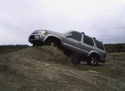
Re: First QX4


I really can't say which year is best as I've only had an '01, and I've never heard a discussion like this. But definitely an interesting thread and I'll be watching if it ever goes back on topic.
Re: First QX4
I also wonder about the multi pack ignition system of newer QX4. Mine is a single coil with original HT leads. The OBDII system is basic, no air filter for the cabin. If I had gotten into the rear seats I would not have bought this vehicle, the rear seats in my opinion are terrible. The BHP at 167 needs to be higher but any motor mods are out because the only time it needs HP is when fully loaded with 4 people and their luggage.
At just over 14 years of Canadian winters the body shows very little rusting, underneath is free from rust but that is because of Krown service every other year. OEM stock tires with another mounted snow set on OEM rims are long lasting about 130,000 a set.
Shocks changed at 250,000 Km and struts every 120,000 Km, suspension links every 120,000 Km.
Creature comforts as AC, heating, front seats cabin size all good and original equipped. Warranty work was minimal and included a brake redone for the front, the front struts, rebound rubber in rear and a complete exhaust system with 2 O2 sensors. Outside warranty has been good.
Maintenance may have acted in keeping this vehicle up with Mobil 1 oil changes based on time not distance, all fluids regularly changed. Only real bad thing is a failed front rotor and I can not find the reason, it is still on but I have tried to reset the ceramic pad to it but I think a rotor and pads are in the future.
I've owned many 4x4 vehicles, with the QX4 being by comparison not bad, but not really an off road vehicle with a frame-less body and not being robust enough when compared to a Ford Bronco. But as long as it is driven on paved roads and off road means my driveway, it is OK. I do put it in 4 x4 hi and low to flex the motor to engage the front and for lubrication to see parts. My Toyota 4x4 of 1973 was robust but you could not breathe in it while off road, the QX4 has comfort wrapped up not robutness.
Leather seats are all good and supple that from regular treatments but not suited to off road. The flimsy plastic like belly pan is a joke and Nissan could learn about 4x4 from Kubota. The Jeep of yester-year was a good 4x4, but the QX4 in my opinion is a great 4x4 but a lousy off road vehicle. The suspension was over thought but under done.
Buying a QX4 used and making it an off road vehicle makes no sense to me because if the QX4 is left alone as built the attack angles are wrong, the body too low, running boards in snow will lift the vehicle, and lack of control speeds via the auto transmission are all wrong. With bigger tires the axles leave a lot to be desired the twisting of large tires puts far too much strain on the pivot points and struts are too flimsy to withstand the twisting and off centre torsions that build up.
But a used QX4 with next to no value does make sense when used as a winter beater because the way it is, makes for a good people carrier in all sorts of weather in comfort.
At just over 14 years of Canadian winters the body shows very little rusting, underneath is free from rust but that is because of Krown service every other year. OEM stock tires with another mounted snow set on OEM rims are long lasting about 130,000 a set.
Shocks changed at 250,000 Km and struts every 120,000 Km, suspension links every 120,000 Km.
Creature comforts as AC, heating, front seats cabin size all good and original equipped. Warranty work was minimal and included a brake redone for the front, the front struts, rebound rubber in rear and a complete exhaust system with 2 O2 sensors. Outside warranty has been good.
Maintenance may have acted in keeping this vehicle up with Mobil 1 oil changes based on time not distance, all fluids regularly changed. Only real bad thing is a failed front rotor and I can not find the reason, it is still on but I have tried to reset the ceramic pad to it but I think a rotor and pads are in the future.
I've owned many 4x4 vehicles, with the QX4 being by comparison not bad, but not really an off road vehicle with a frame-less body and not being robust enough when compared to a Ford Bronco. But as long as it is driven on paved roads and off road means my driveway, it is OK. I do put it in 4 x4 hi and low to flex the motor to engage the front and for lubrication to see parts. My Toyota 4x4 of 1973 was robust but you could not breathe in it while off road, the QX4 has comfort wrapped up not robutness.
Leather seats are all good and supple that from regular treatments but not suited to off road. The flimsy plastic like belly pan is a joke and Nissan could learn about 4x4 from Kubota. The Jeep of yester-year was a good 4x4, but the QX4 in my opinion is a great 4x4 but a lousy off road vehicle. The suspension was over thought but under done.
Buying a QX4 used and making it an off road vehicle makes no sense to me because if the QX4 is left alone as built the attack angles are wrong, the body too low, running boards in snow will lift the vehicle, and lack of control speeds via the auto transmission are all wrong. With bigger tires the axles leave a lot to be desired the twisting of large tires puts far too much strain on the pivot points and struts are too flimsy to withstand the twisting and off centre torsions that build up.
But a used QX4 with next to no value does make sense when used as a winter beater because the way it is, makes for a good people carrier in all sorts of weather in comfort.