

Electric fan debate
Re: Electric fan debate
Lots of drag cars use the Tarus setup. I agree that a mechanical fan is still superior. Pulling huge amps with a dual Spal setup can be a problem for some electrical systems. If your car overheats on the highway at cruse speeds then you have a issue. The fans do little when the radiator sees highway speed air. My current drag car will go to 200F when staging and be at 180 at the end of the track with the fans off. Weird aint it.
-
jschrauwen

- Posts: 85
- Joined: Sun Nov 16, 2008 10:20 am
- Car: 1990 RHD JDM 300ZX TT 2+2 5sp
- Location: Frankford, Ontario
Re: Electric fan debate
I think because the Taurus fan is an oem product, it's bound to have been tested quite rigorously and up to the task of many years of daily use. It had been used for almost 7 years in the Taurus and other Ford cars like the Lincoln IIRC, so I assume it has proven itself over the long run. Being substantially cheaper than a Spal fan makes it a very attractive solution for those wishing to go the e-fan route. Nice thing about e-fans is that at highway speeds and depending on the owners thermosensor temp range selection, the Taurus e-fan can even be in the OFF mode completely thereby reducing any current draw compared to parasitic loss still in play from a mechanical fan.
-
J30tChumpCar
- Posts: 487
- Joined: Sat Jan 23, 2010 1:34 pm
- Car: 1995 J30t Totaled @ Charlotte motor speedway
1994 J30 gutted caged road racer Now with VH45DE!
1966 Chevy Corvair V8 mid-ship conversion - Location: WPB Fl.
- Contact:
Re: Electric fan debate
Anyone specifically have a yes or no for extended track use of one or the other?
-
swimshark
- Posts: 593
- Joined: Fri Feb 23, 2007 8:17 am
- Car: Bamboo Mist 1994 Infiniti J30 Soon to RIPs
Pearl White 1993 Infiniti J30 Project Ghost
Re: Electric fan debate
smh...J30s are not FWDRe037 wrote:i had dual altima fans on my pos 240sx. had dual 30amp fuses and relays, thermo switch, water temp gauges, everything properly set up. it greatly improve throttle response, butt dyno felt better, and mpg increased as well. noticed no diff in temperatures. only problem was power draw on the alternator at ngiht with head lights on, 75w FET driving lights, sub woofer, etc. lights would dim down noticeably, otherwise during the day, the car ran fine. however i havent done enoguh research to determine if the 300zx would get adequate cooling from a similar set up. i do know the j30 and maxima (and all fwd cars) get e-fans cus of the transverse engine layout. having a clutch fan on a longitudinal layout makes more sense as manufacturer. its more than likely cheaper, if it fails the fan will always spin. and the radiator is right in front of the engine already, so its pretty staight forward to slap a fan in front of the engine. not sure if their decision would have been different if cost wasnt an issue. only way to check is to install a coolant temp gauge and compare temps with clutch fan vs e fan... i dont have time to play on my car anymore. i barely have time to wash her.
[youtube]http://www.youtube.com/watch?v=G5wgxd28dzM[/youtube]
but anyways. ive been looking in to swapping to a TT radiator and this thread came out cause i am thinking of getting a mishimoto and after measuring the stock J30 radiator is seems it is only .8" wider than a TT radiator. so debating on doing the taurus fan since i can get one from pull a part for $20 or see if i can use the dual maxima e-fans i have installed. i bought the variable thermostat controlled harness from advance auto and wired up each fan independently.

-
jschrauwen
- Posts: 85
- Joined: Sun Nov 16, 2008 10:20 am
- Car: 1990 RHD JDM 300ZX TT 2+2 5sp
- Location: Frankford, Ontario
Re: Electric fan debate
Video doesn't work.
-
aroche25
- Posts: 195
- Joined: Fri Jan 14, 2011 12:46 pm
- Car: 2007 Mazdaspeed 3 GT
Looking for a Z32 Slicktop - Location: Florida
Re: Electric fan debate
jschrauwen wrote:Video doesn't work.
Working in Firefox on Win 7
-
jschrauwen
- Posts: 85
- Joined: Sun Nov 16, 2008 10:20 am
- Car: 1990 RHD JDM 300ZX TT 2+2 5sp
- Location: Frankford, Ontario
Re: Electric fan debate
Sorry, seems to work now. Thanks.aroche25 wrote:Working in Firefox on Win 7jschrauwen wrote:Video doesn't work.
I see John of Z1 at the dyno controls.
-
Lovenpain

- Posts: 161
- Joined: Sat Feb 24, 2007 2:09 pm
- Car: 1990 Nissan Fairlady Z32 TT Slicktop Auto
- Location: Byron, GA
- Contact:
Re: Electric fan debate
Here is my 2 cents on the debate...
Bought an aftermarket two row radiator due my stock one literally fell apart. Seeming mine is an automatic, it needed a cooler for the aft. So I bought one and mounted in front of the stock oil cooler. Then I read this topic along with others with this debate. I held off installing my 14" electric fan kit. Trying to give the mechanical fan a chance. Guess what? That piece of crapped failed ironically! So i figured I will give the electric one a try and if fails I can I reinstall a new mechanical fan. Well I still haven't had any over heating issues nice then. Been since January since I did the conversion. Recently raced it and even drove to Z1 motorsports. Which is almost a 6 hour trip and even got stock in traffic on the back home. NOT ONCE over heated! Not once a failure. STILL running strong. And will be upgrading to a 16" fan in a month just to get even a cooler temp. I run between 165-195 in temp. It hasn't even killed my battery yet. And stays on while the cars off until it's properly cooled off. Been constantly checking the fluids and everything seems to be running right. I do have an adjustable temp switch. And been making sure I set it to a decent range so it cools the car off properly. For my job I usually drive around all day and put almost 100 miles per day. So for my setup, the upgrade worked. If it fails, I have the parts to revert back to a mechanical. But till it fails, I will keep the electric setup on. Besides, I do love the space I have and can see all my belts and pulleys. But I can understand it might not work out for some. But take in mind I live in Georgia. And all our roads are black asphalt! Lol
Bought an aftermarket two row radiator due my stock one literally fell apart. Seeming mine is an automatic, it needed a cooler for the aft. So I bought one and mounted in front of the stock oil cooler. Then I read this topic along with others with this debate. I held off installing my 14" electric fan kit. Trying to give the mechanical fan a chance. Guess what? That piece of crapped failed ironically! So i figured I will give the electric one a try and if fails I can I reinstall a new mechanical fan. Well I still haven't had any over heating issues nice then. Been since January since I did the conversion. Recently raced it and even drove to Z1 motorsports. Which is almost a 6 hour trip and even got stock in traffic on the back home. NOT ONCE over heated! Not once a failure. STILL running strong. And will be upgrading to a 16" fan in a month just to get even a cooler temp. I run between 165-195 in temp. It hasn't even killed my battery yet. And stays on while the cars off until it's properly cooled off. Been constantly checking the fluids and everything seems to be running right. I do have an adjustable temp switch. And been making sure I set it to a decent range so it cools the car off properly. For my job I usually drive around all day and put almost 100 miles per day. So for my setup, the upgrade worked. If it fails, I have the parts to revert back to a mechanical. But till it fails, I will keep the electric setup on. Besides, I do love the space I have and can see all my belts and pulleys. But I can understand it might not work out for some. But take in mind I live in Georgia. And all our roads are black asphalt! Lol
-
TTkickedin

- Posts: 1658
- Joined: Tue Jul 19, 2011 5:51 am
- Car: 1991 Nissan 300zx TT 5 speed, t-tops, < currently in intensive care unit!
2011 MBTA BUS - Location: Braintree, MA
- Contact:
Re: Electric fan debate
good topic to post up! I'm gonna do some digging on this subject, I want to see how far the efans can go.
-
UberBricky
- Posts: 56
- Joined: Fri Dec 16, 2011 10:22 pm
- Car: 1990 300ZX TT
- Location: Edmonton, Alberta
Re: Electric fan debate
I would have no prob with a elec fan on my car, I ran a 3300cfm fan on a 2 core aluminum rad in my supercharged mustang for 2 years without a problem. Not apples to apples but if a V8 can be cooled by that type, I'm sure it can cool a V6.
-
TTkickedin
- Posts: 1658
- Joined: Tue Jul 19, 2011 5:51 am
- Car: 1991 Nissan 300zx TT 5 speed, t-tops, < currently in intensive care unit!
2011 MBTA BUS - Location: Braintree, MA
- Contact:
Re: Electric fan debate
^ by theory it should. if a 3300cfm fan is cooling a v8, it should be more than capable of handling a twin turbo v6.
I think to make the most of the setup, one would have to have some type of upper engine compartment ventilation so the hot air dragged out of the radiator would have a place to escape. (hood spacers?)
Some cherokee guys end up getting vents cut in their hood when they're running these Efans. Think about it, where's the ehat gonna go? Heat travels upward as you know, it won't dissipate to the bottom unless there's a physical air guide
I think to make the most of the setup, one would have to have some type of upper engine compartment ventilation so the hot air dragged out of the radiator would have a place to escape. (hood spacers?)
Some cherokee guys end up getting vents cut in their hood when they're running these Efans. Think about it, where's the ehat gonna go? Heat travels upward as you know, it won't dissipate to the bottom unless there's a physical air guide
-
UberBricky
- Posts: 56
- Joined: Fri Dec 16, 2011 10:22 pm
- Car: 1990 300ZX TT
- Location: Edmonton, Alberta
Re: Electric fan debate
Good point, the Pork Chop Express had a cowl hood on it:
(Just before paint)
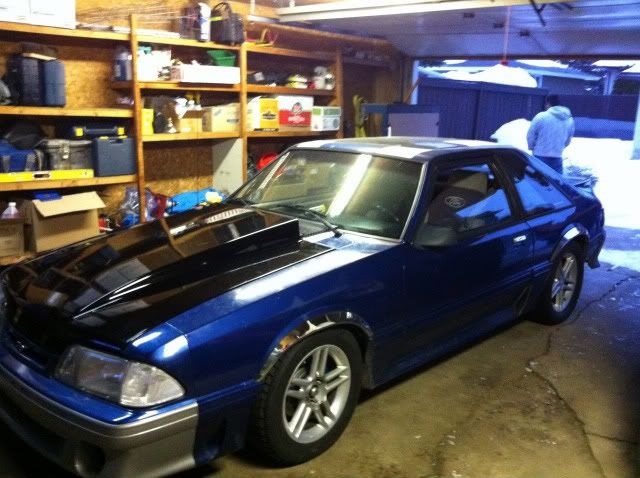
The fender flares were a joke fyi...
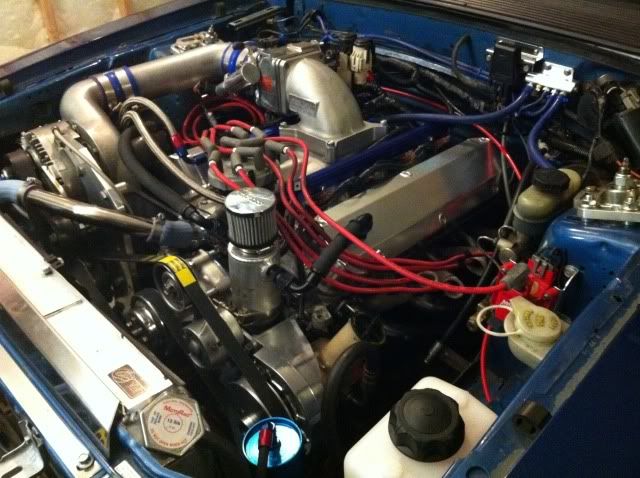

I wonder what a small cowl would look like on a Z's hood? My fans almost never ran once I had the cowl. Also, I just double checked the specs, they only flowed 2500cfm.
(Just before paint)
The fender flares were a joke fyi...
I wonder what a small cowl would look like on a Z's hood? My fans almost never ran once I had the cowl. Also, I just double checked the specs, they only flowed 2500cfm.
-
BigTDogg (MA)
- Posts: 4194
- Joined: Wed Aug 29, 2007 8:26 am
- Car: 1990 Nissan 300ZX TT
- Location: Boston MA
Re: Electric fan debate
But you have two fans. 2500CFM each, or combined?
A vented hood would help cooling. I don't think a cowl would look good on the Z32, but a slotted custom hood looks awesome.
http://www.speedyzx.com/Ventedhood/vh.html
A vented hood would help cooling. I don't think a cowl would look good on the Z32, but a slotted custom hood looks awesome.
http://www.speedyzx.com/Ventedhood/vh.html
-
TTkickedin
- Posts: 1658
- Joined: Tue Jul 19, 2011 5:51 am
- Car: 1991 Nissan 300zx TT 5 speed, t-tops, < currently in intensive care unit!
2011 MBTA BUS - Location: Braintree, MA
- Contact:
Re: Electric fan debate
You wouldn't necessarily need a drastic change of look to let the heat escape. it will find its way through this setup: 5-10mm hood spacers (just enough to raise the hood without being very obvious,) wheel well vents for the intercooler, intercooler ducts, a 2500-3000CFM Efan, and proper radiator shrouding *on a larger radiator*..
A car travels forward 90% of the time, right? So you need a rearward facing vent, that's known. The vent need not be a large vent, but the larger the gap, the better the cooling. Thus removing the hood entirely will cool it better in theory.
You could go with a vented hood, but if water drips down on electrical wires, that can cause other issues and can eventually rust or corrode wires, you know. Some hood designs have this in mind, it's up to preference how you want to have your vent.
So hood spacers do the trick for people that don't want a vented hood.

This guy has the right idea with the hood spacers, but the FMIC is throwing heated ambient air at the radiator.
It's a pretty substantial gap once you factor in all 3 sides (rear, left and right fender,) that are now venting to the atmosphere and allowing a larger channel of hot air to move out of the engine bay (lol, and this type of vent isn't more efficient for drifters by the way, it's still an outward current type of vent.)
The main reason why mechanical fans were manufactured to push so much air is because not many cars came factory with vents for all this air to exit, thus a bigger fan is needed. And the rear gap is so large with a vented hood, it's more efficient at venting hot air than a mechanical fan is when it's forcing air out. More work is required on that end, which is why you lose horsepower.
So the bigger the vent, the less the fan needs to pull, (to a certain extent, you also need to factor in how much CFM at idle is required to keep coolant at normal operating temperature as well, which is about 2500-3000CFM.) The vent will naturally pull the air from the front of the radiator through the fan, then the fan guides it along it's course in the engine bay, and you don't even need a large fan to do that. It's the path of air. Eventually you're helping with aerodynamics as well, but that's another topic.
Think about it, this is why intercooler vents are needed inside your wheel wells, it's the same theory! You have all this air in the front bumper ready to push air out of the itnercoolers, but since theres a huge amount of stale air behind the intercoolers with no vent to escape that it prevents airair from replacing it, almost acting as a wall for cooler air to replace. This hotter air also rises in the bumper, which heats up the sides and the upper portion of the radiator core support, which essentially raises under hood temps and could also heat the radiator..
A car travels forward 90% of the time, right? So you need a rearward facing vent, that's known. The vent need not be a large vent, but the larger the gap, the better the cooling. Thus removing the hood entirely will cool it better in theory.
You could go with a vented hood, but if water drips down on electrical wires, that can cause other issues and can eventually rust or corrode wires, you know. Some hood designs have this in mind, it's up to preference how you want to have your vent.
So hood spacers do the trick for people that don't want a vented hood.
This guy has the right idea with the hood spacers, but the FMIC is throwing heated ambient air at the radiator.
It's a pretty substantial gap once you factor in all 3 sides (rear, left and right fender,) that are now venting to the atmosphere and allowing a larger channel of hot air to move out of the engine bay (lol, and this type of vent isn't more efficient for drifters by the way, it's still an outward current type of vent.)
The main reason why mechanical fans were manufactured to push so much air is because not many cars came factory with vents for all this air to exit, thus a bigger fan is needed. And the rear gap is so large with a vented hood, it's more efficient at venting hot air than a mechanical fan is when it's forcing air out. More work is required on that end, which is why you lose horsepower.
So the bigger the vent, the less the fan needs to pull, (to a certain extent, you also need to factor in how much CFM at idle is required to keep coolant at normal operating temperature as well, which is about 2500-3000CFM.) The vent will naturally pull the air from the front of the radiator through the fan, then the fan guides it along it's course in the engine bay, and you don't even need a large fan to do that. It's the path of air. Eventually you're helping with aerodynamics as well, but that's another topic.
Think about it, this is why intercooler vents are needed inside your wheel wells, it's the same theory! You have all this air in the front bumper ready to push air out of the itnercoolers, but since theres a huge amount of stale air behind the intercoolers with no vent to escape that it prevents airair from replacing it, almost acting as a wall for cooler air to replace. This hotter air also rises in the bumper, which heats up the sides and the upper portion of the radiator core support, which essentially raises under hood temps and could also heat the radiator..
Last edited by TTkickedin on Mon Mar 26, 2012 9:02 am, edited 2 times in total.
-
TTkickedin
- Posts: 1658
- Joined: Tue Jul 19, 2011 5:51 am
- Car: 1991 Nissan 300zx TT 5 speed, t-tops, < currently in intensive care unit!
2011 MBTA BUS - Location: Braintree, MA
- Contact:
Re: Electric fan debate
You also have to take into account that turbo's create a lot of heat in the back of the engine compartment. A vent encouraging rearward flow of air pulling heat from the top of the turbos would definitely help under hood temps, as well as provide a good vent for efans 
Tony, for that hood to work at 100% efficiency, it definitely needs a vent closer to the windshield to pull the air from the turbos out. Let's say you're traveling at 100mph, you have hot air over the turbos being pushed by the cars motion towards the firewall. A tiny amount of this air dissipates with the firewall's downward slope towards the road (heating your exhaust near the 02 sensor area.) But with a proper vent behind the engine, pretty much all of the hot air traveling at 100mph will be encouraged to follow the flow of air being guided by the efans on the radiator.
Rather than explaining in text, here's pics:

Stock is like this ^ Air sort of leaves through the bottom, and makes the engine compartment, medium pressure, which is limiting the airflow in the radiator.
But if you add a top vent, you're creating a lower pressure engine compartment:
Air will leave through the top and bottom. Seal off the bottom of the engine bay, and you have air exiting through the path of lease resistance. Faster current of air, more consistent pathway for air to go, and you'd also be helping aerodynamics if you sealed the bottom of the engine bay and had a vented hood or raised hood.
Not to mention, since you're creating a lower pressure engine bay, you're also creating a more aerodynamic z32.
Tony, for that hood to work at 100% efficiency, it definitely needs a vent closer to the windshield to pull the air from the turbos out. Let's say you're traveling at 100mph, you have hot air over the turbos being pushed by the cars motion towards the firewall. A tiny amount of this air dissipates with the firewall's downward slope towards the road (heating your exhaust near the 02 sensor area.) But with a proper vent behind the engine, pretty much all of the hot air traveling at 100mph will be encouraged to follow the flow of air being guided by the efans on the radiator.
Rather than explaining in text, here's pics:
Stock is like this ^ Air sort of leaves through the bottom, and makes the engine compartment, medium pressure, which is limiting the airflow in the radiator.
But if you add a top vent, you're creating a lower pressure engine compartment:
Air will leave through the top and bottom. Seal off the bottom of the engine bay, and you have air exiting through the path of lease resistance. Faster current of air, more consistent pathway for air to go, and you'd also be helping aerodynamics if you sealed the bottom of the engine bay and had a vented hood or raised hood.
Not to mention, since you're creating a lower pressure engine bay, you're also creating a more aerodynamic z32.
Last edited by TTkickedin on Mon Mar 26, 2012 9:33 am, edited 1 time in total.
-
BigTDogg (MA)
- Posts: 4194
- Joined: Wed Aug 29, 2007 8:26 am
- Car: 1990 Nissan 300ZX TT
- Location: Boston MA
Re: Electric fan debate
Nope, that hood will work great where it is. It's directly behind the fan shroud, so it pulls hot air from the radiator. The hood spacing on the other hand, looks ghetto and ricetastic (IMHO) and I would bet dollars to donuts doesn't cool as well as the custom hood. Any water dripping in that area would hit the back side of the radiator, inconsequential electrically. The only downside to the custom hood is the cost and finding a shop talented enough to make one.
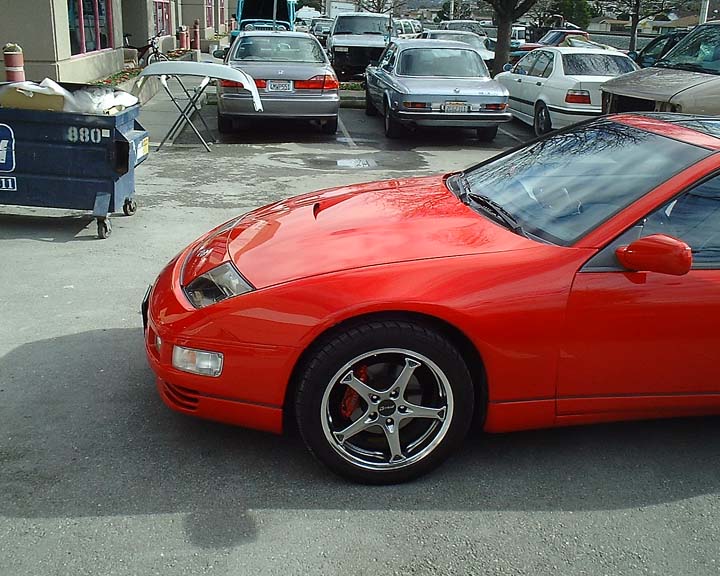
Intercooler vents in the wheel well aren't needed either. They don't hurt, and don't look stupid like hood spacers, but if you have proper fender liners then the vents offer little benefit. The area between the tire and wheel well is a high pressure zone, so air is less likely to flow into it.

Look below the DS IC slits. See that duct there? That's on every brand new factory fender liner. It sucks fresh air through it, and then pulls hot air off the back side of the ICs, the venturi effect.
Intercooler vents in the wheel well aren't needed either. They don't hurt, and don't look stupid like hood spacers, but if you have proper fender liners then the vents offer little benefit. The area between the tire and wheel well is a high pressure zone, so air is less likely to flow into it.
Look below the DS IC slits. See that duct there? That's on every brand new factory fender liner. It sucks fresh air through it, and then pulls hot air off the back side of the ICs, the venturi effect.
-
TTkickedin
- Posts: 1658
- Joined: Tue Jul 19, 2011 5:51 am
- Car: 1991 Nissan 300zx TT 5 speed, t-tops, < currently in intensive care unit!
2011 MBTA BUS - Location: Braintree, MA
- Contact:
Re: Electric fan debate
That venturi vent is actually a great idea.. Make me rethink it a little bit.
What if you had intercooler ducts directly behind the intercoolers pointing to the outside of the wheel well, not the inside as I mentioned earlier (closer to the bottom of the engine bay?)
Like, using that picture, visualize it directed more towards the inside of the bumper, (closer gap between the two ducts). that would be a high flowing area and would still contribute to the venturi effect.
one problem i see with a traditional vent is that the hot air above the turbos arent addressed. that hot air won't go forward if you're moving forward. it'll be pressed to the firewall, maybe circulating near the battery compartment and the brake master cylinder.
What if you had intercooler ducts directly behind the intercoolers pointing to the outside of the wheel well, not the inside as I mentioned earlier (closer to the bottom of the engine bay?)
Like, using that picture, visualize it directed more towards the inside of the bumper, (closer gap between the two ducts). that would be a high flowing area and would still contribute to the venturi effect.
one problem i see with a traditional vent is that the hot air above the turbos arent addressed. that hot air won't go forward if you're moving forward. it'll be pressed to the firewall, maybe circulating near the battery compartment and the brake master cylinder.
-
sdhsbaseball
- Posts: 154
- Joined: Fri Feb 27, 2009 4:46 am
- Car: 1991 300zx TT
- Location: Chattanooga, TN
Re: Electric fan debate
If that is true then why does the GTR have vents in the wheel well for the oil cooler which is basiclly in the same place as our intercoolers?BigTDogg (MA) wrote:
Intercooler vents in the wheel well aren't needed either. They don't hurt, and don't look stupid like hood spacers, but if you have proper fender liners then the vents offer little benefit. The area between the tire and wheel well is a high pressure zone, so air is less likely to flow into it.
Look below the DS IC slits. See that duct there? That's on every brand new factory fender liner. It sucks fresh air through it, and then pulls hot air off the back side of the ICs, the venturi effect.
-
TTkickedin
- Posts: 1658
- Joined: Tue Jul 19, 2011 5:51 am
- Car: 1991 Nissan 300zx TT 5 speed, t-tops, < currently in intensive care unit!
2011 MBTA BUS - Location: Braintree, MA
- Contact:
Re: Electric fan debate
True ^
Getting into the knitty-gritty, one could make the argument that if the intercooler ducts in the tires were in the wheel well with the gills pointing downward and out of the intercooler area, (which they are,) the high pressure wind created from the tire's forward movement would actually also create a venturi effect and pull the air out of the intercooler area. Pressure is actually good in this case, or the duct would be useless.
I've seen other cars with oem fender well ducts, can't remember which.
Either way, a duct is necessary in the intercooler area, no matter where it's put, but needs to be somewhere. I think the most ideal spot for it would be on the sides of the bumper, honestly. Ducts in the front of the intercooler, and a duct pointing to the vent out of the bumper, and a completely sealed fender well area. Venturi effect would work best right there due to the higher pressure high flowing air forced on the outside of the bumper's curve.
But this might compromise the look of the bumper, (could come out awesome if you use the skyline type of bumper vent, like so: )

Getting into the knitty-gritty, one could make the argument that if the intercooler ducts in the tires were in the wheel well with the gills pointing downward and out of the intercooler area, (which they are,) the high pressure wind created from the tire's forward movement would actually also create a venturi effect and pull the air out of the intercooler area. Pressure is actually good in this case, or the duct would be useless.
I've seen other cars with oem fender well ducts, can't remember which.
Either way, a duct is necessary in the intercooler area, no matter where it's put, but needs to be somewhere. I think the most ideal spot for it would be on the sides of the bumper, honestly. Ducts in the front of the intercooler, and a duct pointing to the vent out of the bumper, and a completely sealed fender well area. Venturi effect would work best right there due to the higher pressure high flowing air forced on the outside of the bumper's curve.
But this might compromise the look of the bumper, (could come out awesome if you use the skyline type of bumper vent, like so: )
-
UberBricky
- Posts: 56
- Joined: Fri Dec 16, 2011 10:22 pm
- Car: 1990 300ZX TT
- Location: Edmonton, Alberta
Re: Electric fan debate
BigTDogg (MA) wrote:But you have two fans. 2500CFM each, or combined?
That is total for both, they were small due to clearance issues with the SC pulley.
-
sdhsbaseball
- Posts: 154
- Joined: Fri Feb 27, 2009 4:46 am
- Car: 1991 300zx TT
- Location: Chattanooga, TN
Re: Electric fan debate
I agree about having a completely about having it sealed so air goes in one way and out the other without having the opportunity to escape randomly. That’s how it is on the IMSA 300z they have brake style ducts going to the intercooler then the same style ducting take the air right back out. But cutting a massive hole in the fender liner and then just calling that good would no work and *might* even cause more harm then good.TTkickedin wrote:True ^
Getting into the knitty-gritty, one could make the argument that if the intercooler ducts in the tires were in the wheel well with the gills pointing downward and out of the intercooler area, (which they are,) the high pressure wind created from the tire's forward movement would actually also create a venturi effect and pull the air out of the intercooler area. Pressure is actually good in this case, or the duct would be useless.
I've seen other cars with oem fender well ducts, can't remember which.
Either way, a duct is necessary in the intercooler area, no matter where it's put, but needs to be somewhere. I think the most ideal spot for it would be on the sides of the bumper, honestly. Ducts in the front of the intercooler, and a duct pointing to the vent out of the bumper, and a completely sealed fender well area. Venturi effect would work best right there due to the higher pressure high flowing air forced on the outside of the bumper's curve.
But this might compromise the look of the bumper, (could come out awesome if you use the skyline type of bumper vent, like so: )
-
TTkickedin
- Posts: 1658
- Joined: Tue Jul 19, 2011 5:51 am
- Car: 1991 Nissan 300zx TT 5 speed, t-tops, < currently in intensive care unit!
2011 MBTA BUS - Location: Braintree, MA
- Contact:
Re: Electric fan debate
^ Fender well vents pointing out and downward to the road, as described for the 300zx.

But this isn't what I think would be the best for cooling. The air is traveling at a much higher rate of speed on the sides of the bumper. If you seal off the fender well and open up a slit in the sides of the bumper and route a duct going right to that vent and nothing else, It would drastically improve the cooling efficiency in that area. The wind wont go a reverse direction of flow when the path of least resistance is to continue it's path, so It wont go into this vent unless it's fabricated at a weird angle. Once the wind from the intercooler reaches the vent in the bumper, it will be "sucked" into the path and continue on with the rest of the wind.
But this isn't what I think would be the best for cooling. The air is traveling at a much higher rate of speed on the sides of the bumper. If you seal off the fender well and open up a slit in the sides of the bumper and route a duct going right to that vent and nothing else, It would drastically improve the cooling efficiency in that area. The wind wont go a reverse direction of flow when the path of least resistance is to continue it's path, so It wont go into this vent unless it's fabricated at a weird angle. Once the wind from the intercooler reaches the vent in the bumper, it will be "sucked" into the path and continue on with the rest of the wind.
Re: Electric fan debate
Gotta ask, Got a 1993 j30 things over heating but doesn't start over heating right off the bat, usually takes some Lengthily driving to get the needle to start rising on it, I've had the cooling system flushed, NO LEAKS, everything seems fine till its been driven for a bit, I'm thinking it's the Fan Clutch but not 100% sure has anyone else with a j30 have any similar issues such as this? This Is a bone stock j30 with the Z motor in it. I've been reading this and wondering since technology has changed would it be efficient NOW to change over to an E-Fan?

Re: Electric fan debate
I would say that electric fans are better for a purely performance application. That being said, putting an electric fan on a car is similar to turboing a normally N/A car. You cant just slap it on there and expect it to work. You will need a radiator built for your new fan, as well as a fan shroud to direct the air to the right places. If you are using it for a turbo application you may need to modify or replace your intercooler (if you have one). The fan is a great tool! I would never have a performace application without one. But it is completely irresponsible to say that you are going to buy a $20 ebay fan and slap it on your stock car and see what happens. You have to build your fan setup for your own custom application. They weigh less and take up a lot less room while increasing efficiency while set up right. If you know what you are doing, they will never fail you. Saying they are unreliable, is like saying you don't know what you are doing. an electric motor doesnt just fail. Either you bought a cheap product, or you wired it wrong. Buy quality parts and do your research!