Hey fellas... and girls
im considering going N/A...
if i really wanted to put down some good numbers how much would i be looking into dropping into the car.
F/I is just too expensive... atleast the up keep (from what i've heard)
im going to have a good amount of cash when i get done with this tour in afghan (90 more days yeeeeeessssssssss) and i really want to get the car worked on.

Considering N/A
Re: Considering N/A (dyss)
If you want decent HP then it might actually be cheaper to go FI. If you are going to go racing at tracks or even just at autox then going all motor is good. It is more reliable to a certain degree and a smoother power band. I have done cams, 3.9 rear, underdrive pulleys, plenum spacer, port and polished heads, and complete exhaust from heads, to high flow cats to straight 3'' pipes out the back, with a utech to tune it all. With labor it would hve been cheaper for me to just put a vortech (or whatever) and get 350hp. As is right now I am getting 309 at the rear wheels, but the car is bad ***! If you want a dyno queen then go fi. If you want to have fun at the trach spend your money on suspension and tires first!
Re: Considering N/A (matt_2036)
hmm sounds all good to me thanks.
how much would you say you've dropped into all that including labor?
how much would you say you've dropped into all that including labor?
Re: Considering N/A (dyss)
With everything on my signature around $20000. But if youa re looking to just go fast and look good in a straight line you dont need a lot of the stuff I have such as coilovers, sway bars, clutch, flywheel, engine damper ect. These things just make you fast on the track.
Re: Considering N/A (matt_2036)
damn... if i was gonna drop 20k in my car i would definitely go F/I
we'll see though... i have around 5k now... and i'll have a bit more than that when i get back from afghan. so we shall seeeeee.
thanks for answering my questions. much appreciated.
we'll see though... i have around 5k now... and i'll have a bit more than that when i get back from afghan. so we shall seeeeee.
thanks for answering my questions. much appreciated.
For 5k you are close to getting a kit. Then another 2k for instalation, 1k for a good tuning kit, and now you have a car that goes but doesnt stop, so you get a bbk kit 2k, then you want wider wheels 2k, then you can go fast but cant handle so you get a coilovers 2k and way bars, and camber kits .5k. Anyway you get the picture. Eventually your motor will blow and you will get a short block with forged internals (which you should ahve done in the first place) 5 to 10k depending on what you buy. I will tell you this, the number one thing I did to my car to make it faster in a staight line, and on a track for that matter is changing the gears in the rear.
Re: (matt_2036)
yeah i see what your saying...
fortunately i already have the sway and suspension, i already have the wheels (Volk CE28n 9.5F 10.5R) exhaust is done, the brakes will likely come short after the install and tune.
forged internals tho... yikes, i know their necessary, but im curious as to how long i can hold off till i actually need those.
fortunately i already have the sway and suspension, i already have the wheels (Volk CE28n 9.5F 10.5R) exhaust is done, the brakes will likely come short after the install and tune.
forged internals tho... yikes, i know their necessary, but im curious as to how long i can hold off till i actually need those.
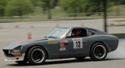
Re: (evildky)
hmm interesting.
yeah im looking to get to about 4-450 whp is my goal. i can already see F/I is already the cheaper route. have you found that N/A is more reliable though in the long run? i baby my cars so either route i take im taking extreme caution.
yeah im looking to get to about 4-450 whp is my goal. i can already see F/I is already the cheaper route. have you found that N/A is more reliable though in the long run? i baby my cars so either route i take im taking extreme caution.
-
spitalul2bad
- Posts: 327
- Joined: Sun Jun 08, 2008 12:25 pm
- Car: Nissan 350z Roadster - REV-UP Engine
Opel Vectra C
BMW E30 6cylinder 2000cmc - Contact:
Re: (dyss)
a fully built Cosworth motor (bottom too) and the right supporting mods will make about 350 whp. It would take huge cash to make 400whp with the 350z N/A but it is do-able...
some guy on my350z did it I think but with the help of some JDM fellows and special help from left & right.
the N/A build will be 100% reliable... the F/I... iffy. If you do the engine build N/A and then add F/I you'll go to 700whp
some guy on my350z did it I think but with the help of some JDM fellows and special help from left & right.
the N/A build will be 100% reliable... the F/I... iffy. If you do the engine build N/A and then add F/I you'll go to 700whp
Re: (spitalul2bad)
hmmm...
looking into the cosworth, they appear to be legit. performance and everything looks great.
i couldn't find anything specifically though for a 2007 Z..
looking into the cosworth, they appear to be legit. performance and everything looks great.
i couldn't find anything specifically though for a 2007 Z..
-
Retired Chief

- Posts: 374
- Joined: Fri Sep 19, 2008 4:11 pm
Re: (dyss)
Jetpilot posted a link once to a team that built an N/A 350Z that put down 428hp. Not cheap though. They have sponsors with deep pockets.
-
C-Kwik

- Moderator
- Posts: 8070
- Joined: Thu Aug 01, 2002 9:28 pm
- Car: 2013 Chevy Volt, 1991 Honda CRX DX
Re: (dyss)
While its feasible, understand, that making more HP is generally a function of how much air you can pump through the engine. With NA, you will generally try and increase volumetric efficiency and/or increase redline as higher RPM's will pump more air through the motor. This is how Honda, BMW, and Ferrari are able to achieve 100HP/Liter figures on some of their motors. Making a high revving motor can be a challenge though. Especially with a motor that wasn't engineered with that in mind. Tensile forces on the bottom end become high. Balancing becomes more crucial. And trying to keep volumetric efficiency up in those higher revs is imperative. And if this is going to be a street motor, the latter can become quite difficult to achieve as the tendency is to lose low end VE as you increase high end VE.dyss wrote:hmm interesting.
yeah im looking to get to about 4-450 whp is my goal. i can already see F/I is already the cheaper route. have you found that N/A is more reliable though in the long run? i baby my cars so either route i take im taking extreme caution.
If your goal is 400-450 WHP, we can assume about 450 HP at the crank minimum. That's 128 HP/L. The best Honda has been able to produce is 120HP/L in the S2000. And Honda has a slight advantage in that they can rely not only on variable cam timing to try and provide good VE throughout the rev range, but they can also change the lift. With the 07 Z, you have variable cam timing on both the intake and exhaust and that is a big plus, but typically, manufacturers have only been able to pull off about 100 HP/L without losing drivability. An extra 28 HP/L would be tough to pull off on a motor that is already being pushed to its limits. This will be getting into the realm of reengineering, which willl likely be expensive and beyond the knowledge and scope of most tuning shops.
I'd recommend a supercharger or Turbo. They can be bolted on or at worst, you rebuild the motor to handle the boost. This is relatively simple as it just adds stronger parts with the only real engineering being the decision of what compression ratio to run.
N/A power that is well beyond the manufacturer's engineering is likely less reliable. Generally, adding boost to a motor add's only a moderate amount of additional stress. Most people kill motors due to detonation, which is either a result of poor tuning and/or the limitations of high compression coupled with the limitations on available gas. As for powerband, if by smoother, you mean flatter, then yes, NA can be smoother. If that's what you mean though, you might ask yourself what is better. "Smoother?" Or more powerful?matt_2036 wrote:It is more reliable to a certain degree and a smoother power band.

Re: (C-Kwik)
C-Kwik.....our walking encyclopedia
Re: (C-Kwik)
My point is more HP isnt always faster around the race track. Most fi kits will get you around 340 to 360whp. I am running 309 whp all motor with shorter gears. I would rather have my set up (atleast while I am not an expert race car driver) without the extra weight (more front bias) of an fi kit right now. I also dont think i ahve done anything to extreme to make my motor to much less reliable than stock.
Re: (C-Kwik)
Kwik thank you very much for that info. it helped, im still however.... deciding lol.
you've put alot into perspective though and i appreciate it.
you've put alot into perspective though and i appreciate it.
-
C-Kwik
- Moderator
- Posts: 8070
- Joined: Thu Aug 01, 2002 9:28 pm
- Car: 2013 Chevy Volt, 1991 Honda CRX DX
Re: (matt_2036)
Yes and no. Peak HP isn't the end all of acceleration. Average HP in the range of RPM's used is. But the assumption then here would be that a 340HP+ turbo kit has a peaky power curve. But the amount of boost needed to make such a moderate level of power in a VQ means there are many great turbo matches that can provide a reasonably broad power band.matt_2036 wrote:My point is more HP isnt always faster around the race track. Most fi kits will get you around 340 to 360whp. I am running 309 whp all motor with shorter gears. I would rather have my set up (atleast while I am not an expert race car driver) without the extra weight (more front bias) of an fi kit right now. I also dont think i ahve done anything to extreme to make my motor to much less reliable than stock.
Shorter gears does not net you that much more acceleration. Once you get out of first, it starts to average out in a hurry. You're still going to be limited to 309 HP worth of leverage (part of which appears to be reductions in mass that don't actually contribute to more power, but just reduce the mass neededing to be accelerated; ie, your brake horsepower would be somewhat lower). And of course, if one wanted, they could just as easily drop the gearing on a turbo motor as well.
As for reliability, I referred specifically to power levels that are well beyond the engineering of the motor. Perhaps to clarify here, I'm talking mostly of a higher revving motor. The bolts ons you put on are limited to increasing VE and reducing some of the mass the motor has to accelerate. But the OP stated a goal of 400-450 WHP. To put that into perspective, if we assumed a minimum of 450 crank HP at 6000 RPM, that would mean the motor would have to put out 393 lb-ft of torque at 6000 RPM. If the shape of the power band stayed the same, the peak torque would be even higher. But even assuming that was peak torque, that's some 112 lb-ft of torque per Liter. Some of the highest specific output motors barely break 75 ft-lbs per liter in NA form. I'd speculate it would be downright impossible to get the kind of VE that could yield that much torque per HP. Let alone over a broad range of RPM's.
Re: Considering N/A (dyss)
Youll spend more money trying to go 300whp N/A than making 500F/I
-
finalforce

- Posts: 183
- Joined: Mon Sep 25, 2006 8:23 am
- Car: Nissan
^ Very true, even just breaking 300whp mark is tough and requires a lot of bolt ons and ems tuning. The amount of labor to add headers and cams pretty much will require taking off the engine to install. Some have done the install while on the car, but its is very, very nerve racking and time consuming. You're better off attaining your goals going fi.