If you have low oil pressure, it would be fairly constant, thus, not likely to cause an intermittent problem such as this.
Just to make sure we are all speaking the same language - take a few minutes and read this wikipedia article about vapor lock. At least the 1st 2 paragraphs.
EDIT: OK, so I can't make a link to the Wikipedia article. Fuzznuggets! So here is the text from the first part of that article in RED. Better yet, go to wikipedia.com and type in "Vapor Lock" in the search and read the whole article.
Vapor lock is a problem that mostly affects gasoline-fueled internal combustion engines.
It occurs when the liquid fuel changes state from liquid to gas while still in the fuel delivery system. This disrupts the operation of the fuel pump, causing loss of feed pressure to the carburetor or fuel injection system, resulting in transient loss of power or complete stalling. Restarting the engine from this state may be difficult. The fuel can vaporise due to being heated by the engine, by the local climate or due to a lower boiling point at high altitude. In regions where higher volatility fuels are used during the winter to improve the starting of the engine, the use of "winter" fuels during the summer can cause vapor lock to occur more readily.
Vapor lock was far more common in older gasoline fuel systems incorporating a low-pressure mechanical fuel pump driven by the engine, located in the engine compartment and feeding a carburetor. Such pumps were typically located higher than the fuel tank, were directly heated by the engine and fed fuel directly to the float bowl inside the carburetor. Fuel was drawn under negative pressure from the feed line, increasing the risk of a vapor lock developing between the tank and pump. A vapor lock being drawn into the fuel pump could disrupt the fuel pressure long enough for the float chamber in the carburetor to partially or completely drain, causing fuel starvation in the engine. Even temporary disruption of fuel supply into the float chamber is not ideal; most carburetors are designed to run at a fixed level of fuel in the float bowl and reducing the level will reduce the fuel to air mixture delivered to the engine.
Carburetor units may not effectively deal with fuel vapor being delivered to the float chamber. Most designs incorporate a pressure balance duct linking the top of the float bowl with either the intake to the carburetor or the outside air. Even if the pump can handle vapor locks effectively, fuel vapor entering the float bowl has to be vented. If this is done via the intake system, the mixture is, in-effect, enriched, creating a mixture control and pollution issue. If it is done by venting to the outside, the result is direct hydrocarbon pollution and an effective loss of fuel efficiency and possibly a fuel odor problem. For this reason, some fuel delivery systems allow fuel vapor to be returned to the fuel tank to be condensed back to the liquid phase, or using an active carbon filled cannister where fuel vapor is absorbed. This is usually implemented by removing fuel vapor from the fuel line near the engine rather than from the float bowl. Such a system may also divert excess fuel pressure from the pump back to the tank.
Vapor lock is intermittent and unpredictable but always related to hot engine/weather. In essence, fuel gets vaporized somewhere in the fuel line BEFORE reaching the carb and the carb cannot effectively deliver a vapor. You have a positive pressure fuel pump which helps reduce the chance of forming vapor in the fuel line before it reaches the carb. If you are forming vapor in the fuel line BEFORE it reaches the carb, then the glass at the front of the carb should show little or no fuel at the time the motor cuts off. If the carb bowl vent has been capped off, it would be easy enough to uncap it just to see if it helps. I kinda doubt it, but maybe you are developing vapor inside the carb bowl, (it has no way out except though the carb vent - see photo). You don't need a line to the charcoal cannister, just make sure it's not capped off.
It will take some effort, but next time it cuts off, before you pump the pedal and crank the motor, go look at the carb glass to see if you have fuel in the bowl. If so, have a friend crank the motor while you look down the throat of the carb to see if she's squirting fuel. IMHO, if you have fuel in the bowl and you can see fuel going down the throat of the carb RIGHT AFTER it shuts off, then it is some other problem, NOT vapor lock.





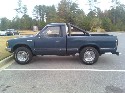


 Plz give me the strength to fix this truck lol.