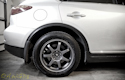
I drove my 2wd in the snow for the first time today. With a set of Michelin Xi2 tires I had no problems getting around. I came to a complete stops on hills and would get some rear wheels slip starting off as the tires hooked up. The traction and stability system nannies kept the drama low; almost boringly so. I clearly had more traction than AWD vehicles with all season tires.
As usual when winter strikes my area the roads were littered with crashed SUVs. The usual examples poor driving skills and bad judgment at work. The word accident doesn't apply; some of these people should be charged with criminal negligence.

2WD gets it done in the snow and ice.
Re: 2WD gets it done in the snow and ice. (jmess)
I have a EX35 AWD with Xice Xi2. I love this tire...
It really depends how thick the snow is to really see how good the rear
wheel drive is and also how slow you drive. When it comes to Ice I would
prefer an AWD.
It really depends how thick the snow is to really see how good the rear
wheel drive is and also how slow you drive. When it comes to Ice I would
prefer an AWD.
Re: 2WD gets it done in the snow and ice. (AWGD8)
Had a pretty icy commute this morning. The Xi2s continue to impress me. I had the original X-ICE on a Honda van and the new version seems to have a little more bite on the ice. I find the EX to be a really easy car to drive on the slick stuff.
Re: 2WD gets it done in the snow and ice. (jmess)
We have a powdery snow today and when I drove home, it was a little
intense during turning. Wow! that powder snow is very slippery, even
though it just a few inches on the ground (2-3 inches). I have more
confindent driver on a coarse or med-large flakes snow even if it is 6-7
inches. I`ve been living in midwest for 15 yrs now, and seldom I encounter
a very fine snow flakes (Powder). So when I drove home today, it slid a
little during turning and the nanny kicks in all the time, but when the car
pointed straight, it doesn`t wobble at all
I couldn`t imagine driving without the snow tires...
The best thing about the snow tires is it accelerate quicker from the stop.
Now I have a chance to beat all Muscle Cars off the line....
Modified by AWGD8 at 4:29 PM 12/16/2008
intense during turning. Wow! that powder snow is very slippery, even
though it just a few inches on the ground (2-3 inches). I have more
confindent driver on a coarse or med-large flakes snow even if it is 6-7
inches. I`ve been living in midwest for 15 yrs now, and seldom I encounter
a very fine snow flakes (Powder). So when I drove home today, it slid a
little during turning and the nanny kicks in all the time, but when the car
pointed straight, it doesn`t wobble at all
I couldn`t imagine driving without the snow tires...
The best thing about the snow tires is it accelerate quicker from the stop.
Now I have a chance to beat all Muscle Cars off the line....
Modified by AWGD8 at 4:29 PM 12/16/2008
-
BrokenTiller

- Posts: 85
- Joined: Tue Oct 21, 2008 6:20 pm
Re: 2WD gets it done in the snow and ice. (AWGD8)
And my favorite thing about snow tires is that you can decelerate and change directions quicker than the vehicles with all season rubber.

Re: 2WD gets it done in the snow and ice. (BrokenTiller)
Had just a nice drive Home in the first real Winterstorm here in Toronto.
I have "only" the All Seasons M&S Dunlop Tires but ,wow .
As i left the Highway i had to go up a tiny Hill and around 5-6 cars in Front of me could not make it up. Even a Guy in his Lincoln Truck ,who was beeping me on the Highway because he was in a Rush, i guess. ha,ha,ha like on Railroad Tracks was i passing everybody and they only saw my snowy back.
Then i went to Downtown Infinity in Toronto and had my Windshield Wipers replaced . I could not see a thing when i was operating them . Funny, in the up Move the cleard and down was blurry and slushy. The Service Manager Greg replaced them right away with new ones from a new Showcar because they had none in Stock ! But no charge at all and a nice new Facility .
so,lets see what the next snowy days are like.
I have "only" the All Seasons M&S Dunlop Tires but ,wow .
As i left the Highway i had to go up a tiny Hill and around 5-6 cars in Front of me could not make it up. Even a Guy in his Lincoln Truck ,who was beeping me on the Highway because he was in a Rush, i guess. ha,ha,ha like on Railroad Tracks was i passing everybody and they only saw my snowy back.
Then i went to Downtown Infinity in Toronto and had my Windshield Wipers replaced . I could not see a thing when i was operating them . Funny, in the up Move the cleard and down was blurry and slushy. The Service Manager Greg replaced them right away with new ones from a new Showcar because they had none in Stock ! But no charge at all and a nice new Facility .
so,lets see what the next snowy days are like.
-
ecosse

- Posts: 18
- Joined: Fri Sep 05, 2008 10:18 am
- Car: 2008 EX35 (Black Obsidian with Chestnut Leather)
Re: 2WD gets it done in the snow and ice. (Ogiku)
You need to clarify that we Canadians all have the ATESSA AWD standard here so, in our case, its "AWD gets it done in snow and ice" .
Re: 2WD gets it done in the snow and ice. (ecosse)
mmh, you are so right. thanks for correcting me.
-
EXceptional

- Posts: 1222
- Joined: Sun Apr 06, 2008 7:54 pm
- Car: 2008 Aspen Pearl EX35 Freakin Loaded!
Re: 2WD gets it done in the snow and ice. (Ogiku)
What is ATESSA ?
-
sg77
- Posts: 164
- Joined: Thu Sep 18, 2008 9:16 pm
- Car: 2008 Infiniti EX35
- Location: Santa Barbara, CA
Re: 2WD gets it done in the snow and ice. (EXceptional)
ATESSA is just what Nissan/Infiniti calls their AWD system. http://en.wikipedia.org/wiki/ATTESA
-
EXceptional
- Posts: 1222
- Joined: Sun Apr 06, 2008 7:54 pm
- Car: 2008 Aspen Pearl EX35 Freakin Loaded!
Slight Topic Hijack...
What a great Link...
It says that we have this system. It sure sounds complicated under there...
ATTESA-ETSIt utilizes what is mostly a conventional RWD gearbox. Drive to the rear wheels is constant via a tailshaft and rear differential, however drive to the front wheels is more complex by utilizing a transfer case at the rear of the gearbox. The drive for the front wheels comes from a transfer case bolted on the end of an almost traditional RWD transmission although the (bell housing is slightly different to allow the driveshaft for the front wheels to pass it, the main body is exactly the same as the RWD transmission, the tail-shaft is different to couple to the transfer case).
A short driveshaft for the front wheels exits the transfer case on the right side. Inside the transfer case a chain drives a multi-plate wet clutch pack, torque is apportioned using a clutch pack center differential, similar to the type employed in the Steyr-Daimler-Puch system in the Porsche 959.
On the rear differential is a high pressure electric oil pump, this pump pressurises Normal ATF oil (0-288psi) into the transfercase to engage the clutchpack. The higher the oil pressure the transfer case is supplied with, the more the clutch pack engages, this is how the torque to the front wheels is varied. The transfer case has its own dedicated ATF (Nissan special ATF) oil to lubricate the chain/clutch pack.
The front driveshaft runs along the right side of the transmission, into a differential located on the right of the engine's oilpan. The front right axle is shorter than the left, as the differential is closer to the right wheel. The front left axle runs through the engine's sump to the left wheel.
The ATTESA-ETS layout is more advanced than the ATTESA system, and uses a 16bit microprocessor that monitors the cars movements at 100 times per second to sense traction loss by measuring the speed of each wheel via the ABS sensors. A three axis G-Sensor mounted underneath the center console feed lateral and longitudinal inputs into an ECU, which controls both the ATTESA-ETS 4WD system and the ABS system.
The ECU can then direct up to and including 50% of the power to the front wheels. When slip is detected on one of the rear wheels (rear wheels turn 5% or more than the front wheels), the system directs torque to the front wheels which run a viscous LSD.
Rather than locking the AWD in all the time or having a system that is "all or nothing", the ATTESA-ETS system can apportion different ratios of torque to the front wheels as it sees fit. This provides the driver with an AWD vehicle that performs like a rear wheel drive vehicle in perfect conditions and can recover control when conditions aren't as perfect. The advantage to a more traditional ATTESA (Viscous LSD) system is response in hundredths of a second.
It says that we have this system. It sure sounds complicated under there...
ATTESA-ETSIt utilizes what is mostly a conventional RWD gearbox. Drive to the rear wheels is constant via a tailshaft and rear differential, however drive to the front wheels is more complex by utilizing a transfer case at the rear of the gearbox. The drive for the front wheels comes from a transfer case bolted on the end of an almost traditional RWD transmission although the (bell housing is slightly different to allow the driveshaft for the front wheels to pass it, the main body is exactly the same as the RWD transmission, the tail-shaft is different to couple to the transfer case).
A short driveshaft for the front wheels exits the transfer case on the right side. Inside the transfer case a chain drives a multi-plate wet clutch pack, torque is apportioned using a clutch pack center differential, similar to the type employed in the Steyr-Daimler-Puch system in the Porsche 959.
On the rear differential is a high pressure electric oil pump, this pump pressurises Normal ATF oil (0-288psi) into the transfercase to engage the clutchpack. The higher the oil pressure the transfer case is supplied with, the more the clutch pack engages, this is how the torque to the front wheels is varied. The transfer case has its own dedicated ATF (Nissan special ATF) oil to lubricate the chain/clutch pack.
The front driveshaft runs along the right side of the transmission, into a differential located on the right of the engine's oilpan. The front right axle is shorter than the left, as the differential is closer to the right wheel. The front left axle runs through the engine's sump to the left wheel.
The ATTESA-ETS layout is more advanced than the ATTESA system, and uses a 16bit microprocessor that monitors the cars movements at 100 times per second to sense traction loss by measuring the speed of each wheel via the ABS sensors. A three axis G-Sensor mounted underneath the center console feed lateral and longitudinal inputs into an ECU, which controls both the ATTESA-ETS 4WD system and the ABS system.
The ECU can then direct up to and including 50% of the power to the front wheels. When slip is detected on one of the rear wheels (rear wheels turn 5% or more than the front wheels), the system directs torque to the front wheels which run a viscous LSD.
Rather than locking the AWD in all the time or having a system that is "all or nothing", the ATTESA-ETS system can apportion different ratios of torque to the front wheels as it sees fit. This provides the driver with an AWD vehicle that performs like a rear wheel drive vehicle in perfect conditions and can recover control when conditions aren't as perfect. The advantage to a more traditional ATTESA (Viscous LSD) system is response in hundredths of a second.
Re: Slight Topic Hijack... (EXceptional)
Why can't we have somthing like acura has on their car that can individually control the power of each wheel!!!!!